
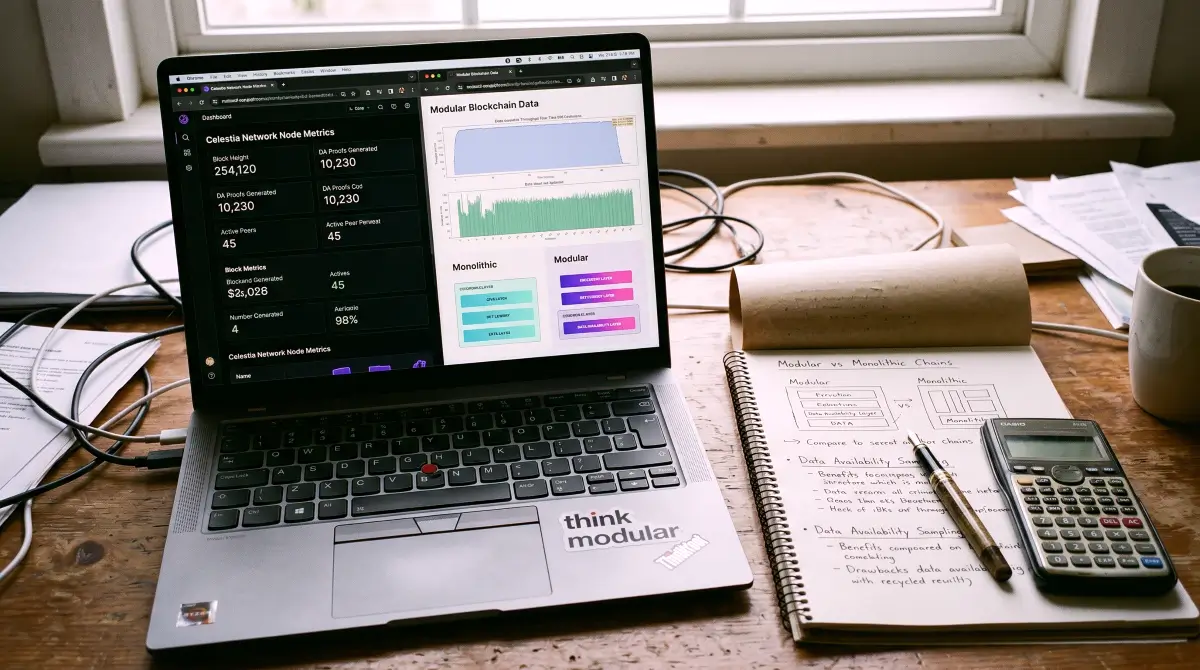
Coin markets move fast, but checking a network with heavy insider selling requires separating the technology from the actual tokenomics. Celestia operates differently from old blockchains. It focuses strictly on keeping data available.
Evaluating blockchain infrastructure requires deep research because network conditions change daily. Many platforms launch with great software but fail to protect retail holders from venture capital supply dumps. This setup makes it hard for standard participants to find real value.
This independent audit looks past the hype. My goal is to expose the real network stats, price action, and future risks so you can evaluate the project clearly.
What Celestia Actually Does
Most old blockchains try to do everything at once. They process transactions and store data all in one place. This makes them highly inefficient. Celestia uses modular technology instead.
It handles only the raw data availability layer. It takes the hard work of executing transactions and gives it to other networks. The team recently upgraded to Fibre Blockspace to carry a higher volume of data. It acts as a strong foundation for developers to build custom chains.
Historical Timeline And Price Action
People were very excited when Celestia first launched. The genesis block created 1 billion TIA tokens. The core plan releases more inflation tokens every year, starting at an 8 percent rate.
The token price pumped to an all-time high of $20.91 in February 2024. Then a sudden cliff unlock occurred. The network released 176 million tokens directly to early investors and developers. These venture capital firms sold heavily.
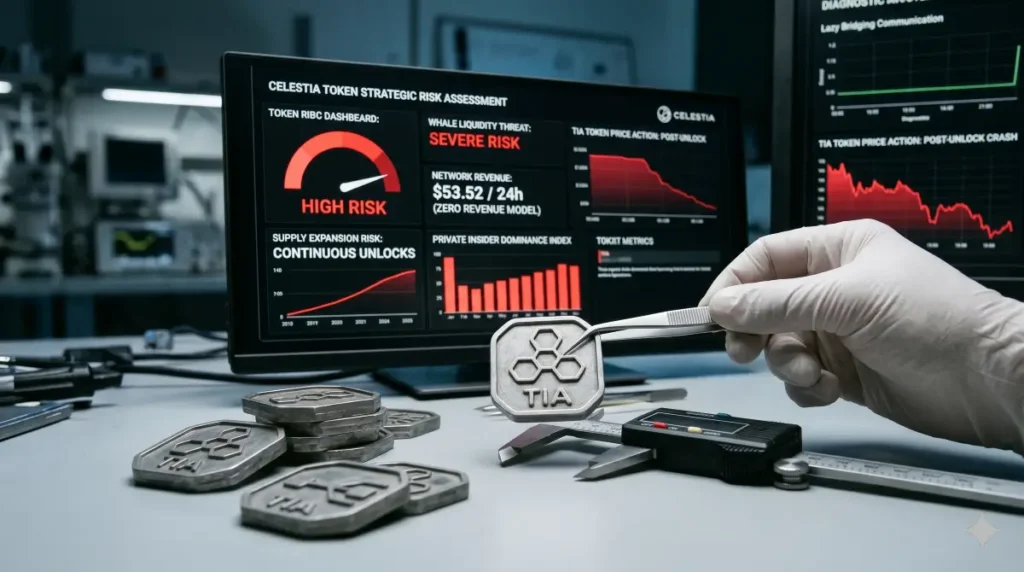
This caused the price to crash by 98 percent. By April 2026, the asset fell to a low of $0.27. It trades near $0.41 in late May 2026. The token is heavily struggling after a brutal downtrend caused by continuous insider selling.
Network Security And Revenue Metrics
Celestia operates as its own standalone consensus network. People pay their data transaction costs exclusively in TIA tokens. This makes the infrastructure very cheap for rollups.
However, this cheapness is a direct challenge for token holders. Recent on-chain data shows the entire global network generated only about $53.52 in total transaction fees in a 24-hour period.
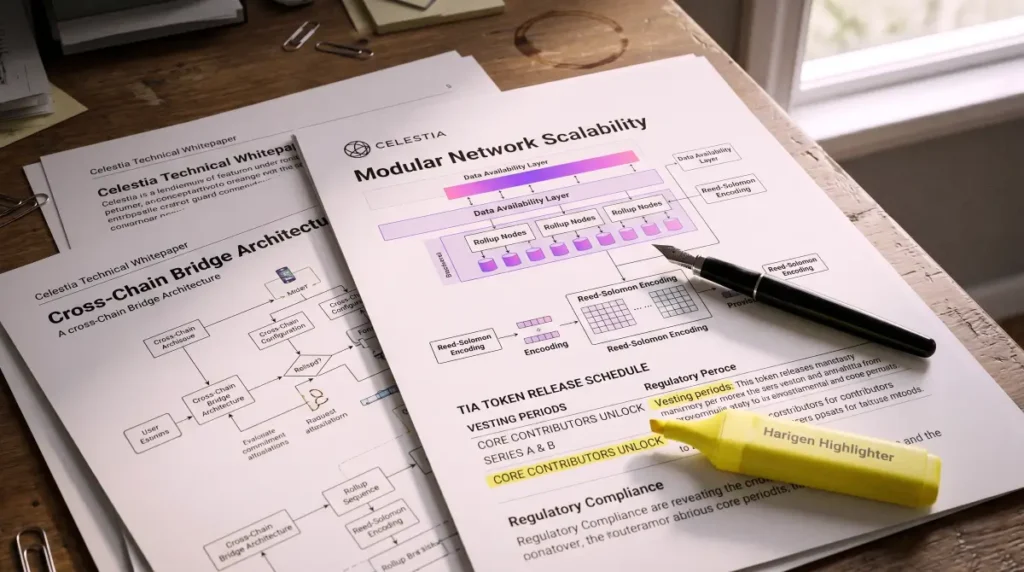
The network simply does not earn enough protocol revenue to protect itself over time. From a technical audit standpoint, it is safer from common smart contract exploits. Leading platforms like CertiK Skynet gave the base layer a security score of 4.2.
Whale Concentration Risks
Only 12.15 percent of the total supply was sold during the initial public distribution. Private insiders, seed investors, and early contributors divided the remaining supply.
This extreme concentration gives a handful of wallets complete control over the market direction. Currently, about $150 million worth of the Celestia Token moves daily. Private whale wallets still hold total dominance.
Celestia Tokenomics For Strategic Analysis
| Tokenomics Factor | Details | Why It Matters |
|---|---|---|
| Total Max Supply | No Max Supply (—) | There is no fixed supply ceiling. Initial supply expands through a built-in inflation model. |
| Circulating Supply | 919.93 Million TIA | Represents the active portion of tokens currently tradeable in the open market. |
| Total Supply | 1.16 Billion TIA | The complete number of tokens generated so far, including locked reserves. |
| Initial Inflation Rate | 8% Annually | The network started with high dilution, meaning a large expansion of competing supply. |
| Target Inflation | 1.5% Floor Rate | The system decreases emission rates by 10% each year until it hits its permanent floor. |
| Insider Control | ~67% Tier-1 Lockups | A large portion of the supply was allocated to VCs, creating permanent sell pressure. |
Future Upgrades and Technical Roadmap
The core technical team is rolling out a major network upgrade called Hibiscus. They are also developing a custom system known as Lazy Bridging. This allows rollups to communicate safely without relying on third-party apps.
Scam groups frequently target this ecosystem by creating fake lookalike tokens. Users must always verify the authentic identifier on the official explorer.
Social sentiment remains very quiet. Community engagement has dropped significantly. The technology is great, but the lack of revenue forces a low score for financial sustainability.
Frequently Asked Questions
Is Celestia A Dead Project?
The technical development is alive. However, token performance remains painful for retail buyers because early whales continue to sell.
Why Are Network Fees So Low?
The network only processes data availability rather than executing complex smart contracts. This low cost structure is great for developers but represents a major threat to long-term survival due to zero revenue.
Can It Reach Its Old High Of 20 Dollars Again?
Returning to $20 is highly improbable in the current market. The large increase in circulating supply means the project needs billions in new capital just to offset whale sell pressure.
Related Reviews For Further Research
If you want to understand alternative layer structures, check our complete Aerodrome Finance Aero review. Additionally, read our detailed Decred review to evaluate governance systems.
The Veteran Observation
The truth is simple. Celestia is a beautiful piece of blockchain engineering. But the token is mostly used to help early investors cash out their profits using retail money. It works great for developers, but it has been painful for buyers. This is just for education. It is not advice to buy or sell.

Founder & Managing Editor of CryptosMedia. Zahid Hussain leads evidence-based crypto research covering tokenomics, security, governance, adoption, and risk.
CryptosMedia separates verified facts from interpretation, avoids buy/sell recommendations, and updates reviews when major evidence changes.
8 thoughts on “Celestia Token Review: Tech Risks And The Truth”