

Crypto AI projects often look simple from the outside. They heavily rely on the buzzwords of machine learning and blockchain. But the harder question is whether the token actually does something useful. People wonder if the network is just riding a temporary trend. Bittensor aims to build an internet-scale intelligence market. Since the architecture behind it is highly complex, evaluating this Bittensor DePIN requires careful attention. This Bittensor review looks at how its subnets actually work. I will analyze what the TAO token does, its supply structure, and the serious governance risks the project has faced recently.
How i Checked The Bittensor DePIN Data
I reviewed this project by checking its official whitepaper by Yuma Rao. My research also included the Opentensor Foundation documentation and its open-source GitHub repository. Market data, tokenomics, and recent ecosystem news were checked on CoinMarketCap.Since market figures are time-sensitive, i checked them only on the listed data date. I also compared its structure to other prominent AI and compute tokens in the crypto sector. If i found gaps in transparency, i noted them as areas requiring your own verification.
What Is Bittensor Actually Doing?
Bittensor is an open-source protocol. It powers a decentralized machine learning network. Instead of a single massive corporation training monolithic AI models, Bittensor creates a peer-to-peer market. Different intelligence systems evaluate and reward each other organically.
The network does not operate as one single entity. Instead, it relies on distinct subnets.. These are independent communities focused on producing specific digital commodities. For example, they handle compute power, data scraping, drug discovery, or financial market prediction. Inside these subnets, miners produce the digital commodity. At the same time, validators must evaluate the quality of the miners’ work. Miners must run expensive hardware. Also, they need powerful GPUs to train models or scrape data. If their output is poor, validators will not reward them. The competition forces everyone to improve constantly. The best-performing miners and validators earn TAO tokens as a reward.
Token Utility: What TAO Actually Does
A token’s utility is the easiest way to separate real ecosystems from pure hype. So, TAO serves several clear and active functions within the network:
- Incentivization and rewards: The network continuously emits TAO to reward miners. It rewards those who produce high-quality intelligence and validators who accurately score that work.
- Staking and delegation: TAO holders can stake their tokens to specific validators. Basically, this allows regular users to participate in the network’s security. They earn a share of the yield without needing the hardware to mine themselves.
- Network access: TAO tokens grant external access to the network. This allows users to extract information and tune the AI models to their specific needs.
- Subnet creation and governance: Users must lock TAO to register and manage their own subnets. Upcoming Dynamic TAO upgrades aim to give token holders even more power. They will dictate how rewards are distributed across different subnets.
Bittensor Tokenomics And Supply Structure
Bittensor’s tokenomics closely mirror Bitcoin’s supply model. Its inflation schedule is highly predictable. I checked the numbers on CoinMarketCap.
| Tokenomics Factor | Details | Why It Matters |
|---|---|---|
| Total / Max Supply | 21,000,000 TAO | A hard cap prevents endless inflation, creating long-term scarcity. |
| Circulating Supply | ~10.94 Million TAO (52.12%) | Roughly half the supply is circulating as of May 2026. The rest will unlock slowly over time. |
| Market Capitalization | ~$3.03 Billion | Gives context to the network’s current valuation relative to other large-cap crypto projects. |
| Inflation / Emissions | Rewards distributed every 12 seconds | Keeps miners and validators constantly incentivized, yet introduces steady sell pressure. |
| Halving Cycle | Yes | Like Bitcoin, TAO emissions undergo periodic halving events, reducing the rate of new supply. |
The tokenomics are easier to evaluate because the project uses a strict supply schedule. In addition, it avoids arbitrary developer minting. The main concern for researchers is whether network demand outpaces the daily inflation. This is because new TAO tokens are constantly minted to pay miners.
Ecosystem And Real Adoption Of The Bittensor DePIN
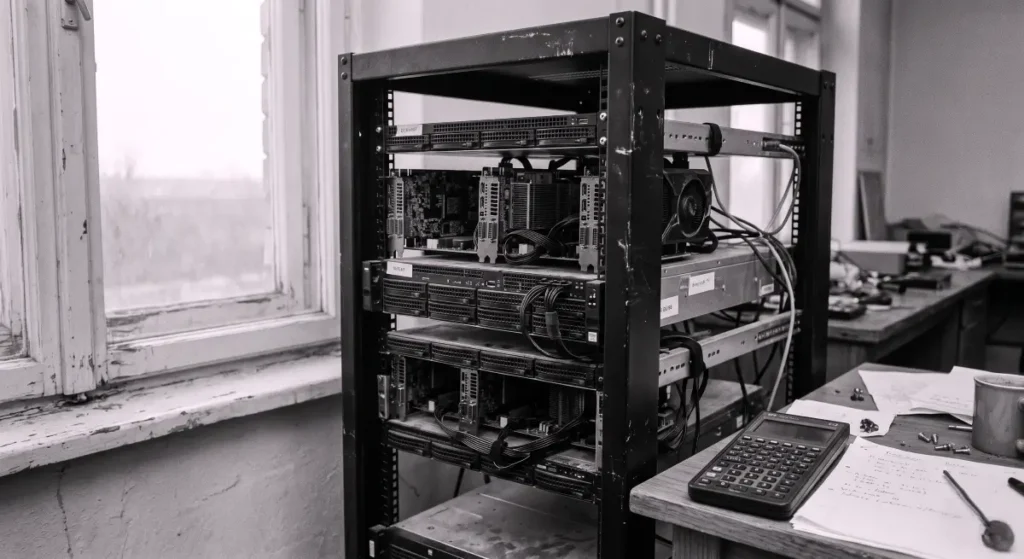
Miners must provide verifiable computing power to earn TAO token rewards.
Measuring adoption means looking at subnet activity and institutional integration. We should not just look at social media volume. The network has grown to support over 1,000 validators and miners. In fact, the subnets themselves have become highly specialized. For instance, Subnet 68 focuses on drug discovery by screening millions of molecules. Other subnets focus on open-weight model training.
From an institutional standpoint, the ecosystem has attracted significant attention. Nvidia has openly supported the network’s infrastructure. Along with this, traditional finance entities like Grayscale have filed for a spot TAO ETF. This could offer institutional investors direct exposure. General Tensor’s recent acquisition of Backprop Finance signals a big shift. Professional liquidity and trading infrastructure is being built directly around the TAO ecosystem.
Governance, Centralization, And Red Flags
Despite its decentralized design, Bittensor is currently navigating severe governance friction. I treat this as the project’s most significant research gap and risk factor. In April 2026, Covenant AI exited the network. Before this, they were a major player in the ecosystem. They left following allegations that its co-founder was exercising centralized authority. The exit triggered a massive selloff. It raised serious questions among the community. People wonder whether the network is as decentralized as it claims. The community noticed unusual token movements, and as a result, trust was broken.
In response to the internal conflict, the network had to implement a Locked Stake protocol. This aimed to regain trust and stabilize governance. Since trust is everything in crypto, the foundation had to step in quickly. The Locked Stake protocol forced users to think twice before withdrawing liquidity. While the network has shown resilience by reviving disrupted subnets, risks remain. The reality is that major network upgrade decisions carry centralization risks. The project uses governance language. Yet, the recent events show that concentrated power among top subnet owners can disrupt the broader ecosystem.
Security And Audits For The Bittensor DePIN
Bittensor relies on an open-source codebase. Allowing anyone to review and contribute via its GitHub repository. CoinMarketCap lists a CertiK rating of 4.0 for the project. I could not verify a standalone traditional smart contract audit report from the provided documentation. Because Bittensor operates its own independent blockchain called Subtensor, standard EVM smart contract audits do not apply perfectly here. For a crypto project handling billions in value, readers should verify current security incident reports directly from the Opentensor Foundation before trusting the infrastructure completely.

Category Comparison: Decentralized AI Networks
Compared with similar projects, Bittensor has a more complex architecture. That complexity brings steeper learning curves for regular users.
| Metric | Bittensor (TAO) | Artificial Superintelligence Alliance (FET) | Render (RENDER) |
|---|---|---|---|
| Category | Decentralized Machine Learning | Autonomous AI Agents | Decentralized GPU Rendering |
| Main Use Case | P2P intelligence market via subnets | Deploying AI agents for automated tasks | Sharing idle GPU power for rendering |
| Max Supply | 21 Million (Capped) | Uncapped / Inflationary (Varies post-merger) | Capped |
| Ecosystem Focus | Miners producing AI models, validators scoring them | Interoperable AI agents and data sharing | Graphics, VFX, and AI compute |
| Main Risk | Governance centralization disputes | Integration complexities post-token merger | Hardware supply/demand imbalances |
Where The Bittensor DePIN Network Stands Out
- Clear token utility: TAO is strictly required to run subnets, stake to validators, and access network intelligence.
- Institutional attention: Backing from major players like Polychain, Nvidia, and Grayscale adds substantial legitimacy.
- Hard-capped supply: The 21 million maximum supply and halving mechanism provide predictable scarcity. It mirrors Bitcoin’s model.
Main Risks And Red Flags
- Governance centralization: Recent exits by major entities like Covenant AI highlight a massive flaw. That a few large players can drastically impact the network.
- High complexity: Understanding how to deploy, mine, or validate on a subnet requires significant technical knowledge.
- Extreme volatility: The token has experienced massive price swings. It is down historically from its all-time high of $767 in 2024 to the $270 range in May 2026. Past performance does not guarantee future results.
This Review Is Most Useful If…
You are trying to separate the artificial intelligence hype from actual network utility. If you want to understand how decentralized machine learning models are scored and rewarded. If you are researching the tokenomics of TAO before interacting with the network, this breakdown covers the core mechanics.
What Readers Should Verify
Readers looking for guaranteed returns should slow down. In fact, relying only on social media hype is dangerous, so you must check this project more carefully. Before trusting this project, verify:
- The current status of the Dynamic TAO upgrade and how it impacts staking yield.
- The concentration of weight among top validators on platforms like taostats.
- Official announcements from the Opentensor Foundation regarding network governance and centralization mitigations.
Common Questions About Bittensor (TAO)
- What is Bittensor used for? Bittensor is an open-source platform used to produce and access digital commodities. It provides machine intelligence, compute power, and data scraping through a decentralized network of subnets.
- Does TAO have a fixed supply? Yes. TAO has a maximum supply of 21 million tokens, mirroring Bitcoin’s supply structure.
- What is a subnet in Bittensor? A subnet is an independent community within the Bittensor network. Here, specialized miners produce a specific digital commodity like text generation or drug discovery. Validators evaluate their work.
- Does this review give investment advice? No. This review does not provide buy, sell, or hold advice. Readers should study the project’s utility, tokenomics, security, liquidity, and risks before making their own financial decisions.
My Final Takeaway On Bittensor DePIN
Bittensor’s clearest strength is that its documentation connects the TAO token to specific protocol functions. It avoids relying only on AI branding. By forcing intelligence models to compete peer-to-peer, it has created a genuinely fascinating marketplace for digital commodities. The technology is only half the equation. The recent governance disputes and centralization concerns show serious flaws. The Bittensor DePIN ecosystem is currently battling the same human coordination problems that challenge many decentralized networks. The long-term viability of the project will depend just as much on how fairly the Opentensor Foundation manages the community. It relies heavily on the AI models being produced.

Founder & Managing Editor of CryptosMedia. Zahid Hussain leads evidence-based crypto research covering tokenomics, security, governance, adoption, and risk.
CryptosMedia separates verified facts from interpretation, avoids buy/sell recommendations, and updates reviews when major evidence changes.
3 thoughts on “Bittensor DePIN Review: Subnet Utility And Risks”