Maker MKR Truth: Dark Reality Behind Sky Transition

Maker MKR Truth Cryptosmedia engraved on a heavy iron gear inside a disassembled pocket watch.

Maker MKR holds dark secrets behind its shiny decentralized financial system. Crypto projects often present beautiful faces, but diving below surface level reveals complex webs of governance transitions, peg stability mechanisms, and structural overhauls. Over past year, Maker ecosystem has been undergoing its biggest transformation – huge rebranding called ‘Sky’. Under this shift, legacy tokens MKR and DAI face replacement with new tokens SKY and USDS. Anyone looking for information right now must understand this complex transition and token conversion process. I will explain new Sky transition’s technical mechanics using simple words. We will evaluate real Maker utility, analyze Maker tokenomics deeply, highlight security and centralization risks every regular holder should know. Most important research question stands: does this rebrand scale DeFi properly, or does it compromise censorship-resistant principles on which founders built Maker? My Research Method: How I Evaluated This Project To prepare this report, I deeply analyzed first-party project documentation, historical market data, smart contract parameters, Maker audit reports, public governance forum debates. I monitored core smart contracts on Ethereum, checked CertiK security ratings, analyzed latest financial reports from Sky Frontier Foundation. Crypto market data changes very quickly. Therefore, I verified all market metrics here using live data from July 14, 2026. I used rates and liquidity metrics from CoinMarketCap, Binance, MetaMask, Independent Reserve to ensure absolute accuracy. Truth About Rebranding: Journey From Maker MKR To Sky Maker Protocol Mechanics Danish entrepreneur Rune Christensen conceived Maker Protocol during 2015. It launched fully during late 2017, becoming one foundational pillar for DeFi space. Fundamentally, this system operates as decentralized credit platform. Users lock volatile crypto collateral (like Ether) inside smart contracts called Vaults. Against locked collateral, system allows them to mint DAI. DAI is decentralized stablecoin holding soft-peg with US dollar. Because crypto prices remain highly volatile, overcollateralization runs everything here. Meaning, if you want to borrow $100 worth of DAI, you must lock collateral holding much higher value. If collateral value drops below critical threshold, protocol automatically liquidates that Vault. It sells collateral through on-chain auctions to recover outstanding DAI debt. Sky Transition: MKR And DAI Swap Process During late 2024 and 2025, Maker governance decided to change brand name to ‘Sky’ under ‘Endgame’ plan. They introduced two new upgraded tokens alongside this transition: This transition caused immense confusion and restlessness among community members. On Reddit and other social platforms, regular users expressed anger regarding automatic conversions happening on centralized exchanges. Wallets stopped showing new balances. People worried about impacts on legacy Vaults. Although collateralized debt engines operate normally, new governance structure now divides into networks of independent ‘SubDAOs’ (called Sky Stars). Token Utility: Roles Inside Maker MKR Ecosystem Governance Votes And System Parameter Control MKR and SKY tokens function like internal voting shares. Holding these tokens gives no passive dividends. Instead, holders control crucial system parameters. Holders vote on these critical decisions: Solvency Recapitalization: How Holder Capital Faces Risk Many new users remain unaware regarding one fundamental risk. Governance tokens bring financial liability along with power. If collateral values crash rapidly and liquidation auctions fail to cover outstanding DAI or USDS debt, system automatically mints new MKR or SKY tokens. It dumps them on open market. This recapitalization backstop means if governance accepts bad collateral or sets incorrect parameters, heavy financial loss falls onto regular holders through massive token dilution. Maker Tokenomics: Supply, Buybacks, Reserves Analyzing Maker supply dynamics and solvency buffers is essential inside this new system. Buyback mechanism uses surplus protocol revenues to buy and burn new tokens from open market whenever financial health permits. Maker MKR Tokenomics Summary Table I verified new core metrics inside this table: Tokenomics Factor Live Verified Details (July 14, 2026) Market Implications Legacy Token Price $1,465.33 (Binance) / $1,410.51 (MetaMask) Price spreads exist between exchanges and wallets. Max Supply Floor 1,000,000 MKR A hard ceiling exists, though recapitalization mechanisms may still introduce additional minting if required. Total Supply 870,827.47 MKR The total supply has declined over time through token burns and buybacks. Circulating Supply 847,225.42 MKR (Self-Reported) Approximately 84.72% of the maximum supply is available for public trading. Fully Diluted Valuation ~$1.46 Billion Represents the potential valuation if the maximum supply were valued at the current market price. Total Value Locked (TVL) ~$5.87 Billion Reflects the total collateral value locked within the protocol’s smart contracts. Reality Of Reserves And Solvency Metrics Financial safety depends heavily on reserves. I verified these buffer figures from latest documents: Governance Centralization And Censorship Red Flags Centralization Problem: 5 Wallets Control 98% Voting Power Despite claiming decentralization, Maker governance centralization remains massive problem. During crucial rebranding votes, data revealed only five large token holder addresses controlled 98% voting power. This means regular retail holder votes hold zero actual value. Few whales and institutional players control entire monetary policy and smart contract upgrades. Censorship Risks: DAI Delisting And USDS Freeze Feature Biggest Maker risks emerge from regulations and stablecoin freeze designs: Ecosystem Activity: Real-World Assets And Revenue Updates Institutional Capital Deployment Details Maker no longer relies solely on crypto collateral. It leads industry in integrating traditional financial markets: Record Protocol Revenues And Financial Health These diversification strategies made system revenue model highly organic: Head-To-Head DeFi Competitors Comparison I analyzed three major DeFi protocols side-by-side to help readers find correct direction: Metric / Feature Maker (Sky Ecosystem) Aave Protocol Curve crvUSD Primary Category Collateralized Stablecoin & Debt Money Market & Lending Automated Market Maker & Stablecoin Stablecoin Product USDS (New) / DAI (Legacy) GHO crvUSD Peg Backing Model Overcollateralized Debt & RWAs Multi-Asset Lending Pools AMM Liquidity Pools Yield Source RWA Yields, Stability Fees Variable Borrow Rates Swap Fees, Pool Incentives Censorship Resistance Low to Medium (USDS Is Freezable) High (Decentralized Pools) High (Censorship Resistant) System Audit Score 4.5/5.0 (CertiK) High (Multi-Audited) High (Audited Contracts) Biggest Structural Risk Governance Whales, Regulatory Limits Pool Utilization Rates, Bad Debt Liquidity Lockups, Contract Bugs What Makes Our Evaluated Project Different? Biggest advantage comes from massive real-world revenue models and deep capital integrations. These separate it from simple borrow-and-lend … Read more

Aave V4 Upgrade: The Hidden Smart Contract Risks Exposed

A close look at the technical lending environment and liquidity pools behind the Aave V4 upgrade.

The Aave V4 upgrade is changing how decentralized finance (DeFi) lending works, but it brings hidden dangers. DeFi platforms often show a perfect picture to the public with high profits and automated code. Behind the dashboard graphics lies a complex system of crypto smart contracts, liquidity pools, and economic incentives that need critical analysis. This article looks past the marketing to examine the core mechanics. We will look at the new architecture, recent exploits, the changes in Aavenomics 3.0, and the actual utility of the AAVE token. How I Audited This DeFi Project I evaluated the official documentation, historical whitepapers, smart contract reports, and live market data. To keep facts accurate, I treated all market cap, volume, and supply figures as time-sensitive based on July 9, 2026. I checked the mechanics of liquidity pools, the scope of safety reserves, and cross-referenced public auditing history with documented security incidents. I do not do simulated code deployments; my analysis relies strictly on verified on-chain events and official developer disclosures. The Evolution of DeFi Liquidity Pools Aave is a non-custodial liquidity protocol on multiple blockchains, mostly on Ethereum. It allows borrowing and lending without central middlemen, as smart contracts automatically manage all asset transfers. Shifting from ETHLend to a Unified Model Stani Kulechov originally launched the project in November 2017 as ETHLend. It started as a peer-to-peer lending system where the platform directly matched individual borrowers and lenders. This model was highly inefficient, suffering from low liquidity and long wait times. Kulechov’s team rebranded the project to Aave in early 2020. Under this new setup, the protocol dropped peer-to-peer matching for pooled liquidity. How Borrowing and Lending Works Natively Instead of waiting for a counterparty, lenders deposit assets into unified smart contracts called lending pools. Uncollateralized Liquidity via Flash Loans Aave’s secondary borrowing mechanic is the flash loan, which does not require collateral. A user can borrow any amount of available liquidity from a pool, provided they return the principal plus a 0.09% fee within the exact same blockchain transaction block. If the borrower fails to return the funds and fee within that single block, the system automatically reverses the entire transaction. While flash loans help with complex strategies like arbitrage, executing them safely requires advanced programming skills. AAVE Token Supply, Utility, and Market Value The AAVE token is an ERC-20 asset that serves as the administrative and security core of the protocol. The development team introduced it via a 100:1 migration from the original LEND token. On July 9, 2026, market data listed the Aave token price near $88.34 with a 24-hour trading volume of $239,107,333. The protocol maintains a verified circulating supply of 15,414,022.35 AAVE out of a hard-capped maximum supply of 16,000,000 AAVE. This capped supply makes the token non-inflationary. Tokenomics Factor Details Why It Matters Max Supply Capped at 16,000,000 AAVE Prevents long-term dilution from arbitrary minting. Circulating Supply 15,414,022.35 AAVE Minimizes the risk of massive unexpected supply unlocks. Safety Module Staking Backstop Reserve Funded by Stakers The protocol can liquidate staked AAVE to cover shortfalls. Value Recapture Burn Mechanisms and Automated Buybacks Links token demand directly to protocol usage. Core Utility Roles Exploring the Hub-and-Spoke Architecture The Aave V4 upgrade replaces the single-pool design with a Hub-and-Spoke model. The Liquidity Hub acts as the central ledger, while individual Spokes act as specialized lending markets. This structure allows Aave to isolate risk parameters for distinct asset classes. Inside the Global Dollar Hub A primary component of the Aave V4 upgrade is the Global Dollar Hub, designed to aggregate stablecoin liquidity on Ethereum. This hub integrates stablecoins like GHO and USDG to facilitate lower-fee transactions and improve capital routing. GHO currently utilizes the Aave Savings Rate of 4.25% APY via Savings GHO to drive adoption. Targeting the Traditional Securities Market The Aave V4 upgrade explicitly bridges traditional Wall Street mechanisms with decentralized finance. The protocol integrates tokenized real-world assets and tokenized stocks on Aave Horizon. Through integrations like mGLOBAL, institutional users can deposit tokenized private credit or treasury bills as collateral to borrow stablecoins. Security Audits and Real Vulnerabilities Aave possesses one of the more seasoned security profiles in DeFi, backed by an annual SOC 2 Type 2 security audit and formal verification by Certora. No protocol is entirely risk-free. Aave has suffered substantial stress events that users must evaluate. The Legacy V3 Bridge Exploit In mid-2026, a critical bridge vulnerability caused a massive panic, leading to an $8.45 billion emergency withdrawal. While the protocol survived this liquidity shock, the event highlighted the systemic risks present in cross-chain bridge dependencies. The KelpDAO Bad Debt Incident On June 17, 2026, an exploit involving KelpDAO generated $230 million in bad debt directly on Aave’s balance sheet. This crisis forced the protocol to overhaul its asset listing standards and lead a $320 million ETH recovery effort to cover the shortfall and protect depositors. These incidents demonstrate that even a formally verified protocol remains vulnerable to external integrations. Governance Dynamics and Centralization Risks The Aave Decentralized Autonomous Organization theoretically governs the protocol as holders vote on proposals. However, the reality of its governance reveals central points of failure. Comparing Aave V4 with Competitors To evaluate Aave’s market position, it is useful to compare its core variables against other prominent lending protocols like Maker and Compound. Metric Aave Maker (Sky) Compound Primary Category Multichain Pooled Lending Stablecoin Debt Ingestion Ethereum Pooled Lending Total Value Locked $12.94 Billion Varies Lower than Aave Token Capping Hard Cap of 16M AAVE Variable Hard Capped Primary Token Utility Governance, Safety Module Governance, Burn Mechanism Governance Only Major Deficit Risk Third-Party Smart Contract Exploits Undercollateralized Peg Failures Liquidity Utilization Locks DeFi Investor Checklist: What to Verify Independently Before depositing assets or holding AAVE, I recommend verifying the following on-chain metrics: Deciding If Aave’s Ecosystem Aligns with Your Focus This Guide Is Most Useful If You Are: Extra-Careful Readers Should Slow Down If You Are: Common Questions About the Aave Protocol Is the AAVE token inflationary? No. The AAVE token … Read more

Jupiter (JUP) Review: Solana Utility & Risks

Solid metallic JUP token resting on a dark granite desk beside a confidential financial audit report.

Jupiter (JUP) Review: Decentralized exchanges often inflate their importance with speculative roadmaps, but checking a platform that processes over 85% of its native network’s volume requires strict data verification. Jupiter has evolved from a simple pricing aggregator into a sprawling decentralized financial hub on the Solana blockchain. This Jupiter (JUP) Review bypasses the marketing hype to analyze the protocol’s actual swap execution, the zero-emission economic overhaul, and the hidden smart contract risks every participant must understand before interacting with the ecosystem. How I Reviewed This Project I reviewed this project by examining Jupiter’s official developer documentation, recent DAO governance proposals, and on-chain market data from platforms like CoinMarketCap. I also analyzed the core smart contract using automated security scanners like Token Sniffer to identify underlying architectural vulnerabilities. My goal is to separate the reality of Jupiter’s on-chain execution from the heavy social media attention surrounding its previous airdrops. I treated all market figures as time-sensitive and checked them only on the listed data date. Ecosystem Dominance & The Super App Pivot Routing, Perpetuals, and Jupnet The platform primarily operates as the foundational routing layer for decentralized finance (DeFi) on Solana. Instead of depending on one isolated liquidity pool, the underlying engine queries multiple automated market makers and order books simultaneously. This architecture guarantees traders receive the tightest possible execution prices with minimal slippage across the entire network. However, the protocol is rapidly expanding into a “super app.” The infrastructure now supports leveraged perpetuals trading up to 100x through the Jupiter Liquidity Pool (JLP). Furthermore, the development team integrated a lending market and a yield-bearing stablecoin (JupUSD) backed by institutional assets from BlackRock’s BUIDL fund. The most ambitious technical hurdle is the upcoming Jupnet—an omni-chain ledger designed to seamlessly link networks like Ethereum and Base without relying on traditional, vulnerable bridging contracts. Token Supply & The Zero-Emission Overhaul Governance Utility and Revenue Buybacks A critical phase of this Jupiter (JUP) review involves auditing the structural changes to the token supply. The native asset serves strictly as a governance mechanism. Rather than forcing artificial utility for gas fees, the developers align the asset’s value with direct protocol revenue. The Decentralized Autonomous Organization (DAO) executed a massive economic pivot by halting team emissions and burning 3 billion tokens from the original maximum cap. More importantly, the protocol actively routes 50% of its on-chain exchange revenue to purchase tokens directly from the open market, establishing a constant deflationary pressure against the circulating supply. Tokenomics Factor Verified Details Forensic Impact Total Max Supply 7 Billion JUP The DAO permanently destroyed 3 billion tokens to protect against future dilution. Circulating Supply ~3.32 Billion JUP Roughly 48% of the network cap is actively circulating in the public markets. Net Zero Emissions Currently Active Team unlocks are paused indefinitely, halting a major source of internal inflation. Revenue Buybacks 50% of Protocol Fees Direct market purchases using exchange revenue constantly recycle value to holders. Treasury Security 4/7 Multisig Contracts Moving massive funds requires consensus from multiple verified key holders. Security Forensics & Contract Vulnerabilities Centralization Risks and Trust Assumptions Verifying code safety is mandatory before deploying capital. Automated smart contract scanners assign the infrastructure a low safety score of 35/100. While these scanners lack human context, they expose vital architectural facts. The contract successfully disables transfer fees, minting capabilities, and wallet freezing functions, shielding users from arbitrary fund confiscation. Conversely, the metadata update authority remains active. This allows the administrative keys to alter foundational token details post-launch. Additionally, blockchain ledgers show massive centralization, with the top 10 wallets securing nearly 68% of the active supply. While typical for networks managing large DAO treasuries, this heavily concentrates voting power and liquid capital among a fraction of insiders. Historical Market Context The JUP token launched in early 2024 and experienced an all-time high of approximately $2.04. Like many major altcoins, it faced severe volatility, dropping heavily as initial airdrop recipients sold their allocations. On June 29, 2026, the token trades near $0.21. The token price is heavily influenced by the broader performance of the Solana network and the continuous execution of the protocol’s 50% fee buyback program. Market Positioning & Competitor Context Metric Jupiter (JUP) 1inch Network (1INCH) Hyperliquid (HYPE) Category Ecosystem Super App Multi-Chain Aggregator Native Perpetuals Layer Core Utility Base Routing, Perps, and Lending Cross-EVM Swap Routing High-Speed Futures Supply Structure 7B Cap (Zero Emissions) Inflationary Unlock Cycles Fixed Cap, Large Initial Unlocks Market Dominance Controls 85%+ of Solana Volume Leads Ethereum Routing Leads Decentralized Perpetuals Compared with similar projects, Jupiter has a clearer value accrual mechanism due to its direct fee buybacks. However, it looks weaker regarding cross-chain flexibility compared to 1inch, as it currently relies entirely on Solana’s success until its Jupnet omni-chain vision goes live. What Readers Should Verify Before relying on this project, I suggest checking: Common Questions About Jupiter (JUP) What is the Jupiter JUP token used for? JUP is strictly used to govern the Jupiter DAO, allowing holders to vote on protocol decisions. Users can also stake the asset to earn yields generated directly from protocol activities and trading fees. Does Jupiter have a fixed supply? Yes. The maximum supply is permanently capped at 7 billion tokens after the community successfully voted to burn 3 billion from the original 10 billion allocation. Does this review give investment advice? This review does not provide buy, sell, or hold advice. Readers should study the project’s utility, tokenomics, security, liquidity, and risks before making their own financial decisions. Final Verdict: Investment Forensics Risk Signal Box: Execution & Dependency To conclude this Jupiter (JUP) review, the protocol successfully functions as the undisputed liquidity engine of its native blockchain. Securing a daily volume of roughly $1 billion proves the product fits a massive market demand. The 50% revenue buyback system and the transition to zero net emissions successfully protect holders from aggressive inflationary dilution. ⚠️ RISK SIGNAL BOX: Whale Concentration: The DAO treasury and internal multi-signature wallets dominate the circulating supply. This concentration means retail governance votes … Read more

Ondo Finance Review 2026: Institutional RWA Truth

A forensic photograph of a tablet displaying Ondo OUSG funds on a matte wooden desk for this Ondo Finance Review.

Listen brother, i remember looking into the tokenization narrative back when it started gaining real traction in mid 2022. Fast forward to May 2026, and i was scrolling through their platform data, realizing their Global Markets just crossed one billion dollars in locked value. I spent hours digging through their smart contracts because you know how i am, i need to see the actual money moving. Right from the start of this investigation, i want you to know the reality. As an analyst conducting this Ondo Finance Review 2026, i am here to share technical research, not financial advice. Because crypto is a dangerous jungle, you must protect your capital. Today, traditional finance is built on walled gardens, and regular people are locked out. But, Ondo fills this massive gap. Instead of keeping the yield, they pass it to you. Truly, giving people a functional path provides a deep sense of hope. Surely, they are bridging the old money world with the fast decentralized finance world. Overall, it is a clean setup. Ondo Finance Review: The Core Market Protocol To understand where the protocol stands today, we have to look back at the chaos of the past. Before 2025, real world assets were just a buzzword. Most projects were trying to tokenize real estate or gold with very little legal backing. Yet, Ondo took a different path by focusing on tokenized US Treasuries. Since they prioritized liquidity, they survived the market shakeout. In fact, their system gives you actual, regulated access to the underlying assets. After they partnered with heavyweights like BlackRock, Mastercard, and J.P. Morgan, their credibility exploded. For example, if you read our Lido DAO (LDO) Review, you will see how massive institutional integration changes a protocol. Later, they proved that this reliability is not a fluke. The team is led by Nathan Allman, who cut his teeth at Goldman Sachs digital assets. They have heavy institutional ties, and that is what matters when dealing with US securities laws. Move Language Security And Atomic Settlement Technical security is where the real battle is fought. Initially, everyone thought this would be just another Ethereum fork. Although the smart contract side looks decent, an audit does not mean it is bulletproof. By utilizing the Move programming language, similar to what we see in Aptos and Sui, Ondo provided a much higher level of security. Such as, the Move architecture virtually eliminates reentrancy attacks that were common in 2024. Besides, we saw similar structural containment protocols when evaluating institutional security layers in our Nexera NXRA Review. Every deep dive Ondo Finance Review 2026 must account for these technical shifts. Though the risks remain, the atomic actions provide peace of mind. Like a surgical connection, either the whole trade works or nothing happens. This removes the counterparty risk that usually keeps big banks awake at night. The Reality Of Global Markets And Flux Finance Now, let us talk about how the system actually operates. The launch of Ondo Global Markets changed everything for institutional stock trading. Before this, synthetic assets were a complete nightmare, always prone to oracle failures and sudden liquidations. Soon, brokers realized they could settle trades on the blockchain. Also, their decentralized lending protocol, Flux Finance, is built on battle-tested code from Compound, and audited by Code4rena. Indeed, a comprehensive Ondo Finance Review 2026 reveals that the protocol has now processed over twelve billion dollars in total volume. Next, you can analyze the live market depth on CoinMarketCap to trace daily movements. Then, they issue digital tokens representing a piece of that pie. So, you buy the token, hold it in your crypto wallet, and earn the interest. In short, it cuts out the middlemen. Hence, you are essentially being paid to hold your own money. Clearly, Ondo is that pipe, pouring safe interest into small cups for anyone walking down the street. The Revised RWA Competitor Clash Metric Ondo Finance (ONDO) BlackRock (BUIDL) MakerDAO (MKR) Primary Focus Tokenized US Treasuries Institutional Fund Liquidity Decentralized Stablecoin (DAI) Target Market Retail & Institutional Strictly Institutional Decentralized Crypto Users Yield Product USDY (Daily Yield) Monthly Dividends DSR (Dai Savings Rate) Blockchain Native Yes (Ethereum, Sui, Aptos) Yes (Ethereum) Yes (Ethereum Ecosystem) Tokenomics: The Brutal Reality Check Here is where i need you to pay close attention. The token itself does not give you direct ownership of those treasuries. Rather, it is strictly for governance over the decentralized autonomous organization. Currently, we are looking at a circulating supply of about 4.86 billion tokens, and the total supply is a massive 10 billion. Thus, over half the supply is waiting to hit the market. That is a lot of hidden weight, brother. Even so, the protocol introduced a sophisticated fee-sharing model that funneled revenue into a buyback mechanism. Every time a cross border settlement happens, a tiny fraction is permanently removed. Still, the inflation risk from future unlocks is real. If you want to understand how yield models survive stress, examine our Morpho (MORPHO) Review for broader market comparison. Namely, yield generation is an expectation. Furthermore, this specific Ondo Finance Review 2026 warns that regulatory compliance is a double-edged sword. There is also a significant dependency on third-party custodians, meaning centralization risks remain since core products rely on traditional banks. Ondo Finance Review: The 2027 Forecast And Final Verdict Looking toward 2027, the trajectory for the protocol is completely clear. They want to become the base layer for all tokenized debt. The Franklin Templeton partnership is a massive validation of the protocol infrastructure. To sum up, i have to be honest with you. Holding the governance token is a massive bet on the platform expanding so fast that the buying pressure eats up the remaining 5 billion tokens yet to unlock. If you are looking for a quick flip, this is highly risky. As we conclude this Ondo Finance Review 2026, keep your eyes on the unlock schedules. But, if you believe tokenization is the financial standard of the next decade, this … Read more

Hyperliquid HYPE Token Review – Real Facts

Massive high-end server chassis physically displays the Hyperliquid HYPE Token logo, showcasing the custom-built network infrastructure on the Stylue website.

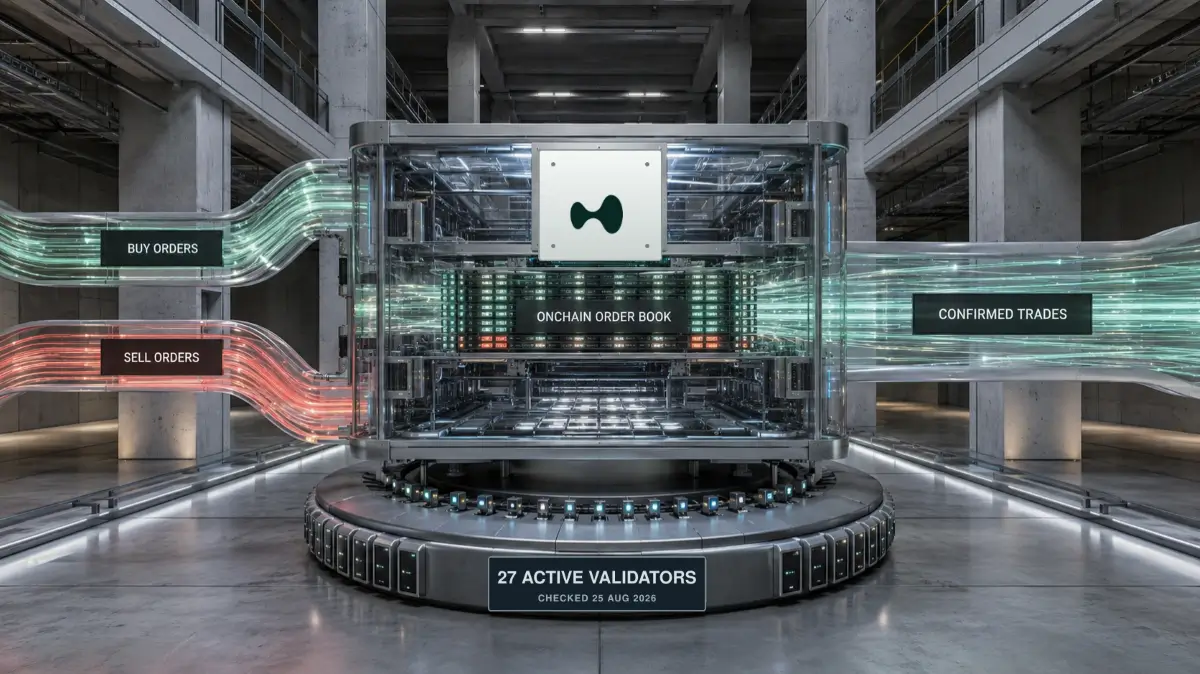
Every serious trader wants a clear edge, and our Hyperliquid HYPE Token review delivers exactly that. The decentralized finance market moves incredibly fast today, but traditional networks simply cannot handle heavy trading volume without breaking. This specific Layer-1 network promises to fix that broken infrastructure permanently. Many platforms try to copy existing blockchain codes and fail miserably. This project takes a completely different and bold path. The development team built a custom engine to handle massive global derivatives trading natively, without relying on slow secondary layers. Let us look closely at the facts, the actual network speed, and the hidden centralization risks that everyday retail buyers often miss. The Architectural Reality Standard financial markets have fixed opening times that stop you from trading freely. This network operates 24/7, allowing you to trade crypto, oil, and gold with up to 40x leverage. You never have to ask a bank for permission. The system runs on a custom built engine called ‘HyperCore’. This unique setup completely removes the need for third-party banks or centralized custody vaults. Traders keep their own funds secure while executing rapid market moves. There is zero risk of an exchange owner running away with your money. Every single trade executes directly on the transparent public ledger, giving the trader real peace of mind. Execution Speed and Network Fees Old blockchain systems get jammed quickly and become dangerously slow. This network processes an astonishing 200,000 transactions per second. Blocks finalize completely in just 0.07 seconds. This extreme speed means your trades execute almost instantly. You avoid the dangerous network lag that often ruins trading positions during sudden market panics. Furthermore, the platform offers true zero gas fees for regular trading. You simply use the native token to stake, vote, and pay tiny fees when interacting with external smart contracts. EVM Compatibility Despite this raw, custom speed, the network supports standard Ethereum smart contracts seamlessly. Developers do not need to learn a complex new coding language to build here. They can simply port their existing decentralized applications directly onto this fast infrastructure. This is not a cheap copy-paste job, it is a massive technical upgrade for the entire ecosystem. The Self-Funded Advantage Venture capital firms usually ruin new crypto projects by dumping locked tokens on retail buyers. The founders of this network funded the entire initial build completely out of their own pockets. This early independence is a very strong positive signal. It removes aggressive corporate pressure and aligns the core development team directly with the everyday community users. By early 2026, the public trusted this independent approach so much that the network secured almost $5 billion locked actively inside its system. Tokenomics and the Supply Trap The maximum supply is strictly locked at 1 billion tokens. While the lack of early corporate investors is fantastic, the network still schedules regular token unlocks for the team and the community. Constant token emission creates permanent inflation within the ecosystem. If normal buyers do not purchase these newly released tokens, the price stability will simply collapse over time. Recently, the team reduced a massive token unlock from 1.2 million down to just 140,000 units. They did this specifically to save the open market from a sudden and brutal price crash. The Centralization Bottleneck Here lies the biggest danger of the entire project. The entire global network is secured and controlled by only 24 active validators. This is a massive centralization bottleneck. A tiny group of computer operators holds absolute power over the entire trading ledger. If these big whales decide to sell their unlocked tokens in a hurry, the market price could fall very fast. Security Audits and Time Locks Security is the most important factor in decentralized finance. Right now, the network holds a very solid safety score of 4.6 from CertiK, proving the base code is highly resistant to standard attacks. To stop sudden network attacks or rapid capital flight, the system enforces a mandatory 7-day waiting period to unstake tokens. This time lock acts as a strong physical barrier against malicious behavior. Market Volatility and Price Action The open market always moves in aggressive waves. Historical data shows that the price of this asset has seen very violent jumps and crashes since its public launch. The asset traded near $3.20 in late November 2024. Speculative momentum then pushed the valuation up over 1,000 percent, hitting a massive peak near $60 in September 2025. A severe, market-wide crash in October 2025 wiped out many late buyers. However, the asset recovered quickly moving into early 2026, proving it has real staying power. Real Trading Volume Every single day, about $345 million worth of the asset is actively traded. This high volume proves that the token is highly liquid and not easily manipulated by small retail groups. You can easily buy or sell it on major trusted platforms like OKX, Bybit, and Coinbase. It is not a dead asset, real institutional money is actively moving through these order books. The Founder Transparency Gap The engineering team comes from elite institutions like Harvard, MIT, and Citadel. They clearly understand the complex mathematics behind high-frequency trading. However, they operate strictly under fake internet names like ‘iliensinc’. For big institutional investors, hiding real names always creates a minor trust gap in the financial sector. Fortunately, their past record is completely clean. No wallets were hacked, there are no internal team fights, and no smart contracts were ever broken under their watch. Competitor Clash Evaluating market position requires a direct look at the competition: Metric Hyperliquid Aster Poly Market Market Cap $10.18 Billion Much Lower Private Valuation Primary Utility Fast L1, EVM, Prediction Decentralized Exchange Pure Prediction Market Community Size 1.91 Million Users Lower Volume Massive Event Traffic The HIP-4 Ecosystem Catalyst The team is actively pushing real code updates, not just empty marketing promises. The recent price recovery is heavily tied to the upcoming HIP-4 network upgrade. This specific update introduces decentralized prediction markets natively into the blockchain. Users will soon be able to … Read more