
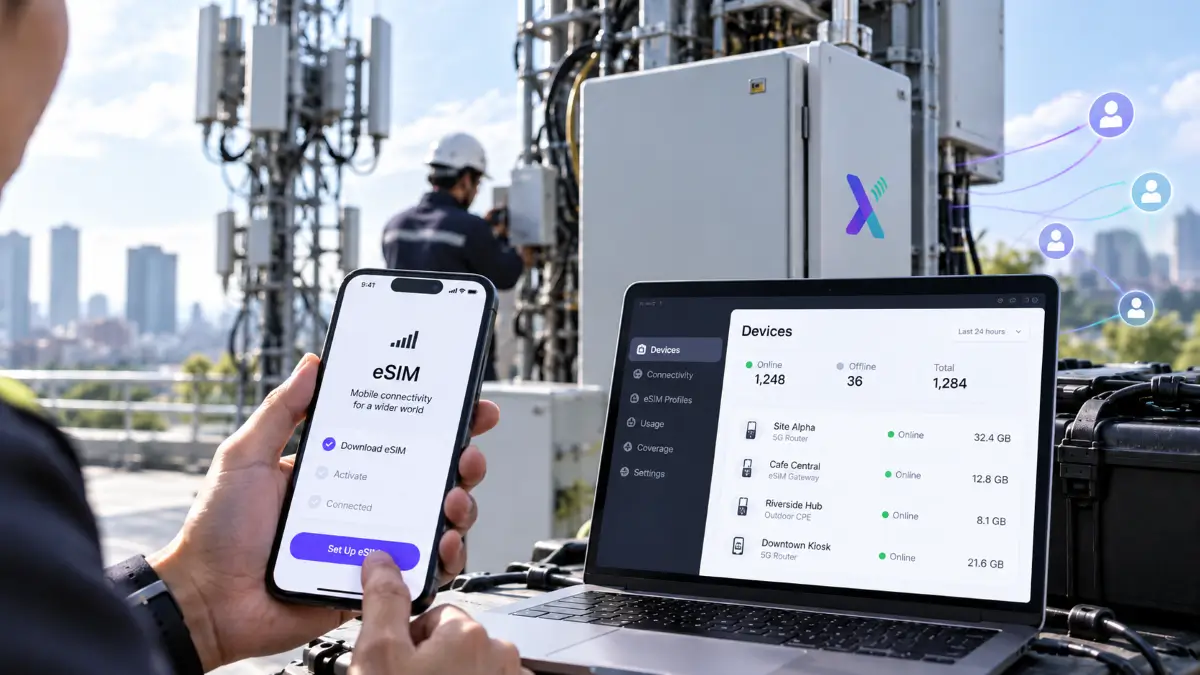
XPIN Network already has something useful to measure: people are using its connectivity products. In the first half of 2026, the project reported 100,000 new SIM and eSIM users. It also reported a 30% rise in eSIM orders and a 50% rise in activations. That gives this XPIN Review a better starting point than a project built only around a future roadmap.
The harder question is what caused that growth. XPIN mixes paid connectivity with token rewards, deposits, mining incentives, discounts and promotional campaigns. A $200,000 Binance Alpha trading competition is also running in September 2026. Strong activity is visible, but not all activity should be treated as organic demand for the network or the XPIN token.
That distinction drives this review. XPIN has a real eSIM product and a growing distribution network. What remains less clear is how much demand would survive with fewer rewards, and how much product growth creates lasting demand for XPIN itself.
XPIN Has a Real Product Before It Has a Token Story
XPIN’s clearest product is global connectivity. Its eSIM service covers more than 149 countries and regions, while the wider product plan includes PowerLink mobile hardware, XPIN BOX and base-station infrastructure. The network also uses automatic carrier selection to improve connectivity across supported locations.
This matters because the product can be understood without crypto. A traveler needs mobile data. A business may need connectivity across several regions. XPIN is trying to make that access easier while adding payments, rewards and decentralized identity around it.
That is different from decentralized compute. In our Akash Network review, demand comes from developers leasing CPU and GPU capacity. XPIN is closer to a consumer telecom product with a Web3 incentive layer.
The distinction is important. Real eSIM sales prove that somebody wants connectivity. They do not automatically prove that customers want decentralization or the XPIN token.
eSIM Growth Is Real, but the Numbers Need Context
XPIN’s H1 2026 report gives several useful operating signals. It reports 100,000 new SIM or eSIM users, eSIM orders up 30%, activations up 50%, and more than 30 new Web2 partners across several regions. It also lists familiar payment options such as Stripe, Apple Pay, Google Pay and Binance Pay.
Those figures are meaningful. An activation is a stronger signal than a social-media follower. A completed order is stronger than a wallet connection.
But the report does not disclose enough commercial detail to calculate the quality of that demand. It does not provide average revenue per user, gross margin, repeat-purchase rate or the share of eSIM orders funded by promotions.
That leaves an important evidence gap.
| Evidence | What It Shows | What It Does Not Prove |
|---|---|---|
| 100K new SIM/eSIM users | Product adoption increased | 100K recurring paying customers |
| +30% eSIM orders | More purchase activity | Higher profit or retention |
| +50% activations | More services reached actual use | Incentive-free demand |
| 30+ new Web2 partners | Distribution expanded | Large recurring partner revenue |
| 371,480 DePINscan devices | Large tracked network footprint | 371,480 paying customers |
The last number needs particular care. DePINscan currently tracks 371,480 active XPIN Network devices. That is useful infrastructure data, but a tracked device is not the same thing as a unique paying telecom customer.
Where DePIN Ends and Telecom Begins
XPIN describes itself as a decentralized wireless network. Parts of the design fit that description. Users can participate through hardware, token deposits, dNFTs and planned community infrastructure. XPIN also connects devices and identities to blockchain-based systems.
But the current connectivity product still depends on real-world telecom networks. An eSIM can switch between carrier networks, yet those towers, spectrum rights and backhaul systems are not suddenly decentralized because XPIN handles the customer layer.
This does not make the product fake. It simply defines what is actually decentralized today.
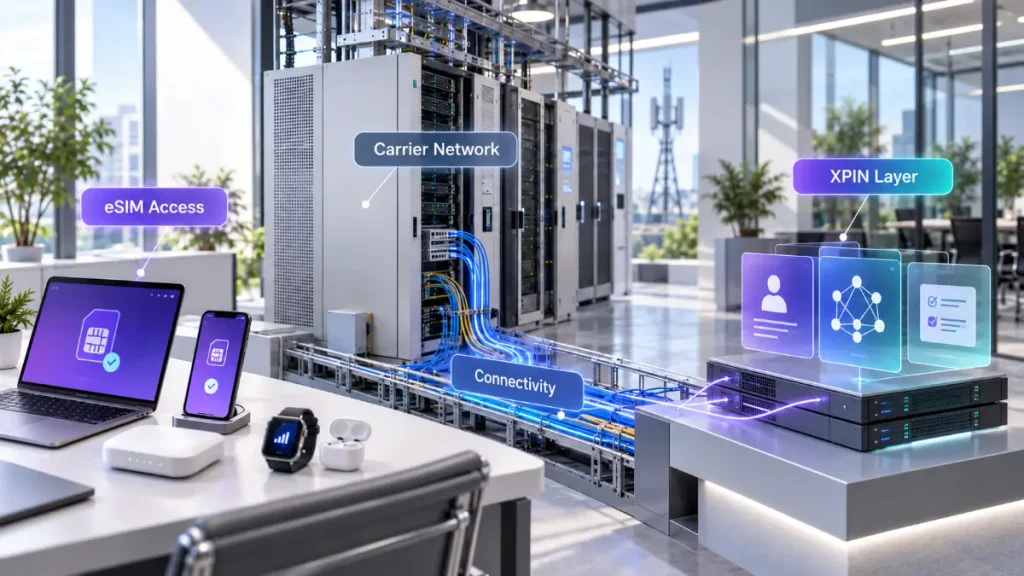
The strongest current case is therefore not ‘XPIN has replaced telecom operators’. It has not. A more defensible description is that XPIN is building a consumer connectivity layer that combines conventional mobile access with DePIN incentives, Web3 identity, hardware participation and token-based services.
That makes it closer to a hybrid infrastructure business than a pure blockchain network.
Does Product Usage Actually Create XPIN Demand?
This is the central token question. XPIN has several documented uses, including staking, network rewards, product discounts, PayFi payments, AI-agent services and governance. Ecosystem participants can also deposit XPIN into Incentive Hubs.
Ordinary connectivity can also be reached through familiar payment methods. XPIN’s H1 report lists Stripe, Apple Pay, Google Pay and Binance Pay as access routes. That reduces friction for customers, but it also weakens any simple claim that product growth must create matching XPIN demand.
More eSIM customers do not necessarily mean the same increase in XPIN purchases.
The token captures more value when users choose XPIN-based payments, lock tokens for deposits, use token-linked discounts, interact with network incentives or need XPIN for another service. The connection is less direct when someone simply pays for an eSIM using a card.
This is similar to the issue examined in our Vana review. A product can become easier to use by hiding blockchain friction. That can help adoption while making token demand less automatic.
XPIN’s Reward System Can Also Create Its Own Activity
XPIN does not only reward infrastructure operators. Its economic design encourages token deposits, mining participation, dNFT activity and long-term locking.
An activated Incentive Hub requires 20 million XPIN to be locked for four years. The system also offers flexible deposits and loyalty deposits. Rewards come from part of the allocated token supply, with annual output designed to decline over time.
That creates real token utility because participants have a reason to hold or lock XPIN. It also creates an analytical problem: reward-funded participation is not the same as customer-funded demand.
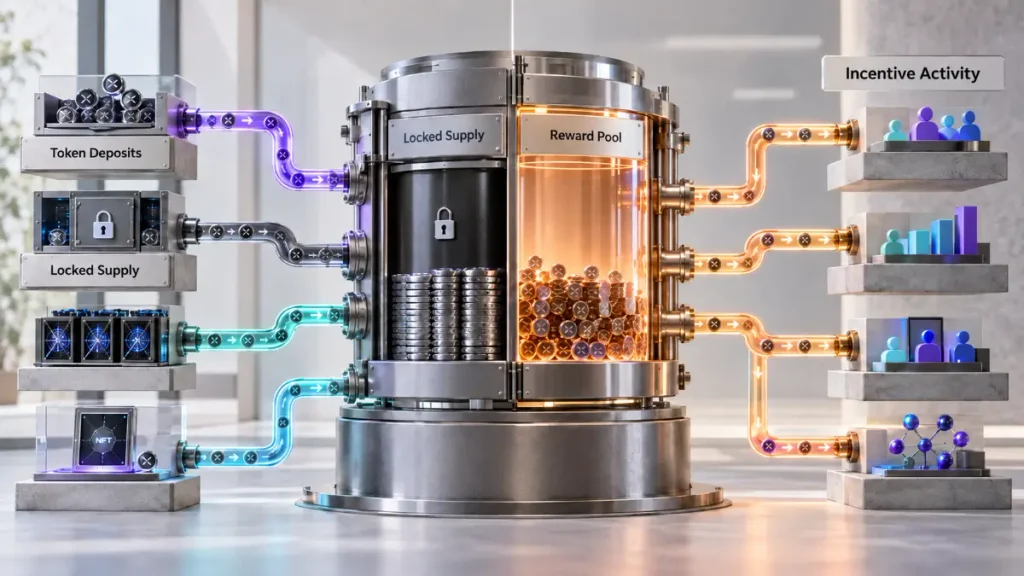
The XPIN website has advertised very high deposit-return figures, while the detailed documentation says displayed APY can change and should not be treated as guaranteed. More importantly, the documents explain that deposit incentives come from token allocations.
This means a high deposit total cannot be treated as network revenue.
The H1 report says more than 7 billion XPIN had been deposited. That is evidence of ecosystem participation. It does not tell us how much outside money entered the system through telecom customers.
Our Grass crypto review raises a related issue: large communities can be real while rewards still affect how much participation continues after incentives decline.
XPIN Tokenomics: 100B Supply and a Distribution Question
XPIN has a stated maximum supply of 100 billion tokens. As of September 10, 2026, CoinMarketCap reports 41,627,804,116 XPIN circulating, or roughly 41.6% of maximum supply. The figure can change as more allocated tokens enter circulation.
The official allocation is heavily weighted toward ecosystem growth.
| Allocation | Share | Published Release Structure |
|---|---|---|
| Ecosystem Incentives | 40% | 120 months, yearly halving |
| Team & Advisors | 20% | 6-month cliff, then 24-month linear vesting |
| Strategic Partners & Backers | 16% | 6-month cliff, then 15-month linear vesting |
| Marketing & Airdrop | 12% | 6-month linear vesting |
| Foundation | 8% | 12-month cliff, then 48-month linear vesting |
| Public Sale | 2% | TGE allocation |
| Liquidity | 2% | TGE allocation |
The 40% ecosystem allocation is the most important part. It funds mining, hardware participation, eSIM-related rewards, staking and other network incentives. That can help bootstrap adoption, but it also means a large part of the token economy is designed to pay people for participation.
XPIN’s published release schedule needs one important clarification. The documentation says the 100 billion supply is ‘produced’ over ten years, with annual output halving. BscScan shows that the current XPIN token contract was created with the entire 100 billion XPIN initial supply, while the verified contract does not expose a public mint function.
That suggests the ten-year schedule is best understood as distribution or reward release from an already created supply, rather than 100 billion tokens being freshly minted over ten years under this contract.
That distinction matters. Maximum supply may already exist on-chain while circulating supply rises gradually as allocated tokens enter the market.
The Binance Competition Can Distort the Demand Signal
As of September 10, 2026, XPIN is also inside a Binance Alpha trading competition worth $200,000 in token rewards.
The first promotion period runs from September 4 to 11, while the second runs from September 11 to 18. Rankings are based on XPIN buy volume, and the campaign also uses multipliers that reward certain trading behavior.
Readers can verify the current terms in the official Binance XPIN competition announcement.
This creates an obvious measurement problem. Traders currently have an extra reason to buy XPIN: winning rewards.
That does not make the volume invalid. The trades are real. But competition-driven volume should not be confused with long-term demand for connectivity, hardware or token utility.

The cleaner test begins after September 18.
If trading activity, deposits, eSIM purchases and token use remain strong after the promotion ends, the demand signal becomes more useful. If activity falls sharply, incentives were doing more of the work.
371,480 Devices Do Not Equal 371,480 Customers
The device count is one of XPIN’s strongest headline numbers. It is also easy to misuse.
DePINscan currently reports 371,480 active devices. That places XPIN among the larger wireless DePIN projects by tracked device count.
But several different things can drive network size. Hardware can be registered because rewards make participation attractive. eSIM-related endpoints can grow as promotions expand. Users can also participate without becoming high-value recurring customers.
The metric we need next is therefore not simply ‘more devices’.
Useful proof would connect those devices to data consumed, recurring service payments, uptime, geographic use and customer retention.
A DePIN network becomes commercially stronger when infrastructure exists because somebody repeatedly needs the service it provides.
Security Evidence Has a Clear Scope
XPIN does have third-party smart-contract review evidence.
Beosin audited XPIN-related Solidity contracts in January 2025. The report found two informational issues: redundant code and missing event triggering when certain key variables were changed. Both were marked Acknowledged, not fixed.
The more important limitation is scope.
The audit covered XPIN, OwnableUUPS and VirtualSim contracts tied mainly to NFT and auction functionality. It was not a blanket audit of every current eSIM system, token mechanism, hardware component or AI product.
The full scope can be checked in the Beosin XPIN Network security audit.
CertiK currently also labels XPIN as not audited by CertiK, while acknowledging third-party audit history. That difference matters. Monitoring or a security score should not be described as a CertiK smart-contract audit.
Security therefore looks better than ‘no audit’, but weaker than ‘the entire XPIN system has been independently audited’.
AI Agents and Hardware Still Need Commercial Proof
XPIN is expanding beyond eSIMs.
Xtella.AI is positioned as an AI-agent layer, while PowerLink combines connectivity with token mining and other network functions. The 2026 roadmap also points toward broader hardware deployment and later base-station infrastructure.
The marketing language is ahead of the evidence in some areas.
XPIN’s H1 report says Xtella.AI is being developed toward automated quoting, purchase, activation, renewal and settlement for AI agents. That wording matters: it describes a direction the system is building toward, not proof that large volumes of autonomous agents already purchase connectivity today.
This is where our Bittensor review provides a useful contrast. Calling something an AI network is less important than showing what the agents or models actually do and who pays for the output.
For XPIN, eSIM usage is currently easier to verify than AI-agent demand.
What Would Prove Sustainable XPIN Demand?
XPIN does not need another large headline number. It needs better separation between paid product demand and incentive-funded growth.
The strongest future evidence would be:
- recurring eSIM customers and repeat order rates after promotional campaigns.
- revenue or gross service spend separated from token deposits.
- the share of connectivity purchases paid through XPIN versus cards and other payment methods.
- active hardware carrying real data traffic rather than only earning rewards.
- token rewards compared with fees or outside customer spending.
- circulating-supply growth as ecosystem and team allocations unlock.
- continued trading activity after the Binance competition ends.
- real AI-agent connectivity purchases rather than only planned integrations.
These metrics would make the token-value question much easier to answer.
Verdict: Real Connectivity, Unproven Token Capture
XPIN is not an empty DePIN story. The eSIM product is live. The project reports real order and activation growth, has expanded its distribution network, and DePINscan tracks a large device footprint. Those are meaningful advantages.
The token case is less proven. XPIN has genuine utility through deposits, rewards, payments, discounts and ecosystem participation, but product access does not always require the token. At the same time, 40% of supply is allocated to ecosystem incentives, deposit yields are partly token-funded, and the current Binance campaign directly rewards trading activity.
That leaves one simple question: would XPIN’s users still buy connectivity, operate hardware and use the token if rewards became much smaller? The evidence is not strong enough to answer yes yet.
For now, XPIN looks like a real connectivity business wrapped in an aggressive incentive system. That is more credible than pure narrative growth, but commercial demand and token demand still need to be separated. The most useful evidence will come after incentives fade: repeat eSIM spending, real network traffic, outside revenue and token usage that continues without a large reward attached.
Frequently Asked Questions
XPIN Network is a consumer-focused DePIN project that combines global eSIM connectivity, wireless hardware, token incentives, decentralized identity and AI-related services.
XPIN provides real connectivity products, but its current eSIM service still relies on underlying mobile carrier infrastructure. Its decentralized layer is built around participation, hardware, identity, payments and incentives rather than replacing every telecom network beneath the service.
Not necessarily. XPIN supports token-based utility, but its reported payment options also include conventional routes such as Stripe, Apple Pay and Google Pay. Product growth therefore does not translate one-for-one into token purchases.
The published maximum supply is 100 billion XPIN. The current token contract was created with 100 billion tokens, while only part of that amount is currently counted as circulating.
No. XPIN documentation says deposit incentives are funded from allocated token supply. A large deposit balance therefore measures token participation, not telecom revenue.
Beosin completed a smart-contract audit in January 2025 and reported two informational findings. The audit covered a defined set of NFT and auction-related contracts, so it should not be treated as a complete audit of every current XPIN product.
Because it gives traders a temporary reward for generating XPIN buy volume. Until the campaign ends, trading activity contains an extra incentive component. Post-campaign activity will be a cleaner signal of persistent market demand.

Founder & Managing Editor of CryptosMedia. Zahid Hussain leads evidence-based crypto research covering tokenomics, security, governance, adoption, and risk.
CryptosMedia separates verified facts from interpretation, avoids buy/sell recommendations, and updates reviews when major evidence changes.