Sahara Crypto Scam: The Best Joke on Your Wallet

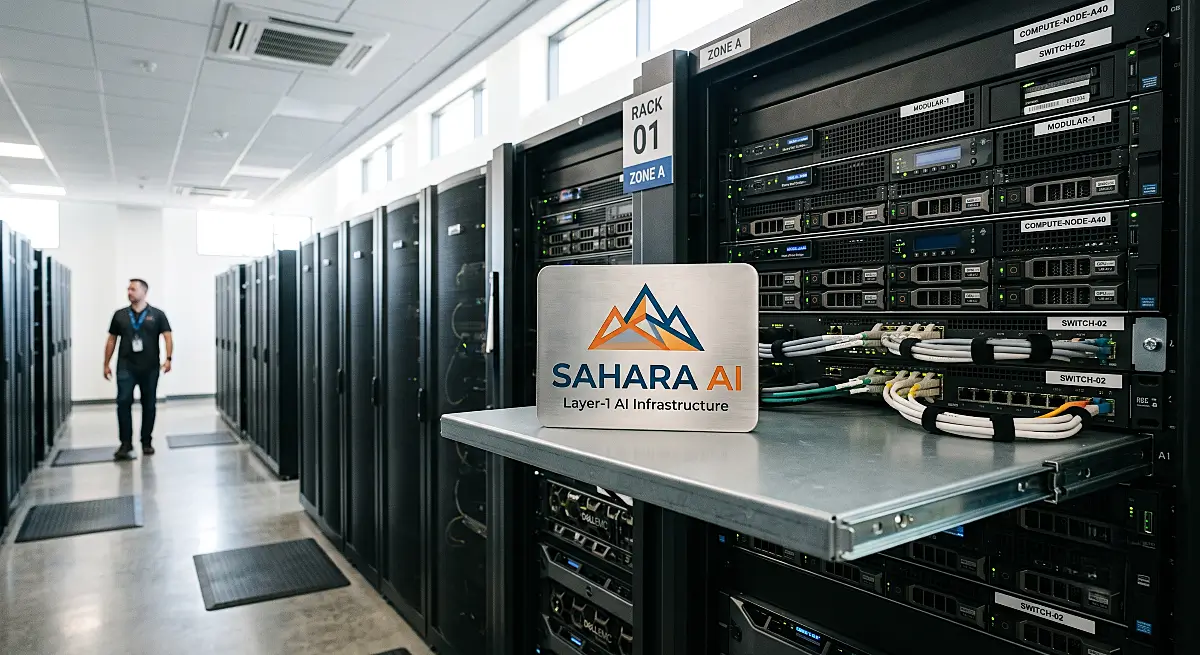
Physical metal badge displaying Sahara AI inside server room, forming core part of our investigation into Sahara Crypto Scam.

Sahara Crypto Scam is making massive noise in the market today. Every big influencer on Twitter is talking about it. They are selling you a very sweet dream of fast money. But we need to look at the cold reality of crypto investing. You work extremely hard for your cash. You need a solid reason before you invest anywhere in decentralized finance. We will look at raw blockchain data today. We will ignore all the paid marketing hype. Is this token a real opportunity or just a hidden rug pull trap? Let us find out. The Main Goal Behind the Project The development team says they are building a brand new network. They claim to take power away from big tech companies. Their main goal is to put machine learning directly on the blockchain. They want the public to own the data. They say the profits will be shared fairly among all users. They even released a tool called the Sorin agent. This is an autonomous app for smart crypto trading. You just type a command in plain English. The trading bot does all the hard work for you. It sounds like a perfect system on paper. But logic asks a very basic question. If this AI bot is so smart, why did the native coin crash by 50 percent? That is a massive warning sign for any crypto project. Familiar Code with Big Funding Venture capitalists love a good tech story. This crypto project raised a huge $50 million from big names. Binance Labs is one of their main backers. They call themselves the next big thing in Web3. They built their system using the Cosmos network. But when you check the real source code, it feels very cheap. The blockchain technology looks borrowed from older projects. The crypto market does not need another basic copy-paste smart contract. The narrative is strong, but the actual product is weak. Investors need real utility to hold a coin long-term. This altcoin token feels like decentralized debt. The Ugly Price Crash History We must trace the money to understand the real game.The digital asset market was completely out of control when this token launched.. People were blindly buying anything with an AI label. The hype was at an all-time high. The token price pumped hard to $0.1631 in July 2025. Regular buyers rushed in with high hopes. They thought they would become crypto millionaires overnight. They bought right at the top of the price chart. Then the early insiders completely ruined the party. On November 29, 2025, the market saw a massive dump. The token price dropped by 50 percent in just a few minutes. This was a classic exit strategy by the market makers. Small retail traders were trapped inside a burning building. They had to sell at a huge financial loss. Today, the token is sitting at $0.01338. That is a brutal 86 percent loss from the top. The trading chart is bleeding every single day. Project Name Total Market Cap Network Security Main Focus Area Sahara AI $67.59 Million 0/100 on BSC AI Economy Fetch.ai (FET) ~$2.5 Billion Audited and Safe Working AI Agents Bittensor (TAO) ~$3.8 Billion Fully Decentralized Machine Learning The Fake Network Fee Problem They boast heavily about having their own blockchain network. But the actual token trades on Ethereum and the BNB Smart Chain. This is a very clever marketing trick to fool crypto beginners. You are forced to pay third-party network gas fees. Ethereum transaction fees are always high. BNB is slightly cheaper but still takes a cut. The liquidity pool is also split badly across two different chains. This creates a terrible slippage problem. You lose a big chunk of your money the second you execute a decentralized trade. The spread takes your profit before you even start. This hidden crypto tax kills a normal day trader over time. You are basically paying network miners to lose your hard-earned money. Real Layer-1 blockchains do not have this massive liquidity issue. Failed Smart Contract Audits Our deep check into the smart contract shows a complete disaster. Independent crypto security companies ran tests on the code. They gave the BSC version a flat 0 out of 100. It completely failed the basic safety tests. The Ethereum contract barely survived with a score of 55. This code is full of dangerous security holes. Hackers can easily exploit it. Buying into the Sahara Crypto Scam is a massive financial gamble. The worst part is the hidden developer control. The developers did not renounce the contract ownership. They hold the master keys to the entire ecosystem. This means they can change the rules at any moment. They can increase the selling fees without asking the community. We also found a ‘Pausable’ function hiding in the code. This is a deadly trap for retail investors. They can hit a switch and freeze all your tokens. You will not be able to sell anything on the open market. Centralized Control and Elite Hype Sahara Labs is core company behind this operation. They claim to have elite partnerships with Microsoft and Amazon. But buying simple cloud server does not make you verified partner. There is no official mention of them on Amazon web press pages.While main founders like Sean Ren and Tyler Zhou are public, actual smart contract controls remain completely hidden. Fully public team means nothing if they still hold private keys to pause network. They can easily freeze your assets if system fails completely. Regular traders still carry all real financial risk. The Token Supply Death Spiral The math behind the token supply is very scary. The maximum supply cap is set at exactly 10 billion coins. That is a massive amount of virtual tokens. Right now, only 3.14 billion are trading in the open market. The rest are locked away tightly in private wallets. The early investors hold almost 60 percent of the entire supply. They did not buy these coins to hold them forever. They are … Read more

io net token Review: Genuine Tech or DePIN Hype?

io net token Review, capturing the actual technical infrastructure and operational environment of the protocol.

The io net token is turning heads in the decentralized physical infrastructure network sector, but smart researchers always verify the facts first. Many people buy assets because of social media hype, flashy slideshows, or big artificial intelligence keywords. My job is to look beneath the marketing promises, check the actual blockchain data, and find the real structural truth. We need to analyze whether this protocol solves a real-world enterprise problem, or if it exposes regular buyers to dangerous structural flaws. Let us open the on-chain data trackers, inspect the smart contract vulnerabilities, and look at who controls the ecosystem capital. The Core Technical Task of Decentralized Compute Networks The underlying system focuses on a major operational problem inside the modern artificial intelligence industry. Training advanced machine learning models requires a massive amount of computing infrastructure, and demand is doubling at an incredible pace. Centralized cloud provider monopolies like Amazon Web Services keep their top-tier graphics processing units fully booked. They also charge premium rates, which blocks smaller independent developers from building competitive software products. This project attempts to create an open market for computing power. It gathers idle, unused graphics processing units from commercial data centers, private computer networks, and crypto mining operations scattered around the globe. By clustering these separate hardware machines into a singular virtual network, it distributes computing power to teams who need it. The documentation claims this setup cuts cloud bills by up to 70 percent, offering an affordable solution for independent developers. Analyzing the Native Asset Utility Model A working hardware solution does not automatically mean the network token is a safe or stable asset. The network uses its native utility asset to handle internal payments, distribute hardware provider rewards, and execute governance votes. When an artificial intelligence developer rents cluster power, they settle the transaction fees using the system token. The hardware hosts who keep their high-end nodes online receive their programmatic network payouts in the same asset. This loop means the asset serves as the primary currency for the machine network. However, true utility depends on consistent network adoption rather than speculative exchange trading. If the platform fails to secure long-term enterprise clients who actually use the compute clusters, the token becomes a purely speculative instrument. Regular user must separate raw hardware operations from the open market tokenomics. Tracking the Market History and Cyclical Volatility The token smart contract officially launched on March 20, 2024, right when global retail interest in artificial intelligence tokens reached its peak. Speculative capital rushed into the early trading pools, creating intense upward price momentum. By June 12, 2024, the market exchange price soared to an all-time high of $6.44. Early buyers believed the upward trajectory would last forever, but macro market shifts quickly corrected the irrational asset valuations. A devastating multi-year downward trend took hold, stripping the protocol of its speculative market value. By February 2026, the token collapsed to an absolute cyclical bottom of $0.0011, marking a severe 98.1 percent valuation decline. This massive crash shows the extreme volatility associated with early-stage infrastructure assets. On July 10, 2026, market data tracked the token trading around $0.1226, showing a minor recovery from its historical floor. While the current price action is higher than the absolute bottom, the overarching macro chart shows massive long-term losses for early retail buyers. Past performance never guarantees future results, and historical data highlights the danger of buying into peak market hype. Technical Infrastructure and Smart Contract Safety The entire technical framework operates on the Solana blockchain network to settle rewards on an hourly basis. While Solana provides high transaction throughput and low native execution costs, it introduces a hard infrastructure dependency. Any operational network congestion or consensus disruptions on the underlying Solana chain directly impact the processing and settlement speeds of the compute network. Automated smart contract security evaluations reveal critical vulnerabilities within the token code, generating an absolute safety score of 0 out of 100. I verified that the smart contract code contains an active developer backdoor configuration. This permission set allows the deployer account to alter token parameters and minting details arbitrarily without community consensus. Furthermore, on-chain tracking tools identified 13 distinct, interconnected trading groups executing synchronized buying and selling patterns. This behavior indicates systematic volume coordination designed to alter natural open-market price discovery. Tokenomics, Whale Concentration, and Liquidity Realities The project features a highly restricted circulating supply model alongside concentrated ownership metrics. Only 39.68% of the total token supply moves freely within the public market, which translates to a circulating figure of 317.48 million tokens. On-chain ledger verification confirms that the top 10 individual network wallets control exactly 63.45% of the entire token supply, giving an insular group of whales absolute administrative and market dominance. Comparative Architecture Matrix Metric / Feature io.net (IO) Render (RNDR) Filecoin (FIL) Market Capitalization $38.92 Million Over $2 Billion Over $3 Billion Core Network Job AI GPU Computing Distributed 3D Rendering Decentralized Data Storage Smart Contract Safety 0 / 100 Audit Score Highly Audited / Safe Mature / Audited Code Supply Concentration 63.45% in Top 10 Wallets Broadly Decentralized Distributed Ecosystem This extreme concentration creates a continuous liquidity threat. On July 9, 2026, the aggregate market capitalization sat at $38.92 million. Because the top 10 wallets hold a majority share of the asset value, any coordinated liquidity exit by these whales would completely overwhelm the available purchasing books, leading to an immediate collapse of the asset’s market value. This risk intensifies when analyzing decentralized exchange liquidity pools. While daily aggregate trading volumes appear high at a reported $74.57 million across centralized order books, decentralized routing pools are almost entirely vacant. The Raydium pool contains an inactive base of only 26,406 USDC alongside minimal SOL pairings, while the Orca routing system registers a negligible 3.44 SOL. This extreme gap indicates that the vast majority of the reported daily trading volume is artificial wash trading, leaving no substantial on-chain financial backup to support sudden market sell-offs. The Bottom Line for Readers The core technology concept … Read more

Theta Network: Decentralized AI Or Tech Corporate Trap?

Physical burden of proof: Separating the polished corporate marketing hype from the unyielding reality of the network's tokenomics.

The Theta Network coordinates decentralized cloud infrastructure for heavy AI, media, and entertainment workloads today. Crypto projects often look remarkably simple from a high-level marketing perspective. A sleek logo, an ascending chart, and a passionate community can hide structural flaws. The far more difficult task is looking past the branding to see whether the underlying architecture holds up under rigorous inspection. This technical audit provides a cold, research-driven look at the project’s dual-token system and network stability. My Research Method For This Technical Audit Core Ecosystem Architecture and Utility Mitch Liu and Jieyi Long founded this infrastructure platform in 2018. The project raised early venture capital from global entities to solve the last-mile delivery bottlenecks of high-resolution video streaming. To give the ecosystem added industry credibility, the team secured a notable advisory board including the co-founders of YouTube and Twitch. The network operates as a dual system comprised of two distinct layers. Hierarchical Consensus Framework Many Layer 1 blockchains struggle with the traditional trilemma of decentralization, security, and scalability. This platform relies on a hierarchical consensus framework to split network responsibilities. Resource-Oriented Micropayment Pools Recording every single tiny peer-to-peer transaction on-chain would immediately clog the network and erase profitability through high gas fees. The protocol uses a custom off-chain payment structure to scale micro-payments. Theta EdgeCloud: The Pivot To AI GPU Compute The real-world economics of streaming video over pure peer-to-peer networks proved incredibly difficult to scale commercially. Consequently, the project has executed a massive strategic shift toward highly trending decentralized physical infrastructure networks. Theta EdgeCloud operates as the cornerstone of this hybrid cloud computing platform. Theta Network Tokenomics And Supply Structure Evaluating the dual-token architecture is crucial for understanding how value accrues within the ecosystem. Staking and network utility are separated into two distinct assets to manage volatile transaction demands. Supply and Staking Metric Verified Blockchain Metrics Why It Matters For Holders THETA Max Supply 1,000,000,000 Tokens The absolute hard cap on governance assets with zero dilution risk. THETA Circulating Supply 1,000,000,000 Tokens One hundred percent of the supply is fully circulating in public hands. TFUEL Supply Model Inflationary Utility Token Initial supply of 5 billion increases annually to pay staking rewards. Minimum Guardian Stake 1,000 THETA Coins The entry barrier required for community nodes to secure block finality. Centralization and Governance Control While marketing materials use highly decentralized language, the structural reality points to a significant concentration of authority. The first tier of consensus is fully gatekept by the Enterprise Validator Council, which remains capped at a very small number of corporate entities. Regular users cannot propose blocks or meaningfully influence state transitions, they must rely entirely on these corporate validators. Furthermore, all core development, software clients, and strategic roadmaps are dictated by Theta Labs, Inc. The average token holder has zero on-chain mechanisms to override decisions made by the core company. Real Transaction Volumes and Node Performance The developer and node operator ecosystems present a highly mixed picture when cross-referencing community sentiment against on-chain stats. The network boasts over 30,000 distributed nodes, but community reports highlight persistent software instability. Operators frequently complain of their edge hardware getting stuck on jobs or randomly dropping offline. Even the robust delegated nodes suffer from uptime issues, multiple prominent delegated guardian nodes went completely offline for over a month in early 2026. Independent on-chain analysis reveals a quiet network footprint, where the net absorption rate of TFUEL only sits around 10 to 16 percent of daily block issuance. This means the token continues to face inflationary supply pressures under quiet network conditions. Verified Strengths and Theta Network Risks Web3 Infrastructure Competitor Matrix Common Questions About The Ecosystem Zahid Hussaincryptosmedia.com

EigenCloud Token: The Agentic Era Cloud Reality

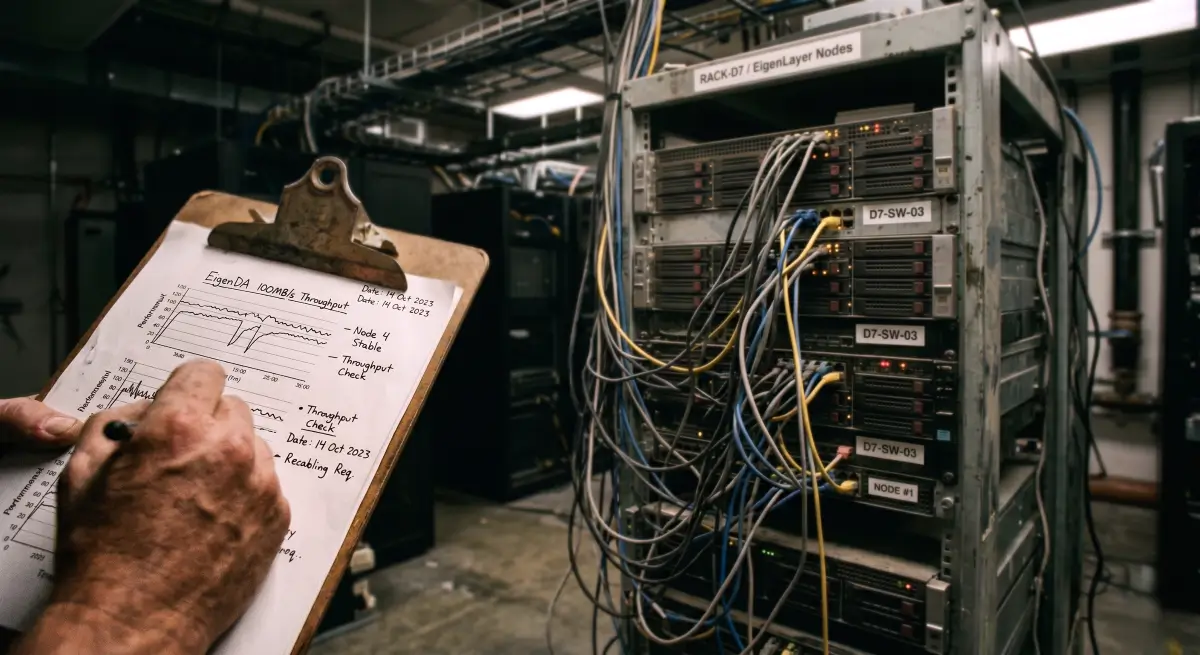
Hand holding a performance clipboard next to an open server rack with blue and yellow cables, verifying the physical EigenCloud Token network setup.

This independent analysis breaks down the core hardware and cryptographic framework powering the EigenCloud Token ecosystem. While traditional cloud environments operate on opaque security promises, this verifiable cloud introduces strict cryptoeconomic guarantees tailored for the Agentic Era. This analysis bypasses marketing narratives to verify on-chain token distribution, smart contract vulnerabilities, and the systemic risks inherent to its supply structure. What Sets The EigenCloud Token Apart This independent EigenCloud review examines a protocol built specifically for autonomous economic actors. AI agents are evolving rapidly past simple chatbots; they now hold real assets and execute direct on-chain payments. However, these agents require verifiable trust to function safely, as traditional servers cannot cryptographically prove what code is actually running. EigenCloud solves this structural flaw utilizing advanced Ethereum restaking primitives. Hardware Integration And Trust The system utilizes Google Cloud Confidential Space and Intel TDX environments. Developers can deploy AI agents with cryptographic proofs of identity. This hardware-software combination guarantees secure, isolated, and verifiable execution at scale. The Evolution Of EigenDA V2 The network infrastructure has grown to support massive Web3 applications, with the launch of EigenDA V2 marking a major performance milestone. Operating live on the mainnet, this data layer delivers a massive throughput of 100 MB/s. Official documentation verifies this speed is 75x faster than its closest competitor, unlocking true cloud-scale data availability for rollups. EigenCompute And EigenAI Tools The protocol introduced EigenCompute to protect standard applications, adding cryptographic trust to software with zero code changes and allowing secure execution across any language. Furthermore, the EigenAI release enables deterministic inference. AI agents yield exact, verifiable outputs every single time, preventing unpredictable or unauthorized financial decisions. Quantitative Market Performance Evaluating quantitative metrics is mandatory before any asset exposure. The EIGEN token is trading between $0.176 and $0.18, maintaining a circulating market cap near $139 Million. While a massive $4.39 Billion Total Value Locked (TVL) backs this ecosystem, the price action remains extremely volatile for retail buyers. The asset sits 96.88% below its historical peak. Verified Tokenomics And Supply Metrics Tokenomics Metric Verified Supply Facts Current Price $0.176 – $0.18 All Time High $5.65 Price Drop 96.88% Below Peak Circulating Market Cap $130.9M – $139M Ecosystem TVL $4.39 Billion Top 10 Holders Control 43% of Supply Whale Concentration 0.09% Hold 93.48% of Supply Severe Price Depreciation The token hit an all-time high of $5.65 back in December 2024. This massive structural drop indicates weak historical price retention for early holders and massive token emission impact. Token Concentration And Whale Threats The EigenCloud token distribution exposes a highly centralized supply structure. Whales make up only 0.09% of all holders today, yet they possess 93.48% of the total market cap. Furthermore, the top 10 holders control over 43% of the total supply. This heavy concentration creates a permanent dumping risk, where retail investors face severe dilution if major wallets distribute their holdings. Security And Smart Contract Audit An automated Token Sniffer scan flags the asset with a score of 60/100. While the asset has adequate liquidity on decentralized exchanges like Uniswap V3, serious smart contract risks require immediate attention. The developers utilize a transparent but highly centralized upgradable proxy contract pattern. The creators have not renounced ownership of the contract. Ownership Control Risks The active owner can pause trading, modify core rules, or change network fees at will. This level of control nullifies true decentralization. Total caution is required when interacting with unrenounced upgradable proxies. EigenCloud Token Pros And Cons Core Strengths: Red Flags And Risks: The Veteran Observation The hard facts prove this verifiable cloud is groundbreaking technology. It provides neutral cryptographic verification for developers building autonomous AI agents, and its trusted execution environments make it best-in-class. However, retail token investors must tread carefully. The extreme token concentration and unrenounced upgradable smart contracts create substantial systemic risks. Keep your focus on the data layer adoption instead of short-term marketing hype. Zahid Hussaincryptosmedia.com

Heurist AI Token Analysis: The Brutal Truth About Crypto Agents

Stack of GPUs processing Heurist AI token data

Introduction And Context I remember staring at my screen, late at night, back in April 2026. At that time, the price of the Heurist AI token had just hit its absolute bottom. It dropped to a fraction of a penny. Because of this, i spent hours digging through the blockchain data. i was searching for answers, trying to see if this project was completely dead. Today, however, the price has bounced back slightly. You might feel lost, looking at these wild charts. But we have all been there. So, let me give you solid support, through the raw facts, so you can find your clear way. The YMYL Safety Check First, this is my personal analysis, and absolutely not financial advice. We must protect our capital first, always. So, i looked into the team behind the curtain. Frank He and Jiewen Wang are real people. In fact, they have been leading this project since 2024. They even secured solid seed funding early on. But here is the brutal reality check. This is the truth you need to hear before you put a single dollar in. Specifically, i checked their security rating on CertiK, and it sits at a terrible 3.7 score. Therefore, you need to tread carefully here. The Core Problem And Solution You know how standard AI models work. They completely hallucinate when you ask them about crypto. Basically, they are blind to the blockchain. Because of this, Heurist saw this massive gap. As a result, they built a decentralized cloud, specifically for crypto AI. They aggregate computing power to run agents. These are agents that actually understand on-chain data and wallet histories. So, they give you real answers instead of guesses. How It Works ELI5 Style Think of it like hiring a specialized accountant for your crypto business. Instead of a regular intern who just guesses the numbers, Ask Heurist acts as your trading copilot. To do this, it uses the Heurist Mesh. This is basically a technical hub. In other words, it is a place where AI agents can buy specific financial skills, and use tools to do the heavy lifting for you. You just tell it what you need, and then the invisible plumbing handles the rest. Heurist AI Token: Tokenomics Reality Check Now, this is where we need to be strictly logical. The total maximum supply sits at one billion HEU tokens. Right now, though, the self reported circulating supply is only around 110 million tokens. Worse still, CoinMarketCap has not even verified these numbers. This means nearly 90 percent of the tokens are still locked away. Due to this, heavy inflation is coming, and we have to be ready. After all, a project cannot sustain its value if millions of new tokens are constantly dumping on the active buyers. Heurist AI Token Forensic Data Matrix Technical Metric Current Reality Project Impact Security rating 3.7 CertiK score Critical risk for smart contracts Circulating supply ~110 million HEU Unverified by major trackers Maximum supply 1 billion HEU Massive future inflation Enterprise backing Google Cloud grant Strong infrastructure validation Real world utility Active node network High hardware participation Heurist AI Token Brutal Pros And Cons Strong Points Red Flags Competitive Analysis General AI providers just cannot compete directly in this niche. Primarily, they lack native integrations with decentralized physical infrastructure networks. Heurist is building a system where their agents can buy services autonomously. Still, the artificial intelligence crypto sector is very crowded. If Heurist fails to maintain its specific edge in agent commerce, traditional big tech could easily crush them with sheer computing volume. Final Expert Verdict On The Heurist AI Token In the end, there is real hope here, but only if you respect the risks. The technology and the ecosystem integrations are incredibly solid. Having major cloud infrastructure backing your vision is no joke. But as an investment vehicle, the Heurist AI token itself is highly risky right now. Because of the low security score, and massive upcoming token unlocks, you should wait for better on-chain clarity before committing serious capital. Stay sharp, protect your portfolio, and always verify the data yourself. Zahid Hussaincryptosmedia.com