Sahara Crypto Scam: The Best Joke on Your Wallet

Physical metal badge displaying Sahara AI inside server room, forming core part of our investigation into Sahara Crypto Scam.

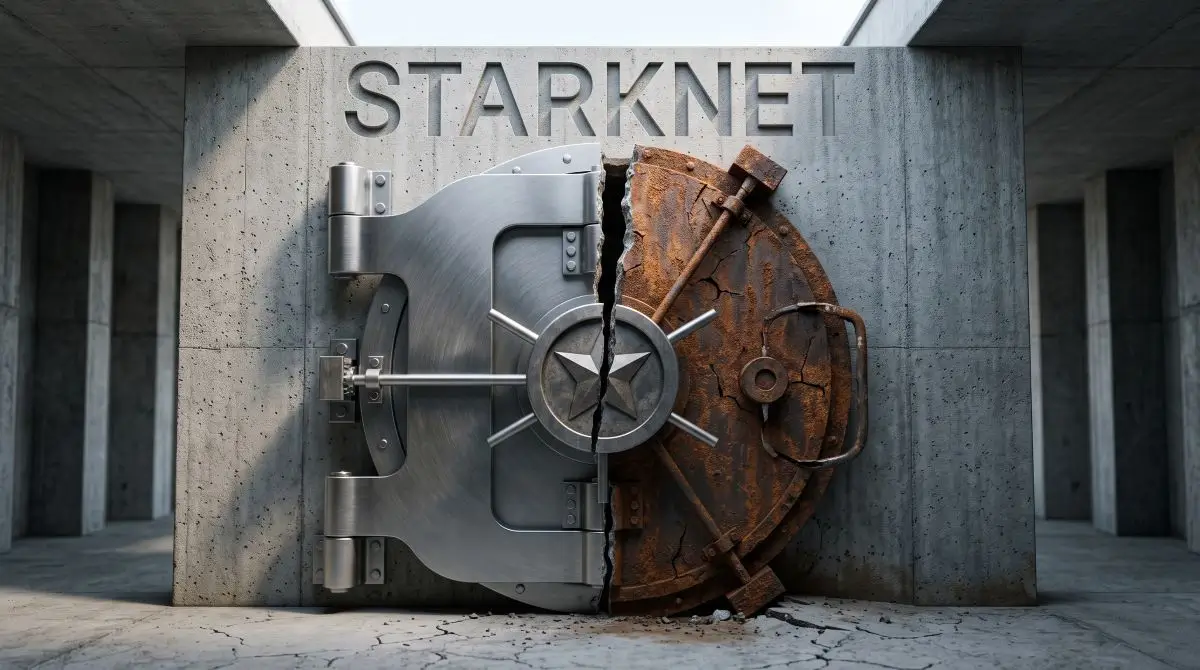
Sahara Crypto Scam is making massive noise in the market today. Every big influencer on Twitter is talking about it. They are selling you a very sweet dream of fast money. But we need to look at the cold reality of crypto investing. You work extremely hard for your cash. You need a solid reason before you invest anywhere in decentralized finance. We will look at raw blockchain data today. We will ignore all the paid marketing hype. Is this token a real opportunity or just a hidden rug pull trap? Let us find out. The Main Goal Behind the Project The development team says they are building a brand new network. They claim to take power away from big tech companies. Their main goal is to put machine learning directly on the blockchain. They want the public to own the data. They say the profits will be shared fairly among all users. They even released a tool called the Sorin agent. This is an autonomous app for smart crypto trading. You just type a command in plain English. The trading bot does all the hard work for you. It sounds like a perfect system on paper. But logic asks a very basic question. If this AI bot is so smart, why did the native coin crash by 50 percent? That is a massive warning sign for any crypto project. Familiar Code with Big Funding Venture capitalists love a good tech story. This crypto project raised a huge $50 million from big names. Binance Labs is one of their main backers. They call themselves the next big thing in Web3. They built their system using the Cosmos network. But when you check the real source code, it feels very cheap. The blockchain technology looks borrowed from older projects. The crypto market does not need another basic copy-paste smart contract. The narrative is strong, but the actual product is weak. Investors need real utility to hold a coin long-term. This altcoin token feels like decentralized debt. The Ugly Price Crash History We must trace the money to understand the real game.The digital asset market was completely out of control when this token launched.. People were blindly buying anything with an AI label. The hype was at an all-time high. The token price pumped hard to $0.1631 in July 2025. Regular buyers rushed in with high hopes. They thought they would become crypto millionaires overnight. They bought right at the top of the price chart. Then the early insiders completely ruined the party. On November 29, 2025, the market saw a massive dump. The token price dropped by 50 percent in just a few minutes. This was a classic exit strategy by the market makers. Small retail traders were trapped inside a burning building. They had to sell at a huge financial loss. Today, the token is sitting at $0.01338. That is a brutal 86 percent loss from the top. The trading chart is bleeding every single day. Project Name Total Market Cap Network Security Main Focus Area Sahara AI $67.59 Million 0/100 on BSC AI Economy Fetch.ai (FET) ~$2.5 Billion Audited and Safe Working AI Agents Bittensor (TAO) ~$3.8 Billion Fully Decentralized Machine Learning The Fake Network Fee Problem They boast heavily about having their own blockchain network. But the actual token trades on Ethereum and the BNB Smart Chain. This is a very clever marketing trick to fool crypto beginners. You are forced to pay third-party network gas fees. Ethereum transaction fees are always high. BNB is slightly cheaper but still takes a cut. The liquidity pool is also split badly across two different chains. This creates a terrible slippage problem. You lose a big chunk of your money the second you execute a decentralized trade. The spread takes your profit before you even start. This hidden crypto tax kills a normal day trader over time. You are basically paying network miners to lose your hard-earned money. Real Layer-1 blockchains do not have this massive liquidity issue. Failed Smart Contract Audits Our deep check into the smart contract shows a complete disaster. Independent crypto security companies ran tests on the code. They gave the BSC version a flat 0 out of 100. It completely failed the basic safety tests. The Ethereum contract barely survived with a score of 55. This code is full of dangerous security holes. Hackers can easily exploit it. Buying into the Sahara Crypto Scam is a massive financial gamble. The worst part is the hidden developer control. The developers did not renounce the contract ownership. They hold the master keys to the entire ecosystem. This means they can change the rules at any moment. They can increase the selling fees without asking the community. We also found a ‘Pausable’ function hiding in the code. This is a deadly trap for retail investors. They can hit a switch and freeze all your tokens. You will not be able to sell anything on the open market. Centralized Control and Elite Hype Sahara Labs is core company behind this operation. They claim to have elite partnerships with Microsoft and Amazon. But buying simple cloud server does not make you verified partner. There is no official mention of them on Amazon web press pages.While main founders like Sean Ren and Tyler Zhou are public, actual smart contract controls remain completely hidden. Fully public team means nothing if they still hold private keys to pause network. They can easily freeze your assets if system fails completely. Regular traders still carry all real financial risk. The Token Supply Death Spiral The math behind the token supply is very scary. The maximum supply cap is set at exactly 10 billion coins. That is a massive amount of virtual tokens. Right now, only 3.14 billion are trading in the open market. The rest are locked away tightly in private wallets. The early investors hold almost 60 percent of the entire supply. They did not buy these coins to hold them forever. They are … Read more

Theta Network: Decentralized AI Or Tech Corporate Trap?

Physical burden of proof: Separating the polished corporate marketing hype from the unyielding reality of the network's tokenomics.

The Theta Network coordinates decentralized cloud infrastructure for heavy AI, media, and entertainment workloads today. Crypto projects often look remarkably simple from a high-level marketing perspective. A sleek logo, an ascending chart, and a passionate community can hide structural flaws. The far more difficult task is looking past the branding to see whether the underlying architecture holds up under rigorous inspection. This technical audit provides a cold, research-driven look at the project’s dual-token system and network stability. My Research Method For This Technical Audit Core Ecosystem Architecture and Utility Mitch Liu and Jieyi Long founded this infrastructure platform in 2018. The project raised early venture capital from global entities to solve the last-mile delivery bottlenecks of high-resolution video streaming. To give the ecosystem added industry credibility, the team secured a notable advisory board including the co-founders of YouTube and Twitch. The network operates as a dual system comprised of two distinct layers. Hierarchical Consensus Framework Many Layer 1 blockchains struggle with the traditional trilemma of decentralization, security, and scalability. This platform relies on a hierarchical consensus framework to split network responsibilities. Resource-Oriented Micropayment Pools Recording every single tiny peer-to-peer transaction on-chain would immediately clog the network and erase profitability through high gas fees. The protocol uses a custom off-chain payment structure to scale micro-payments. Theta EdgeCloud: The Pivot To AI GPU Compute The real-world economics of streaming video over pure peer-to-peer networks proved incredibly difficult to scale commercially. Consequently, the project has executed a massive strategic shift toward highly trending decentralized physical infrastructure networks. Theta EdgeCloud operates as the cornerstone of this hybrid cloud computing platform. Theta Network Tokenomics And Supply Structure Evaluating the dual-token architecture is crucial for understanding how value accrues within the ecosystem. Staking and network utility are separated into two distinct assets to manage volatile transaction demands. Supply and Staking Metric Verified Blockchain Metrics Why It Matters For Holders THETA Max Supply 1,000,000,000 Tokens The absolute hard cap on governance assets with zero dilution risk. THETA Circulating Supply 1,000,000,000 Tokens One hundred percent of the supply is fully circulating in public hands. TFUEL Supply Model Inflationary Utility Token Initial supply of 5 billion increases annually to pay staking rewards. Minimum Guardian Stake 1,000 THETA Coins The entry barrier required for community nodes to secure block finality. Centralization and Governance Control While marketing materials use highly decentralized language, the structural reality points to a significant concentration of authority. The first tier of consensus is fully gatekept by the Enterprise Validator Council, which remains capped at a very small number of corporate entities. Regular users cannot propose blocks or meaningfully influence state transitions, they must rely entirely on these corporate validators. Furthermore, all core development, software clients, and strategic roadmaps are dictated by Theta Labs, Inc. The average token holder has zero on-chain mechanisms to override decisions made by the core company. Real Transaction Volumes and Node Performance The developer and node operator ecosystems present a highly mixed picture when cross-referencing community sentiment against on-chain stats. The network boasts over 30,000 distributed nodes, but community reports highlight persistent software instability. Operators frequently complain of their edge hardware getting stuck on jobs or randomly dropping offline. Even the robust delegated nodes suffer from uptime issues, multiple prominent delegated guardian nodes went completely offline for over a month in early 2026. Independent on-chain analysis reveals a quiet network footprint, where the net absorption rate of TFUEL only sits around 10 to 16 percent of daily block issuance. This means the token continues to face inflationary supply pressures under quiet network conditions. Verified Strengths and Theta Network Risks Web3 Infrastructure Competitor Matrix Common Questions About The Ecosystem Zahid Hussaincryptosmedia.com

Render Network: Real AI Utility Or Market Hype?

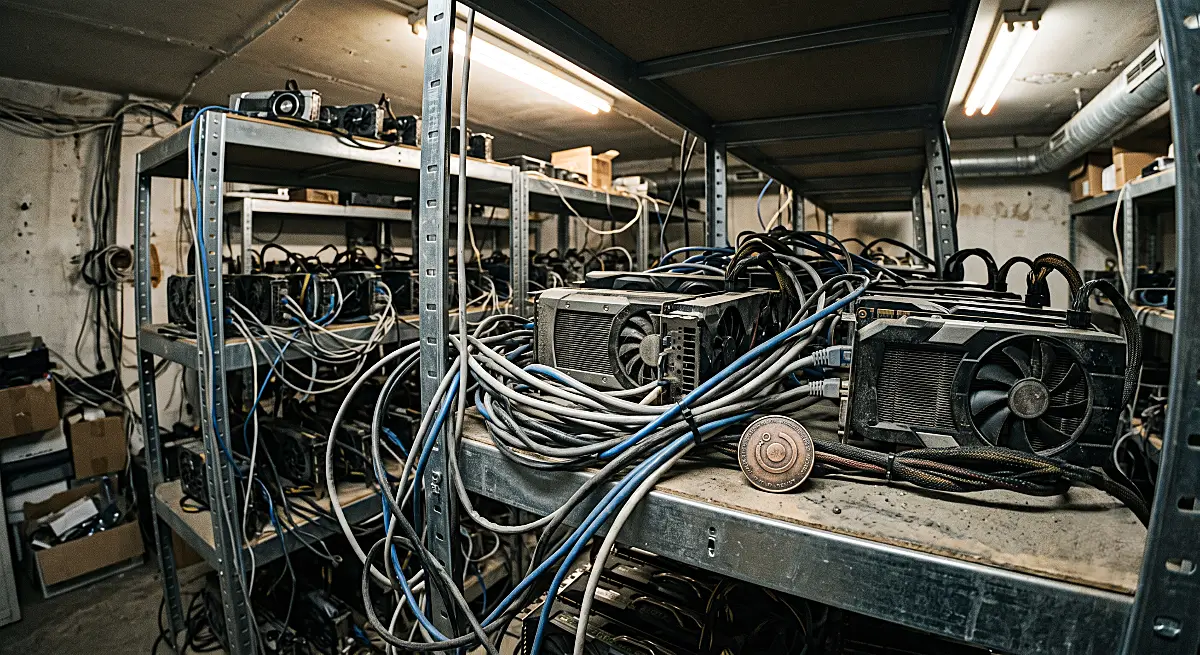
Tarnished Render Network metallic coin resting on dusty industrial server racks featuring exposed graphics processing units and tangled data cables.

The Render Network bypasses speculative noise to solve a massive hardware bottleneck. Crypto projects often look simple from the outside like a logo, a chart, or a short promise. The global demand for high-end visual processing power is skyrocketing. This is driven by 3D animation, gaming, and AI model training. Digital creators traditionally invested in expensive hardware or paid premium prices to centralized cloud providers. This platform attempts to build a decentralized peer-to-peer marketplace that aggregates idle GPUs globally. How I Audited The Render Network Project Evaluating native documentation, technical design files, and on-chain transaction logs helped me audit this project. I systematically verified token utility, supply structure, corporate governance, and security architecture. All market figures are treated as time-sensitive, checked strictly on the designated date. The Core Solution: Balancing The GPU Shortage At its core, the platform functions as an ‘Airbnb’ for computer graphics power. It establishes a two-sided marketplace to balance GPU supply and demand. The software splits large projects into microscopic pieces and distributes them across hundreds of idle GPUs globally. Strategic Partnerships And Software Integration The platform maintains deep connections with corporate technology leaders through OTOY, Inc. OTOY optimized its OctaneX software specifically for Apple Silicon M-series chips. Apple featured OctaneX during major keynote presentations. This positions the protocol to serve as a background processing engine for spatial computing products. The platform architecture is also compiled around NVIDIA CUDA technology. It acts as a secondary market aggregator, pooling consumer-grade graphics cards into an enterprise network. The project recently completed a full technical migration to the Solana blockchain. Solana provides the sub-second execution speeds required for micro-payments. Token Utility And The Burn-And-Mint Economy The native token coordinates payments through a closed economic system. Creators pay to buy GPU compute cycles, while node operators receive compensation for providing hardware power. The protocol uses a custom Burn-and-Mint Equilibrium (BME) model. It permanently burns a portion of the tokens used to pay for jobs. Concurrently, it mints new tokens to distribute to the node operators as reward emissions. If market demand for GPU power is high, more tokens are burned than minted. Render Network Tokenomics And Supply Structure I analyzed the core tokenomic statistics using verified on-chain metrics. Tokenomics Metric Verified Data Why It Matters Max Supply 644,168,762 Tokens The absolute hard cap on the total number of tokens. Total Supply 533,532,274 Tokens Tokens minted minus those verifiably burned. Circulating Supply 518,772,101 Tokens The amount currently circulating in public hands. Render Network Security Audit And Centralization Risks A prominent risk factor identified during my blockchain analysis is the severe concentration of token holdings. The Top 100 holders control over 95 percent of the legacy ERC-20 token supply. The single largest wallet is the official Wormhole Token Bridge. It holds roughly 84 percent of the total supply. While this is a locking contract safeguarding tokens bridged to Solana, it means the token economy is highly dependent on the security of the Wormhole multi-sig bridge. Any exploit affecting this cross-chain bridge could severely impact the token collateralization. How It Stacks Up Against Competitors The decentralized physical infrastructure network (DePIN) sector features several projects targeting GPU aggregation. Metric Render Network io.net (IO) Bittensor (TAO) Category DePIN GPU Compute Decentralized GPU Clusters Decentralized ML Models Supply Model Burn-and-Mint Fixed with Buybacks Halving-Based Block Emission Blockchain Solana Solana Custom Substrate Blockchain Frequently Asked Questions What is the difference between RNDR and RENDER? RNDR is the legacy ERC-20 utility token hosted on Ethereum, while RENDER is the new utility token hosted on the Solana blockchain. Does the network have a fixed maximum supply? Yes. The maximum supply is strictly capped at 644,168,762 tokens. Does this text give investment advice? No. This analysis does not provide buy, sell, hold, or trading recommendations. Readers must perform independent research before committing capital to any crypto asset. The Bottom Line For Readers The platform presents one of the most mature use cases in the decentralized compute sector. Its software integration with Apple OctaneX provides structural utility that sets it apart from speculative meme coins. However, the structural reliance on the Wormhole Token Bridge remains a concentrated security risk. The long-term value depends entirely on whether real-world compute demand can consistently outpace the minting emission schedules. Zahid Hussaincryptosmedia.com

Circle USD Coin Review: Reserve Utility and Contract Risks

Professional hand holding shiny physical Circle USD Coin in modern corporate office workspace

While many stablecoins rely on aggressive market dominance or opaque backing, Circle’s USD Coin (USDC) has built its entire reputation on strict regulatory compliance and institutional trust. For digital asset managers and DeFi participants, the true test of USDC isn’t just its liquidity, but the transparent auditability of its fiat reserves and the hardcoded centralization controls within its architecture. This forensic review breaks down how USDC manages its real-world asset backing, the specific freeze-function risks embedded in its smart contracts, and its growing role as the default settlement layer for automated crypto economies. How I Examined This Project To analyze Circle USD Coin accurately, my analysis involved checking Circle’s official documentation, the MiCA White Paper, GitHub repository data for their EVM smart contracts, automated security scans, and the March 2026 Deloitte attestation reports. Additionally, comparable stablecoins in the same category provided necessary context. I treated market figures as time-sensitive and checked them only on the listed data date. What Is Circle USD Coin and How It Works USD Coin (USDC) is a fiat-collateralized stablecoin pegged 1:1 to the U.S. dollar. Circle and Coinbase originally launched it in 2018 through the Centre Consortium, a joint venture. The consortium dissolved in 2023, leaving Circle as the sole issuer. From July 1, 2024, Circle Internet Financial Europe SAS became a dual issuer to comply with the European Union’s Markets in Crypto-Assets (MiCA) regulation. This strict regulatory approach separates fiat-backed stablecoins from highly volatile ecosystem tokens, such as those powering the BNB network. The Shift to Automated Workflows While many use stablecoins as a safe haven against crypto volatility and for decentralized finance (DeFi) collateral, Circle is pushing USDC utility into automated software payments. The available sources show developers actively using the Circle Agent Stack to build autonomous agents. These agents hold wallets, discover services, and pay for APIs directly in USDC. For example, an automated sales workflow that researches prospects and makes voice calls can settle entirely in the digital asset without traditional banking rails. Cross-Chain Transfer Protocol (CCTP) Circle also manages the Cross-Chain Transfer Protocol (CCTP). This system functions as a native burn-and-mint mechanism to move the stablecoin across different blockchains. Instead of locking tokens in vulnerable third-party cross-chain bridges, CCTP burns the asset on the source chain and mints native tokens on the destination chain (such as moving from Ethereum to Base). This mechanism effectively removes traditional bridge exploitation risks. The Tokenomics and Reserve Utility of Circle USD Coin Evaluating the tokenomics of Circle USD Coin requires understanding that a fiat-backed stablecoin is fundamentally different from a standard crypto token. There is no fixed supply, and the token does not accrue value for holders. I summarized the tokenomics and reserve structure based on the available market and audit data. Tokenomics Factor Details Why It Matters Circulating Supply ~74.87 Billion USDC Represents the exact amount of fiat and short-term treasuries Circle must hold to maintain the 1:1 peg. Max Supply Infinite Supply expands and contracts dynamically based on institutional minting and redeeming. Reserve Backing 1:1 USD and U.S. Treasuries Circle holds an equivalent amount of USD-denominated assets for every token in circulation. Treasury Location Circle Reserve Fund (USDXX) & GSIB Banks Roughly 80%+ of reserves sit in a BlackRock-managed SEC-registered fund custodied at BNY Mellon. Attestations Monthly Deloitte publishes monthly reports confirming reserves match or exceed circulation. The tokenomics are easier to evaluate because the project provides highly detailed transparency regarding its backing. Circle publishes the daily CUSIP-level Treasury holdings of the Reserve Fund, allowing researchers to verify the exact maturity dates of the underlying assets. The March 2026 Deloitte examination report confirmed that Circle held $77.1 billion in fair value assets against $77.0 billion in circulation at the end of that month. Security Audits and Circle USD Coin Contract Risks The available sources show that leading firms like Chain Security and OtterSec regularly audit the smart contracts. However, readers checking automated security tools will notice immediate warnings. For example, a Token Sniffer scan gave the Ethereum contract an automated score of 0/100, because the creators did not renounce ownership. This automated warning highlights one of the biggest contract risks. Circle specifically uses an upgradeable proxy pattern (UUPS) and retains administrative control over the contract. The FiatToken extension in their EVM repository includes denylist and pause functions. Circle retains these admin keys to freeze funds if a government authority issues a legal order or to blocklist addresses associated with illegal activity. A public audit can reduce uncertainty regarding code bugs, but it does not remove the centralized smart contract risk. If anyone ever compromised Circle’s admin keys, attackers could manipulate the entire supply. Governance and Centralization The project uses no decentralized governance. Circle completely controls the master minter address, the denylisting tools, and the treasury. Token holders have no voting rights, receive no yield from the interest generated by the reserve assets, and cannot influence protocol decisions. Circle manages the project as a regulated financial institution. It operates under a New York DFS BitLicense, FinCEN registration, and as an authorized Electronic Money Institution under the EU’s MiCA framework. While this strict centralization alienates users looking for pure permissionless money, it allows the issuer to maintain compliance with international banking laws. Historical Market Context Past performance does not guarantee future results. Circle designed the asset to stay at $1.00, but historical market shocks have tested this peg. The most significant price dislocation occurred in March 2023, when the token temporarily dropped to an all-time low of $0.8774. This happened because Circle held approximately $3.3 billion in unsecured cash deposits at Silicon Valley Bank (SVB) when the bank collapsed. The peg recovered after the banking crisis stabilized. Circle subsequently restructured its reserves to rely more heavily on the BlackRock-managed Reserve Fund, specifically to reduce exposure to commercial bank failures. On June 22, 2026, market platforms listed the token trading normally near $0.9997. Main Strengths Risks and Red Flags How Circle USD Coin Compares with Competitors Compared with similar projects, the asset provides clearer … Read more

EigenCloud Token: The Agentic Era Cloud Reality

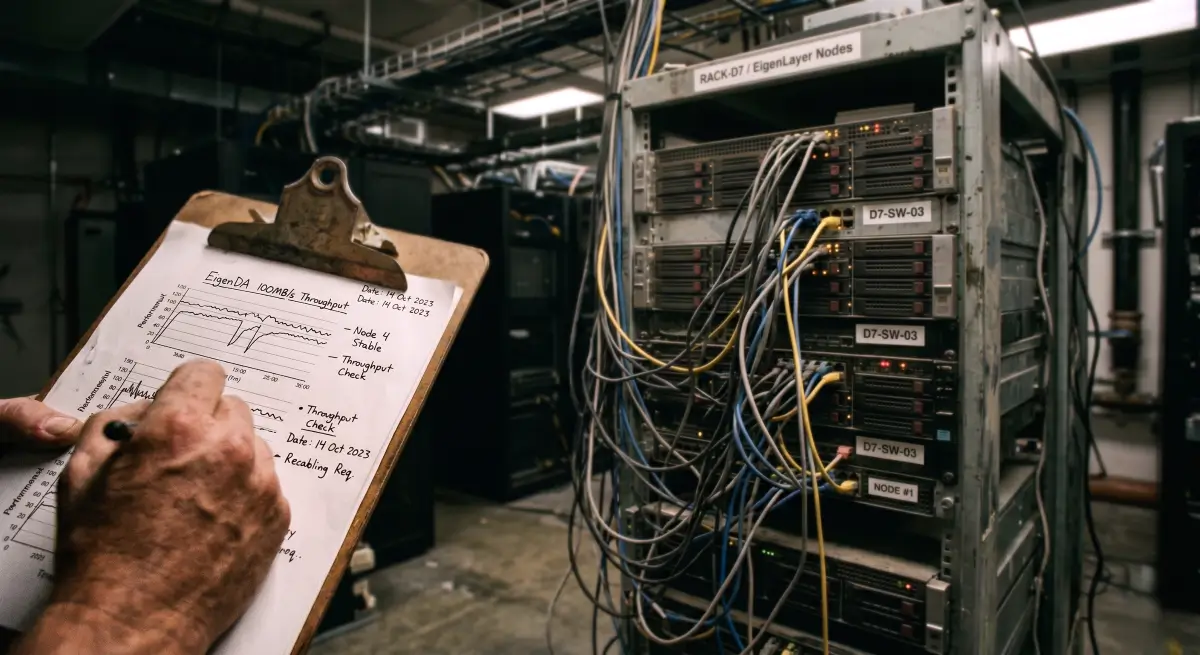
Hand holding a performance clipboard next to an open server rack with blue and yellow cables, verifying the physical EigenCloud Token network setup.

This independent analysis breaks down the core hardware and cryptographic framework powering the EigenCloud Token ecosystem. While traditional cloud environments operate on opaque security promises, this verifiable cloud introduces strict cryptoeconomic guarantees tailored for the Agentic Era. This analysis bypasses marketing narratives to verify on-chain token distribution, smart contract vulnerabilities, and the systemic risks inherent to its supply structure. What Sets The EigenCloud Token Apart This independent EigenCloud review examines a protocol built specifically for autonomous economic actors. AI agents are evolving rapidly past simple chatbots; they now hold real assets and execute direct on-chain payments. However, these agents require verifiable trust to function safely, as traditional servers cannot cryptographically prove what code is actually running. EigenCloud solves this structural flaw utilizing advanced Ethereum restaking primitives. Hardware Integration And Trust The system utilizes Google Cloud Confidential Space and Intel TDX environments. Developers can deploy AI agents with cryptographic proofs of identity. This hardware-software combination guarantees secure, isolated, and verifiable execution at scale. The Evolution Of EigenDA V2 The network infrastructure has grown to support massive Web3 applications, with the launch of EigenDA V2 marking a major performance milestone. Operating live on the mainnet, this data layer delivers a massive throughput of 100 MB/s. Official documentation verifies this speed is 75x faster than its closest competitor, unlocking true cloud-scale data availability for rollups. EigenCompute And EigenAI Tools The protocol introduced EigenCompute to protect standard applications, adding cryptographic trust to software with zero code changes and allowing secure execution across any language. Furthermore, the EigenAI release enables deterministic inference. AI agents yield exact, verifiable outputs every single time, preventing unpredictable or unauthorized financial decisions. Quantitative Market Performance Evaluating quantitative metrics is mandatory before any asset exposure. The EIGEN token is trading between $0.176 and $0.18, maintaining a circulating market cap near $139 Million. While a massive $4.39 Billion Total Value Locked (TVL) backs this ecosystem, the price action remains extremely volatile for retail buyers. The asset sits 96.88% below its historical peak. Verified Tokenomics And Supply Metrics Tokenomics Metric Verified Supply Facts Current Price $0.176 – $0.18 All Time High $5.65 Price Drop 96.88% Below Peak Circulating Market Cap $130.9M – $139M Ecosystem TVL $4.39 Billion Top 10 Holders Control 43% of Supply Whale Concentration 0.09% Hold 93.48% of Supply Severe Price Depreciation The token hit an all-time high of $5.65 back in December 2024. This massive structural drop indicates weak historical price retention for early holders and massive token emission impact. Token Concentration And Whale Threats The EigenCloud token distribution exposes a highly centralized supply structure. Whales make up only 0.09% of all holders today, yet they possess 93.48% of the total market cap. Furthermore, the top 10 holders control over 43% of the total supply. This heavy concentration creates a permanent dumping risk, where retail investors face severe dilution if major wallets distribute their holdings. Security And Smart Contract Audit An automated Token Sniffer scan flags the asset with a score of 60/100. While the asset has adequate liquidity on decentralized exchanges like Uniswap V3, serious smart contract risks require immediate attention. The developers utilize a transparent but highly centralized upgradable proxy contract pattern. The creators have not renounced ownership of the contract. Ownership Control Risks The active owner can pause trading, modify core rules, or change network fees at will. This level of control nullifies true decentralization. Total caution is required when interacting with unrenounced upgradable proxies. EigenCloud Token Pros And Cons Core Strengths: Red Flags And Risks: The Veteran Observation The hard facts prove this verifiable cloud is groundbreaking technology. It provides neutral cryptographic verification for developers building autonomous AI agents, and its trusted execution environments make it best-in-class. However, retail token investors must tread carefully. The extreme token concentration and unrenounced upgradable smart contracts create substantial systemic risks. Keep your focus on the data layer adoption instead of short-term marketing hype. Zahid Hussaincryptosmedia.com

AltLayer ALT Tokenomics Review: The Smart Contract Traps

Over the shoulder view of architectural blueprints showing the actual AltLayer tokenomics and network infrastructure.

AltLayer ALT Tokenomics, behind the complex technical jargon of rollups lies a deeply centralized financial structure. This independent audit strips away the marketing layers of the AltLayer network to expose the actual smart contract vulnerabilities and severe supply concentrations that retail buyers often miss when looking at the technology. The Core AltLayer ALT Tokenomics Trap AltLayer pitches itself as a decentralized protocol designed to streamline custom blockchain rollups for developers. However, a closer look at the on-chain data reveals a highly concentrated ecosystem, creating significant exposure for everyday participants. Supply Structure And On-Chain Reality We must look directly at the hard data to understand the underlying ecosystem risk. Tokenomics Factor Details Why It Matters Total Max Supply 10 Billion Tokens The stated hard cap on total tokens. Circulating Supply 6.4 Billion Tokens The amount of tokens currently in public markets. Owner Treasury Control High Concentration Token Sniffer flags owner wallet holds 36 percent. Smart Contract Privileges Mint And Pause Active The contract can halt transfers or mint supply. Supply Expansion And Wallet Concentration While the official hard cap is documented at 10 billion, the circulating supply has aggressively expanded to roughly 6.4 billion. This massive jump from its initial 1.1 billion circulating launch shows how scheduled unlocks directly suppress the open market. Automated security scanners highlight a critical vulnerability: the primary owner wallet currently commands nearly 36 percent of the total supply. Expanding this scope on Etherscan shows an even bleaker picture, with the top 5 addresses hoarding approximately 87 percent of all tokens, including uncirculated treasury funds and exchange wallets. Security Scans And Code Vulnerabilities Verified source code does not automatically mean safe code. Token Sniffer assigns the contract a hazardous safety score of exactly 25 out of 100. This low rating stems entirely from administrative privileges hardcoded into the system. The Mint And Pause Danger The developers retain active pause and mint functions. In practical terms, the administrative keys can completely freeze user transfers or instantly create new tokens out of thin air. Since the team has not renounced contract ownership, users are forced to rely on blind trust rather than immutable code. While a public audit from CertiK gave the project a 4.2 rating, these active smart contract privileges remain a clear transparency gap. Protocol Utility And Restaked Rollups Unlike purely speculative assets, this token does serve a functional purpose within its ecosystem. The architecture utilizes a ‘Restaked Rollups’ system featuring three distinct modular services: VITAL verifies the correctness of the rollup state, MACH provides faster transaction finality, and SQUAD offers decentralized sequencing. Node operators must physically bond the asset to participate and secure these services. If an operator validates bad data, the protocol slashes their holdings. The token also functions as the primary currency for internal network fees and governance voting. Historical Price Destruction Market data from early June 2026 shows the asset trading at a fraction of a penny, near $0.0059, carrying a market capitalization of roughly $37.8 million. Compare this to its March 2024 historical all-time high of $0.6881, and the reality sets in: the asset has suffered a brutal 99 percent destruction in value. This extreme historical volatility is a critical fact to consider when analyzing market behavior. The Bottom Line On AltLayer ALT Tokenomics The project successfully delivers real technical utility for developers through its VITAL and MACH modules, stepping away from pure governance branding. The technology addresses genuine issues in the rollup space. However, the architectural reality cannot be ignored. The combination of an active minting function, pausable contracts, and overwhelming treasury concentration makes this a highly centralized venture. Anyone researching this network must weigh the genuine rollup technology against the massive smart contract trust required to hold the asset. Zahid Hussaincryptosmedia.com

AIOZ Network Review: DePIN Utility & Risks

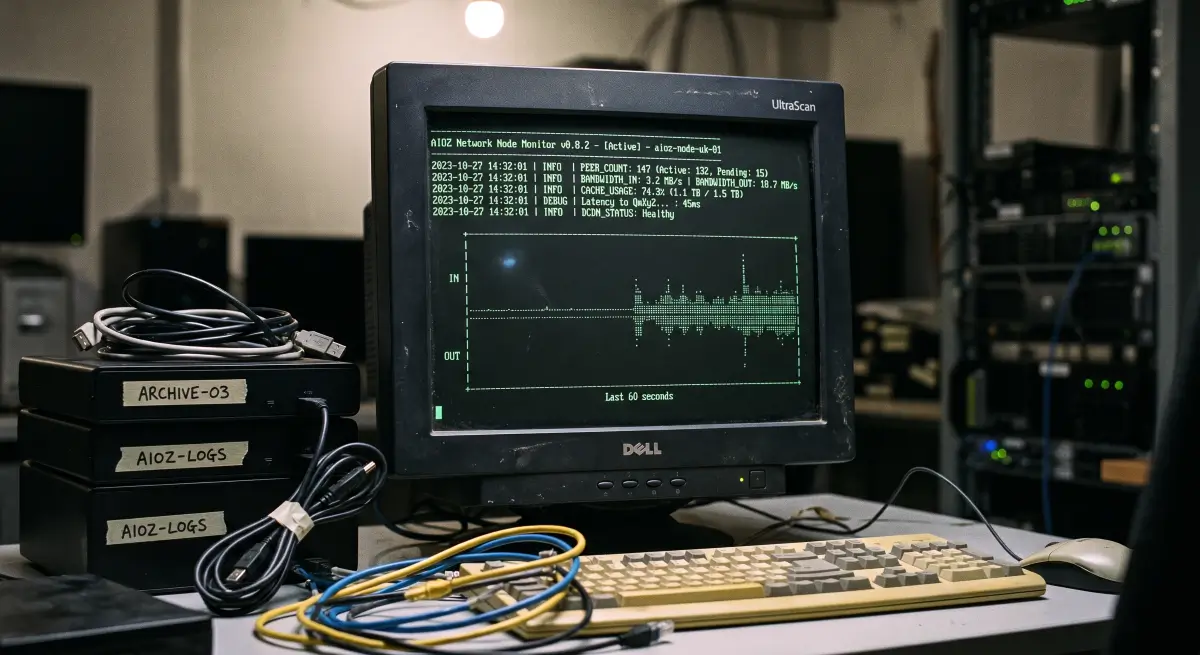
A raw, documentary-style photo for Aioz Network Review, capturing the actual technical dCDN edge node metrics.

Decentralized Physical Infrastructure Networks represent a serious attempt to break the monopoly of centralized cloud providers. AIOZ Network targets this exact sector by merging artificial intelligence computation, decentralized storage, and video streaming into a single blockchain architecture. This AIOZ Network review strips away the initial market hype to audit its underlying technology, token utility, and the structural supply mechanics that dictate its long-term value. Core Technology: What AIOZ Actually Does Operating as a native Layer-1 blockchain, the protocol focuses on heavy online content distribution. Rather than renting server space from corporate giants like Amazon Web Services, the system relies on a global peer-to-peer network of user-operated nodes. The architecture maintains full interoperability, connecting natively with both the Ethereum and Cosmos ecosystems. By supporting EVM and WebAssembly smart contracts, external developers can easily deploy decentralized applications directly onto the infrastructure. The Four Operational Pillars The project divides its technical capacity into four distinct service layers: Token Utility and Network Fuel A massive technical vision requires a strict economic engine. The AIOZ token acts as the required fuel for this entire physical network, stepping beyond basic governance voting. Customers must spend the native asset to purchase network services, whether they are rendering AI nodes or hosting video content. Conversely, everyday users who operate nodes on their personal hardware earn tokens as direct compensation for sharing their unused bandwidth. This creates a closed-loop economy facilitating actual real-world hardware leasing. Tokenomics and the Infinite Supply Structure Evaluating the economic model requires accepting one fundamental reality: this asset operates on an inflationary structure with no hard supply cap. Tokenomics Factor Live Details Forensic Impact Circulating Supply ~1.25 billion AIOZ Nearly all initial tokens are circulating. This reduces sudden massive unlock risks. Max Supply Infinite The protocol continuously mints tokens. This dilutes existing holders over time. Inflation Rate 5% target by 2026 Inflation drops 1% every December 25th. Burn Mechanism Usage-based AIOZ burns 50% of transaction fees and 5% of node rewards. The math dictates the risk. Because the protocol constantly creates new tokens to reward node operators, existing holders face slow dilution. The asset maintains value only if massive enterprise clients buy and use enough network services to trigger the 50% fee burn, destroying tokens faster than the network prints them. Governance and Treasury Centralization While the node infrastructure spans the globe, the financial control of the project remains tightly consolidated. Founder Erman Tjiputra and the core team maintain a public presence, which establishes initial baseline trust. However, the governance structure presents a critical research gap. There is currently no mature Decentralized Autonomous Organization managing the project treasury. By design, the protocol treasury automatically collects 50% of all network inflation. The founding team retains centralized, unilateral control over a massive, constantly growing pool of capital. For an infrastructure project championing decentralization, this financial bottleneck is a significant structural vulnerability. Ecosystem Growth and Security Verification Despite treasury concerns, the protocol delivers measurable growth. The network recently scaled from 60,000 active nodes to over 180,000, indicating massive retail hardware participation. The team is actively securing traditional tech pathways, boasting public integrations with Google for Startups, NVIDIA Inception, and a direct working relationship with Alibaba Cloud in Southeast Asia. CertiK assigns the network a 4.0 safety rating, and on-chain records show no history of catastrophic protocol exploits to date. Main Strengths vs. Major Risks Let us weigh the verified project strengths against its structural vulnerabilities. Main Strengths: Major Risks and Red Flags: DePIN Category Comparison To understand market positioning, you must compare the protocol to established giants in the decentralized physical infrastructure sector. Metric AIOZ Network Filecoin Render Category Multi-sector DePIN Decentralized Storage Decentralized GPU Compute Main Focus AI, Storage, Streaming Cold data storage 3D rendering & AI Supply Model Infinite (Inflationary) Capped Max Supply Capped Max Supply While Filecoin and Render dominate specific niches, AIOZ attempts to build a unified ecosystem that does everything simultaneously. The burden of proof lies on the protocol to show it can capture enterprise market share across multiple fronts. Frequently Asked Questions Is AIOZ an ERC-20 token? It is a native Layer-1 coin. It also exists as an ERC-20 and BEP-20 token to facilitate cross-chain utility and exchange liquidity. Does the asset have a maximum supply cap? No. It operates with an infinite maximum supply. The project manages this via a 5% inflation target by 2026, paired with an aggressive fee burn mechanism. How do users earn tokens? Users earn tokens by running a node on their personal hardware. Existing holders can also stake their assets to secure the network and generate passive interest. Final Verdict This AIOZ Network review concludes that the project is one of the few crypto initiatives delivering a functioning product rather than just a whitepaper promise. Its massive node count and direct integrations with companies like Alibaba Cloud prove the underlying technology is highly competitive. However, anyone evaluating the asset must separate the brilliant technology from the risky economics. The infinite supply model demands constant, aggressive network usage to prevent token devaluation. The infrastructure is ready, but true price stability requires traditional tech companies to fully migrate their daily data operations onto the blockchain. Zahid Hussaincryptosmedia.com

Aerodrome Finance Review: Base Liquidity & Risks

Forensic audit of Aerodrome Finance smart contracts displaying veAERO locking logic, Base network liquidity blueprints, and verified token contract address.

This Aerodrome Finance review, audits the Base network’s liquidity engine. Base is a rapidly expanding Layer-2 blockchain. Sustained growth, however, requires deep capital markets. Aerodrome Finance serves as the primary liquidity hub for this ecosystem. It solves the liquidity problem, allowing users to trade digital assets without massive price slippage. This Aerodrome Finance review bypasses the surface-level yields to audit the exact smart contract infrastructure powering this exchange, the mandatory lock-up periods, and the massive centralization risks inherent to its supply model. DEX Category Comparison To evaluate structural market health, researchers must compare the protocol directly against its largest decentralized competitors. Feature Aerodrome Finance Uniswap Curve Main Network Base (Layer-2) Ethereum Ethereum Revenue Model 100% to Voters Shared with LPs 50% to Voters Governance Vote-Escrow Standard Voting Vote-Escrow Lock Period Up to 4 Years No Lock Required Up to 4 Years Primary Use Ecosystem Liquidity Token Swapping Stablecoin Swaps Core Architecture: Aerodrome Finance Review Insights Aerodrome is not a standard decentralized exchange. The primary function of this platform is concentrated capital retention. In cryptocurrency, liquidity dictates overall market health. Users swapping tokens on the network receive instant execution at fair market rates. The protocol achieves this stability by mathematically routing high-yield rewards directly to liquidity providers who park their capital inside the ecosystem. By optimizing the original Optimism-based model, the developers integrated the architecture directly with the broader Coinbase ecosystem. Tokenomics and the 4-Year Lock Evaluating the economic foundation of this system requires understanding the voting distribution model. The official smart contracts push users to lock their native AERO tokens for extended durations spanning up to four years. The absolute incentive here is voting power. Locking the asset generates veAERO (vote-escrowed AERO). This secondary asset provides strict governance weight, granting users the authority to direct weekly token emissions to specific liquidity pools. In return, these voters collect 100% of the trading fees and external bribes generated by their chosen pools. The Emission and Bribe Mechanics The underlying bribe cycle forms the concrete mathematical foundation of the project’s long-term utility. Aerodrome operates on a strict weekly emission schedule. New tokens are minted and distributed to users providing active liquidity. The specific pools receiving the largest share of these tokens are decided entirely by veAERO voters. External protocols require deep liquidity for their own tokens to survive on the Base network. To attract this liquidity, they pay direct bribes in USDC or Ethereum to veAERO holders. Bribes attract voters, voters direct the AERO emissions, and these emissions draw deeper liquidity from the open market. Historical Market Context The protocol launched on August 28, 2023, utilizing a highly equitable distribution model. The developers minted 500 million initial tokens and airdropped 200 million directly to the community to align cross-network governance. Looking at the June 2026 data, the AERO token trades near $0.41, with a circulating supply sitting at approximately 944 million. The asset previously hit an all-time high of $2.32 during peak speculative demand. This severe 80% price contraction from the top serves as a standard market warning: buying into peak inflationary reward cycles often leads to heavy portfolio damage. Ecosystem Roadmap: The July 2026 Merger The core engineering team, led by verified founders Alex Cutler and Tao Watts, operates through Dromos Labs. Because the founders maintain public profiles and document code modifications openly, the proxy contract threat usually associated with anonymous teams is heavily reduced. Dromos Labs is currently executing a major structural upgrade. By July 2026, the roadmap dictates a complete merger between the Aerodrome and Velodrome networks into a single, cross-chain decentralized exchange. This strategic pivot transitions the platform from a Base-native application to a unified liquidity system designed to target the market share of legacy giants. Security Threats and Scam Alerts While official code scanners confirm the base contracts are clean, the broader Base ecosystem hosts active fraudulent copycat applications. Users must manually verify the exact official smart contract string (0x940181a94a35a4569e 4529a3cdfb74e38fd98631) before signing any execution approvals. Never execute transactions routed through unverified social media links. Final Verdict & Market Risks This analysis concludes that the protocol is a functional, high-yield capital engine essential to the Base network. The underlying mathematics behind the tokenomics require constant tracking. Entering a four-year capital lock without a deep understanding of the emission formula is a reckless allocation of capital. The most severe systemic threat is concentrated ownership. The founders and corporate partners currently control nearly 40% of the total token supply. If these core entities execute a massive insider liquidation, standard retail buy orders cannot absorb the volume, guaranteeing an immediate collapse of the asset’s price floor. ⚠️ RISK SIGNAL BOX: Lock-In Risk: Retail participants entering at cycle peaks and committing to four-year voting locks effectively surrender their ability to exit during downturns, creating a high-probability scenario of capital erosion in a depreciating market. High Volatility Ecosystem: AERO inflation relies entirely on the bribe cycle to sustain liquidity. Dromos Labs controls roughly 40% of the total token supply, representing a significant centralization point. Any massive insider liquidation poses an immediate, non-recoverable downward threat to retail positions. The Liquidity Paradox: The protocol’s long-term sustainability is tethered to external protocols continuously purchasing bribes. If external demand for liquidity wanes, the emission schedule loses its economic rationale, likely triggering a cascade of liquidity exits. Zahid Hussaincryptosmedia.com

Peaq Network Review Initial Diagnostics

Peaq Network Review: A technical forensic photo of a mechanical robotic arm on a dusty workbench connected to a laptop showing raw backend code for DePIN infrastructure.

The $100B Machine Economy vs Token Unlocks In this surgical Peaq Network Review, i remember sitting at my desk back in late March 2026. Initially, i was digging through the charts when i saw the network completely stall. It was March 23, 2026, and a sudden block production issue stopped everything in its tracks. Because of this, i spent hours reading through their GitHub and the newly released Purple Paper. In fact, i was trying to figure out if this project was a real shift or just another crypto illusion. In the end, what i found is a project trying to build the backbone for real world robots. So, today i want to share this raw truth with you. Peaq Network Review: The YMYL Safety Check Listen to me carefully. Actually, this is not financial advice. You have to protect your own capital in this market. The team behind Peaq is highly visible, led by founders Till Wendler, Leonard Dorlöchter, and Max Thake. Also, they have actual partnerships with serious companies like Bosch and Audi. In fact, the network holds a CertiK rating of 4.6, which gives us some comfort. But remember, the crypto market is ruthless, and even audited projects carry severe risk. So, always do your own research before you invest a single dollar. Peaq Network Review Problem & Solution Right now, we have robots, AI agents, and physical machines entering the global economy. But they are trapped. For example, a robot built on Solana cannot easily talk, or build a reputation, on Ethereum. Because of this, they are stuck in walled gardens. Peaq steps in to fix this exact problem. First, they created peaqOS, an omnichain layer that gives machines a universal identity. It allows a single machine to work, earn, and build a verifiable reputation across any blockchain without being locked down. How It Works ELI5 Style Think of a robot as a skilled worker trying to travel the world. Without Peaq, the robot has no passport and no global bank account. Instead, it can only work in one tiny village. Peaq gives this robot a global digital passport and an omnichain wallet. Now, the robot can travel to any village, do the job, and get paid instantly in any currency. Indeed, it represents the economic system enabling robots to do business. Peaq Network Review Tokenomics Reality Check Here is where we need to be extremely careful. The PEAQ token has a maximum supply capped strictly at 5.67 billion tokens, with about 2.07 billion currently circulating. Naturally, the inflation starts at 3.5 percent and drops slowly over time. But i looked at the unlock schedule, and it is a heavy burden. Recently, on May 12, 2026, massive unlocks hit the market, releasing over 93 million tokens each to core contributors, labs, and early investors. When these tokens flood the market, we will likely see persistent selling pressure. So, you must factor this heavy inflation into your timeline. The Brutal Pros And Cons Strong Points Red Flags Peaq vs Rivals The Metric Truth Metric Peaq Network Solana Ethereum Primary Focus Machine Economy DePIN High Speed DApps Global Liquidity Machine Identity peaq ID Universal Chain Specific Wallet Based Network Stability Evolving Post Stall High High Cross Chain Support Native Omnichain Limited Bridge Dependent Competitive Analysis When we look at the biggest rivals, we have giants like Ethereum and Solana racing to capture the machine economy. Solana has incredible speed, and Ethereum has the deepest liquidity. But they are racing to the wrong layer. Instead, they want machines locked into their specific payment systems. On the other hand, Peaq operates differently by acting as a neutral layer across all of them. While projects like the one in our MegaETH crypto review try to speed things up, Solana forces a machine to stay strictly on Solana, Peaq allows the machine to roam freely. Because of this, it gets a massive structural advantage for the DePIN sector. Peaq Network Review Final Expert Verdict I want to give you realistic hope here. The vision Peaq presents is one of the most exciting shifts in the physical crypto space. They have the partnerships, the live machines, and a brilliant omnichain design. However, the short term reality is brutal. Because the upcoming token unlocks are a slow bleed for your portfolio if you buy blindly right now. Actually, it is a solid project fundamentally, but extremely risky at this exact moment due to the heavy inflation. So, watch from the sidelines, wait for the weak hands to get rinsed during the summer unlocks, and look for a safer entry point later. Stay smart and protect your capital. Zahid Hussaincryptosmedia.com

Babylon BABY Review: Truth, Airdrops & Staking Risks

Cryptos Media - honest Babylon (BABY) Review and staking risks.

If you are looking for an honest Babylon (BABY) Review, you have come to the right place. Today, we will sit down and talk. We will uncover the real technology and the hidden risks behind this big project. Furthermore, we will look at the true reality of native Bitcoin staking. Therefore, you can make safe and completely smart choices with your hard-earned money. The crypto market is like a deep ocean. Consequently, it is full of empty promises. Sometimes, a man just needs a steady boat. You need solid ‘Asra’ and clear facts. You must know these facts before you lock your assets anywhere. This guide will give you that exact clarity step by step. What is Babylon and Its True Purpose? The Core Problem It Solves For many years, Bitcoin has been the safest digital money in the world. However, it has one big problem. It just sits there, doing nothing. If you have Bitcoin, it simply stays in your wallet. Consequently, you do not earn any DeFi passive income from it. Babylon is a special network built on the Cosmos system. It takes the heavy security of Bitcoin and shares it. Normally, small networks are weak. Therefore, hackers can attack them easily. But Babylon makes a mathematical bridge. It lets you lock your pure Bitcoin safely. Then, it uses that value to provide Proof-of-Stake security to other chains. Thus, you can earn a profit on your Bitcoin without giving it to a risky exchange. Analyst Perspective I have looked at many crypto codes since 2014. Therefore, I can tell you like a brother. This is not a cheap copy. Indeed, it is a very serious piece of technology. In the old days, you had to give your Bitcoin to a lending company. We all saw how those companies failed. They took people’s life savings. But here, Babylon uses deep math. It keeps your crypto assets safe on its own home network. However, listen to me carefully. This new math brings new dangers. It solves a real problem, yes. But you must pay full attention. Babylon Genesis and the Early 2025 Airdrop The Supercharged Network Launch This project worked quietly in the dark for years. Recently, the team launched a heavy upgrade called “Babylon Genesis.” This is a supercharged network. Specifically, they made it to handle massive pressure from big institutional money without breaking down. The Airdrop Hype Because of this Genesis launch, they officially announced an airdrop. The registration period is for early 2025. When the market hears “airdrop,” people rush immediately. Just like we talked about in our detailed Pi Network (PI) ecosystem review, big hype always brings big money. Everyone wants free money. Furthermore, earning from idle Bitcoin is a big dream. But delivering this safely in the real world is very hard. When the network takes real deposits, they keep the limits very tight. The space gets full in just a few minutes. Consequently, this creates a panic for everyday investors like us. When a man rushes, he makes mistakes. He clicks the wrong links. This is a clever marketing trick. However, it puts unnecessary pressure on a common man’s mind. Technical Audit in this Babylon BABY Review The Slashing Risk on Native Bitcoin Pay close attention here, brother. This is the most important part of this Babylon (BABY) Review. The smart contracts do not actually hold your Bitcoin. Instead, your Bitcoin is locked using special digital signs. But remember, profit is never free. If the smaller network gets hacked, the system does a “slashing”. Alternatively, if the validator does something bad, the code will react. This means the code will automatically burn your locked Bitcoin. This is the heavy price you pay. Therefore, small users put their most precious asset in danger just for a few extra dollars. Smart Contract and Cryptography Vulnerabilities The team uses very advanced math. Top security companies have checked their work carefully. However, the real danger is the bugs we cannot see yet. Bitcoin was never made for this kind of complex work. It is like putting an airplane engine on an old train. If they find a hidden bug, the whole system could freeze. As a result, millions of dollars could get stuck forever. The Reality of the Team and Founders Real Identities vs. Anonymous Developers Throughout this Babylon (BABY) Review, we must look at the creators. The people running this are not hiding. This platform is led by respectful teachers. Specifically, they are researchers from Stanford University. They are not random boys trying to make quick money. They have real knowledge of finance and computer networks. Because they show their real faces, the chance of a scam is very low. This creates high trust. The Track Record When we look deeply into their past, their record is totally clean. There are no old scams. Their past shows they are real experts. Therefore, this is exactly what is needed to build a bridge between Bitcoin and the rest of the crypto world. Live Market Performance and Binance Liquidity The BABY Token and Binance Danger While your Bitcoin is locked, the internal economy runs on the BABY token. You must verify market limits. Therefore, always check the official CoinMarketCap data for the exact real-time circulating supply. This is a strict rule for financial safety. If you look at the live market data, the volume is centralized. Specifically, big centralized exchanges like Binance control the BABY token. If Binance whales control too much, it is very dangerous. Consequently, if they suddenly dump their BABY tokens, the smaller networks will get a heavy shock. If big banks try to control this market, normal users will suffer. If the liquidity goes down, exiting your position becomes expensive. To understand this danger better, you can read our Bitget Wrapped BTC (BWBTC) market guide. Moreover, to understand how networks feed data, check our [Supra Oracle tech audit. Complete Babylon BABY Review: Comparison with Market Leaders The Competitor Clash In this Babylon (BABY) Review, … Read more