
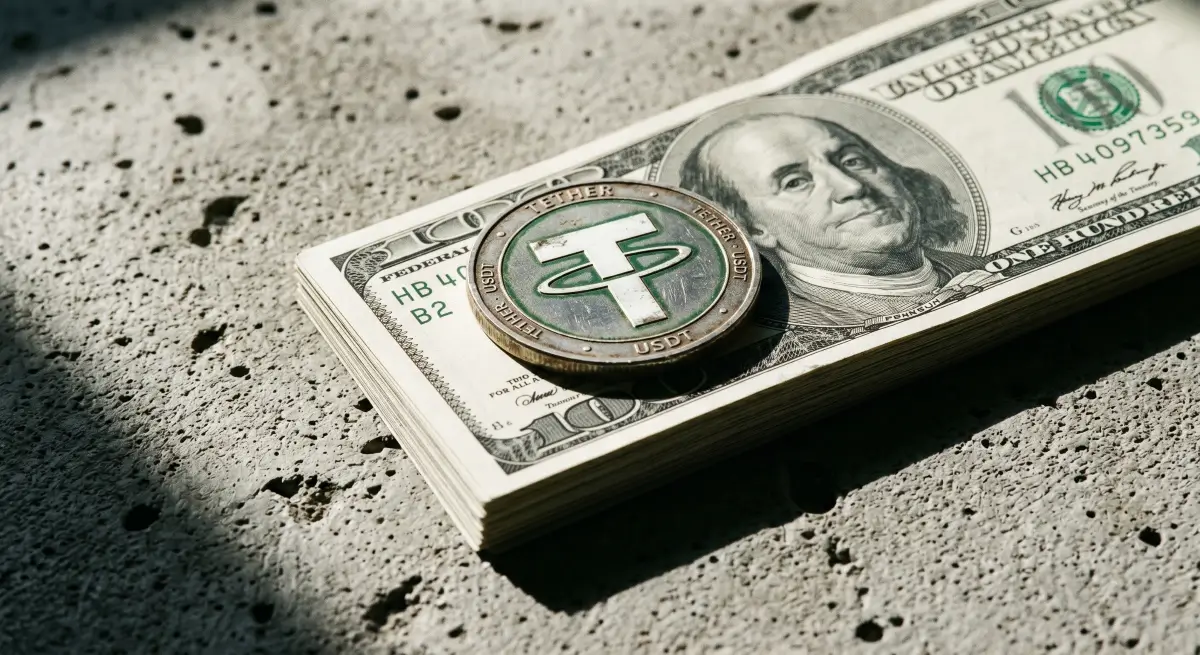
In the cryptocurrency ecosystem, one asset dictates the liquidity of the entire market, yet remains the subject of the industry’s most persistent regulatory debates. Tether (USDT) is the undisputed functional foundation of digital trading, processing billions in daily volume as the primary bridge between fiat systems and blockchain networks. However, for anyone holding large amounts of USDT, the most critical question isn’t whether the token is popular—it’s whether the offshore entity issuing it actually holds the U.S. Treasury bills, gold, and cash required to survive a mass redemption event. This forensic review strips away the market noise to examine Tether’s actual network utility, its reliance on point-in-time attestations over traditional audits, and the centralization risks built into its smart contracts.
How I Checked This Project
Reviewing this project involved checking official transparency reports, tokenomics, historical market data from CoinMarketCap, and documented legal actions from regulatory bodies like the CFTC and the New York Attorney General. I also examined Tether’s recent corporate expansion into other sectors to see how it impacts the core stablecoin issuer. Finally, treating all market and reserve figures as time-sensitive, I checked them only on the listed data date.
What The Tether Stablecoin Actually Does
Tether (USDT) is a fiat-backed stablecoin pegged to the US dollar. Unlike Bitcoin or Ethereum, which experience wild price swings, USDT aims to stay exactly at $1.00.
The token serves three main purposes in the digital economy:
- Trading Liquidity: It is the de facto trading pair for most cryptocurrencies. Traders use it to buy other assets or park their funds during periods of high volatility without converting back to traditional banking systems.
- Borderless Transfers: Users transfer USDT globally to avoid legacy banking delays and high international wire fees.
- Arbitrage: It provides traders with the liquidity needed to take advantage of price differences across major global exchanges.
The available sources show that Tether operates as a second-layer token across multiple blockchains. The majority of USDT now circulates on Ethereum (over $93.4 billion) and Tron (over $87.7 billion).

Supply Structure And Tokenomics
A stablecoin’s tokenomics rely entirely on its reserves rather than a fixed algorithmic emission schedule. Tether claims that its asset reserves 100% back every USDT.
| Tokenomics Factor | Details | Why It Matters |
|---|---|---|
| Total Supply | 193.17 Billion USDT | Shows the total amount of tokens minted across all supported blockchains. |
| Circulating Supply | 186.54 Billion USDT | Represents the actual tokens in public hands and active markets. |
| Max Supply | Infinite | Tether mints new tokens based on market demand and fiat deposits. |
| Reserve Backing | U.S. Treasuries, Gold, Bitcoin, Secured Loans, Cash Equivalents | Dictates whether the company can honor a massive wave of redemptions. |
| Net Equity | $8.23 Billion (as of March 31, 2026) | This excess capital acts as a financial buffer against reserve asset devaluation. |
The tokenomics are easier to evaluate because Tether stablecoin publishes a daily transparency page. As of March 31, 2026, Tether reported holding $191.7 billion in total assets against $183.5 billion in liabilities. The company is heavily reliant on U.S. Treasury bills-holding nearly $98 billion—making it one of the largest holders of U.S. debt globally.
The State Of Tether Stablecoin Reserves
The most persistent question surrounding Tether stablecoin is the exact nature and verifiable state of its reserves.
Attestations vs. Audits
Tether stablecoin publishes quarterly ‘attestations’ signed by the accounting firm BDO Italia. These reports provide a snapshot of the company’s assets at a specific moment in time. However, I could not verify a full, independent financial audit conducted under Generally Accepted Auditing Standards (GAAS) from the available sources. Tether’s general counsel previously stated that a traditional audit from a ‘Big Four’ firm cannot be obtained due to the risk profile of the crypto industry.
For a stablecoin managing over $186 billion in value, the lack of a full traditional audit is a significant research gap. Readers should verify current reserve attestations from official sources before holding large amounts of the token.
Centralization And Control
Tether is a highly centralized project. The British Virgin Islands-based iFinex owns Tether Operations Limited, which manages the project. The leadership team, including CEO Paolo Ardoino and Chairman Giancarlo Devasini, controls the issuance, redemption, and strategic direction of the token. In early 2025, the company relocated its global headquarters to El Salvador.
Because the token is centralized, Tether retains administrative keys that allow it to freeze tokens on compatible blockchains. For instance, in late 2023, Tether collaborated with the U.S. Secret Service to freeze $225 million connected to a human trafficking ring. While this aids law enforcement, it means regular token holders do not have absolute, censorship-resistant control over their assets.
Historical Market Context of the Tether Stablecoin
Tether has generally maintained its peg through extreme market stress, though it has experienced temporary de-pegging events. On October 15, 2018, the price of USDT briefly fell to $0.88 due to credit risk fears.
Past performance does not guarantee future results. While USDT currently trades at $0.9992, temporary market panics or liquidity crunches can temporarily disrupt parity across different exchanges.
Beyond The Token: Corporate Expansion
While USDT is its flagship product, Tether has aggressively expanded its corporate footprint using its massive profits (which hit a record $13 billion in 2024). The available sources show Tether has launched dedicated divisions for artificial intelligence, Bitcoin mining, and education.
Recent investments include a $1.4 billion Series C funding round for NEURA Robotics, a $775 million investment in the video platform Rumble, and a $200 million stake in the American social commerce platform Whop.com. The company also expanded its US presence in late 2025 by launching a specific U.S-based stablecoin called USAT. While these investments diversify the company’s holdings, they also complicate the risk profile of the core stablecoin issuer.
Evaluating Tether Stablecoin Strengths And Weaknesses
Verified Strengths
- Unmatched Liquidity: With a 24-hour trading volume currently exceeding $72 billion, USDT is the most liquid asset in the digital economy.
- Massive Financial Buffer: Tether’s extreme profitability has allowed it to build a reported net equity buffer of over $8.2 billion, providing a cushion against potential shocks to its reserve assets.
- Widespread Integration: The token is supported by nearly every major exchange, wallet, and decentralized finance (DeFi) protocol.
Major Research Risks And Red Flags

- Regulatory Scrutiny: Tether has faced multiple investigations. In 2021, the company paid $18.5 million to the New York Attorney General to settle claims regarding commingled funds, and $41.6 million to the CFTC for inaccurately claiming its tokens were 100% backed by fiat USD. Furthermore, reports indicate ongoing federal scrutiny regarding anti-money laundering compliance.
- Transparency Gap: The project relies on point-in-time attestations rather than full traditional audits.
- Centralization Risk: The company can freeze wallets at its discretion, carrying counterparty risk that decentralized cryptocurrencies avoid.
Read This Closely If You’re Checking…
This review is most useful if you are trying to separate Tether’s actual market utility from the ongoing debates about its reserves and corporate expansions. It helps clarify that while USDT is an incredibly effective tool for moving money quickly and providing trading liquidity, holding large amounts requires trusting a centralized company that operates heavily outside of traditional US banking frameworks.
Common Questions About The Tether Stablecoin
- What is USDT used for? Traders use USDT as a stable unit of account to enter and exit volatile cryptocurrency positions, and to send cross-border payments quickly over blockchains like Tron and Ethereum.
- Is Tether fully audited? I could not verify a full, independent financial audit under standard accounting principles. The company currently relies on quarterly snapshots called attestations (currently via BDO Italia) to prove its reserves.
- Who controls Tether? Tether is issued by Tether Operations Limited, led by CEO Paolo Ardoino and Chairman Giancarlo Devasini. It operates as a highly centralized corporate entity.
- Can Tether freeze my wallet? Yes. Because USDT is issued via a centralized smart contract, Tether has the administrative power to quarantine or freeze addresses, a tool it actively uses when cooperating with international law enforcement.
- Does this review give investment advice? This review does not provide buy, sell, or hold advice. Readers should study the project’s utility, tokenomics, security, liquidity, and regulatory risks before making their own financial decisions.
My Final Takeaway
Tether is the functional foundation of modern cryptocurrency trading. Its core strength is undeniable: it provides the liquidity, scale, and speed that digital markets require to operate. However, the project’s massive profitability and rapid expansion into AI, agriculture, and tech platforms sit alongside a historical transparency gap regarding its reserves. The fundamental reality of Tether remains unchanged: the crypto market relies on it completely, but users must actively accept the centralization and regulatory risks required to use it.

Founder & Managing Editor of CryptosMedia. Zahid Hussain leads evidence-based crypto research covering tokenomics, security, governance, adoption, and risk.
CryptosMedia separates verified facts from interpretation, avoids buy/sell recommendations, and updates reviews when major evidence changes.
5 thoughts on “Tether Stablecoin Review: Utility, Reserves & Key Facts”