Cloud Network Review: Impossible Cloud Network & ICNT Token

A documentary-style photo for Impossible Cloud Network Review, showing a modern laptop with a matte screen protector displaying blockchain data metrics on a clean wooden desk.

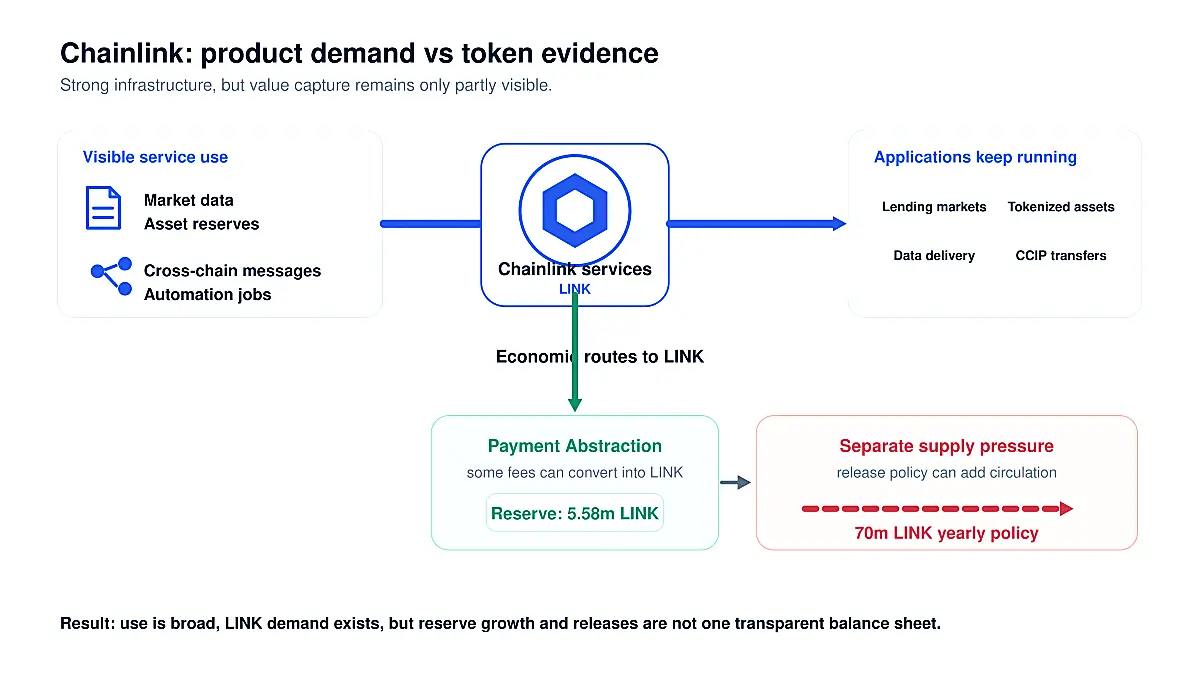
The infrastructure behind the internet is heavily centralized among a few hyperscalers, which makes evaluating projects like Impossible Cloud Network and the ICNT Token very important. So, this centralization raises concerns about data sovereignty, vendor lock-in, and single points of failure. But while Web3 projects frequently promise decentralized alternatives, they often struggle to match the performance and enterprise-grade hardware of traditional Web2 cloud providers. Impossible Cloud Network (ICN) attempts to solve this by creating a global, decentralized bare-metal infrastructure layer optimized for demanding workloads like AI and enterprise software. The harder question is whether the ICNT token has a necessary role, who controls the supply, and whether its smart contract protects users. This Impossible Cloud Network review looks at its utility, tokenomics, ecosystem, security signals, and main risks. How I Reviewed This Project I reviewed this project by checking its official documentation, the whitepaper, live market data from CoinMarketCap, and automated smart contract audit reports from Token Sniffer . I treated market figures as time-sensitive and checked them only on the listed data date. What is the Impossible Cloud Network Platform? Impossible Cloud Network is a decentralized physical infrastructure network (DePIN) that connects hardware providers with builders and service providers. Instead of relying on consumer-grade hardware like many early Web3 networks, ICN focuses on enterprise-grade data centers and high-performance hardware, such as NVIDIA DGX H100, H200, and B300 GPU clusters. The Multi-Layered Cloud Network Architecture: How Does the Cloud Network Token (ICNT) Work? When evaluating a DePIN project, it is critical to separate the hardware from the token. The available sources show that the ICNT token has a very specific operational role within the network. ICNT Is Primarily Used For: The project also uses a secondary asset, the ICN Link NFT, which allows users to run HyperNodes or help hardware providers put up collateral in exchange for a share of their rewards. Tokenomics and Supply Structure Tokenomics are easier to evaluate when a project clearly defines its supply caps and circulating limits. Tokenomics Factor Details Why It Matters Total Supply 700,000,000 ICNT Establishes the hard cap on the asset. Circulating Supply 253,006,129 ICNT (~36.14%) Shows how much of the token is currently on the open market. Market Capitalization $57.69 Million Reflects the current network valuation based on circulating supply. Fully Diluted Valuation $159.62 Million Highlights the future market weight once all tokens enter circulation. Market Data Sourced From CoinMarketCap On May 28, 2026. At roughly 36% circulating supply, a large portion of the ICNT supply remains locked or unissued. The project’s documentation states that regional bootstrapping incentives will pay out rewards to early participants, which means new tokens will enter circulation over time to subsidize hardware providers. Readers should treat this ongoing inflation as a standard supply risk until the network transitions fully to user-paid access fees. Team And Transparency Unlike many anonymous crypto projects, Impossible Cloud Network is built by a public team. The company is based in Hamburg, Germany, and was founded by Christian Kaul and Kai Wawrzinek. Both founders previously built Goodgame Studios, a gaming company that scaled to over $1 billion in revenue and executed a reverse IPO on the NASDAQ. A public team with a verified track record in scaling traditional tech infrastructure is a notable strength that reduces anonymity risk. Security, Audits, And Smart Contract Risks A public team and a working product do not automatically remove smart contract risks. While CoinMarketCap shows a CertiK rating of 4.2 for the token, automated scanning from Token Sniffer reveals significant transparency and security gaps at the contract level. On May 28, 2026, Token Sniffer assigned the ICNT contract a safety score of 0/100. I checked the automated audit findings, which flagged two major concerns: While legitimate projects sometimes retain ownership to manage upgrades, the combination of an active mint function and an unrenounced contract creates a serious research risk. I would treat this as a major transparency gap until the project explicitly renounces ownership or limits minting privileges through a DAO or timelock. Historical Market Context As of May 28, 2026, ICNT traded near $0.2609, with a 24-hour trading volume of roughly $5.23 million. Its historical all-time high was $0.6182, recorded in July 2025. Its historical all-time low was $0.09625, recorded in October 2025. The token maintains listing depth across several centralized exchanges, including Bybit, KuCoin, Bitget, and Coinbase Exchange, which helps support general market liquidity. Past performance does not guarantee future results. Crypto prices change quickly, so readers should verify current market data before relying on any number. Main Cloud Network Strengths Main Risks And Red Flags Competitor Comparison Compared with similar projects, ICN targets a specific enterprise niche. Metric Impossible Cloud Network (ICN) Traditional Hyperscalers (AWS/GCP) Web3 Competitors (e.g., Akash, Render) Category DePIN / Cloud Infrastructure Centralized Cloud DePIN / Compute Main use case Enterprise-grade bare-metal GPU & storage General purpose cloud services Permissionless, often consumer-grade compute Token utility Collateral, access fees, node rewards None (Fiat only) Gas fees, network payments Security/audits Automated scanners flag severe smart contract risks Centralized corporate security Varies heavily by protocol Common Questions About ICNT Is ICNT a coin or a token? ICNT is a token deployed as a smart contract on existing blockchains (such as Ethereum and Base) rather than running its own standalone Layer 1 blockchain network. What is ICNT used for? ICNT is used to pay access fees for cloud resources, and it is used as mandatory locked collateral by hardware providers to secure the network. Does ICNT have a fixed supply? The current maximum supply is listed as 700,000,000 ICNT. However, automated audits indicate the smart contract contains an active mint function, meaning the contract owner currently has the technical ability to increase this supply. Does this review give investment advice? This review does not provide buy, sell, or hold advice. Readers should study the project’s utility, tokenomics, security, liquidity, and risks before making their own financial decisions. My Final Takeaway Impossible Cloud Network attempts to solve a very real problem in the cloud … Read more

Bittensor DePIN Review: Subnet Utility And Risks

Bittensor DePIN hardware miners and GPU servers by Cryptosmedia

Crypto AI projects often look simple from the outside. They heavily rely on the buzzwords of machine learning and blockchain. But the harder question is whether the token actually does something useful. People wonder if the network is just riding a temporary trend. Bittensor aims to build an internet-scale intelligence market. Since the architecture behind it is highly complex, evaluating this Bittensor DePIN requires careful attention. This Bittensor review looks at how its subnets actually work. I will analyze what the TAO token does, its supply structure, and the serious governance risks the project has faced recently. How i Checked The Bittensor DePIN Data I reviewed this project by checking its official whitepaper by Yuma Rao. My research also included the Opentensor Foundation documentation and its open-source GitHub repository. Market data, tokenomics, and recent ecosystem news were checked on CoinMarketCap.Since market figures are time-sensitive, i checked them only on the listed data date. I also compared its structure to other prominent AI and compute tokens in the crypto sector. If i found gaps in transparency, i noted them as areas requiring your own verification. What Is Bittensor Actually Doing? Bittensor is an open-source protocol. It powers a decentralized machine learning network. Instead of a single massive corporation training monolithic AI models, Bittensor creates a peer-to-peer market. Different intelligence systems evaluate and reward each other organically. The network does not operate as one single entity. Instead, it relies on distinct subnets.. These are independent communities focused on producing specific digital commodities. For example, they handle compute power, data scraping, drug discovery, or financial market prediction. Inside these subnets, miners produce the digital commodity. At the same time, validators must evaluate the quality of the miners’ work. Miners must run expensive hardware. Also, they need powerful GPUs to train models or scrape data. If their output is poor, validators will not reward them. The competition forces everyone to improve constantly. The best-performing miners and validators earn TAO tokens as a reward. Token Utility: What TAO Actually Does A token’s utility is the easiest way to separate real ecosystems from pure hype. So, TAO serves several clear and active functions within the network: Bittensor Tokenomics And Supply Structure Bittensor’s tokenomics closely mirror Bitcoin’s supply model. Its inflation schedule is highly predictable. I checked the numbers on CoinMarketCap. Tokenomics Factor Details Why It Matters Total / Max Supply 21,000,000 TAO A hard cap prevents endless inflation, creating long-term scarcity. Circulating Supply ~10.94 Million TAO (52.12%) Roughly half the supply is circulating as of May 2026. The rest will unlock slowly over time. Market Capitalization ~$3.03 Billion Gives context to the network’s current valuation relative to other large-cap crypto projects. Inflation / Emissions Rewards distributed every 12 seconds Keeps miners and validators constantly incentivized, yet introduces steady sell pressure. Halving Cycle Yes Like Bitcoin, TAO emissions undergo periodic halving events, reducing the rate of new supply. The tokenomics are easier to evaluate because the project uses a strict supply schedule. In addition, it avoids arbitrary developer minting. The main concern for researchers is whether network demand outpaces the daily inflation. This is because new TAO tokens are constantly minted to pay miners. Ecosystem And Real Adoption Of The Bittensor DePIN Miners must provide verifiable computing power to earn TAO token rewards. Measuring adoption means looking at subnet activity and institutional integration. We should not just look at social media volume. The network has grown to support over 1,000 validators and miners. In fact, the subnets themselves have become highly specialized. For instance, Subnet 68 focuses on drug discovery by screening millions of molecules. Other subnets focus on open-weight model training. From an institutional standpoint, the ecosystem has attracted significant attention. Nvidia has openly supported the network’s infrastructure. Along with this, traditional finance entities like Grayscale have filed for a spot TAO ETF. This could offer institutional investors direct exposure. General Tensor’s recent acquisition of Backprop Finance signals a big shift. Professional liquidity and trading infrastructure is being built directly around the TAO ecosystem. Governance, Centralization, And Red Flags Despite its decentralized design, Bittensor is currently navigating severe governance friction. I treat this as the project’s most significant research gap and risk factor. In April 2026, Covenant AI exited the network. Before this, they were a major player in the ecosystem. They left following allegations that its co-founder was exercising centralized authority. The exit triggered a massive selloff. It raised serious questions among the community. People wonder whether the network is as decentralized as it claims. The community noticed unusual token movements, and as a result, trust was broken. In response to the internal conflict, the network had to implement a Locked Stake protocol. This aimed to regain trust and stabilize governance. Since trust is everything in crypto, the foundation had to step in quickly. The Locked Stake protocol forced users to think twice before withdrawing liquidity. While the network has shown resilience by reviving disrupted subnets, risks remain. The reality is that major network upgrade decisions carry centralization risks. The project uses governance language. Yet, the recent events show that concentrated power among top subnet owners can disrupt the broader ecosystem. Security And Audits For The Bittensor DePIN Bittensor relies on an open-source codebase. Allowing anyone to review and contribute via its GitHub repository. CoinMarketCap lists a CertiK rating of 4.0 for the project. I could not verify a standalone traditional smart contract audit report from the provided documentation. Because Bittensor operates its own independent blockchain called Subtensor, standard EVM smart contract audits do not apply perfectly here. For a crypto project handling billions in value, readers should verify current security incident reports directly from the Opentensor Foundation before trusting the infrastructure completely. Category Comparison: Decentralized AI Networks Compared with similar projects, Bittensor has a more complex architecture. That complexity brings steeper learning curves for regular users. Metric Bittensor (TAO) Artificial Superintelligence Alliance (FET) Render (RENDER) Category Decentralized Machine Learning Autonomous AI Agents Decentralized GPU Rendering Main Use Case P2P intelligence market via subnets … Read more

GEODNET DePIN Review: Utility And Smart Contract Risks

A researcher's desk showing a laptop displaying data for a complete GEODNET DePIN review and RTK network node analysis.

Crypto projects often look simple from the outside, but this GEODNET DePIN review asks the harder question. Specifically, does the token actually do something useful in the real world? GEODNET claims to solve a physical problem by building a decentralized location layer for robotics and autonomous vehicles. Therefore, by crowdsourcing roof-mounted space weather miners, the project aims to provide centimeter-level accuracy that standard GPS cannot achieve. We will look at its RTK (Real-Time Kinematic) utility, tokenomics, ecosystem growth, security signals, and main risks to separate verifiable data from the DePIN hype. How I Checked The GEODNET DePIN Data I reviewed this project by checking its official whitepaper, official documentation, live network console, CoinMarketCap data, and automated smart contract security scans from Token Sniffer. Since market figures are time-sensitive, i checked them only on the listed data date. However, if i found gaps in the transparency regarding smart contract permissions, i noted them as areas requiring your own verification. What The GEODNET Network Actually Does Standard GPS is often off by several meters, which is a massive problem for autonomous tractors, drones, and precision construction. Indeed, traditional companies spend millions building RTK infrastructure to fix this error margin. GEODNET takes a decentralized approach. Specifically, users buy and mount approved GNSS (Global Navigation Satellite System) receiver antennas on their roofs. These “miners” collect space weather data and send it to the network. Meanwhile, in exchange, the operators earn GEOD tokens. The network then sells the aggregated data as a service to industries that need absolute precision. Therefore, it effectively creates a community-owned alternative to centralized CORS (Continuously Operating Reference Station) networks. GEODNET DePIN Utility: What Is GEOD Used For? A project’s hardware can be impressive, yet the token must have a clear role inside the ecosystem. Because of this, the available sources show that the GEOD token has three primary functions: The most notable utility mechanism is the network’s deflationary design. Still, according to the project’s dashboard, the protocol uses 80% of GEODNET’s data revenue to buy back and burn GEOD tokens, permanently reducing the supply as network usage grows. GEODNET Tokenomics And Supply Structure Tokenomics are easier to evaluate when you know exactly how many tokens exist and how many are left to enter the market. Therefore, i checked GEOD’s supply numbers on CoinMarketCap. Tokenomics Factor Details Why It Matters Total supply 976.56M GEOD The total amount currently minted. Max supply 1 Billion GEOD Hard cap on the maximum tokens that should ever exist. Circulating supply 438.77M GEOD (43.8%) Less than half the supply is currently circulating. Burn mechanism 80% of data revenue Creates a direct link between real-world network usage and token scarcity. Market cap ~$68.2M Evaluates current market footprint (Checked May 26, 2026). Because less than 45% of the token supply is circulating, the project has a significant amount of future unlock and emission pressure. These emissions are necessary to reward miners and expand the network globally. However, future supply increases must be matched by real enterprise demand to absorb the inflation. Ecosystem And Adoption Signals Many crypto projects struggle to prove real-world adoption, yet the network has measurable hardware deployment. As of my data check, the network console reports over 21,400 active miners across 160 countries. More importantly, the project dashboard claims a Current Annual Recurring Revenue (ARR) of $10.25M. Since this separates GEODNET from many purely speculative tokens, it indicates actual enterprise customers paying for the RTK data. GEODNET Token Security, Audits, And Smart Contract Risks This is the most critical part of our review where readers need to pay close attention. I checked automated security scans for the GEOD token on the Solana network via Token Sniffer. While CoinMarketCap notes a CertiK rating of 4.5, the Token Sniffer audit report gave the contract a 0/100 safety score. Specifically, this automated score highlights several critical red flags: I treat the enabled mint authorization as a major transparency gap. Until the project renounces the mint contract or places it under a highly secure, verified multisig timelock, this remains a significant research risk. Governance And Centralization The GeoDAO Foundation governs the network. While the word ‘DAO’ implies decentralization, the project’s own whitepaper admits that during its initial rollout phases, the software stack and service provider nodes were centralized and run by the Foundation. However, the project states it plans to transition operations to a fully decentralized validator node system using Proof of Stake (POS). Still, readers should verify how far along the project is in this decentralization roadmap before assuming the network is fully trustless. Historical Market Context I checked the historical price action to understand the token’s volatility. Specifically, on January 25, 2025, GEOD reached an all-time high of $0.3746. Prior to that, its all-time low was $0.0089 in February 2023. Meanwhile, at the time of this review, the token trades near $0.155. Past performance does not guarantee future results, yet this shows the asset carries standard cryptocurrency volatility. Where The GEODNET DePIN Network Stands Out The project’s clearest strength is its proven physical footprint. Since operating a network of over 21,000 active hardware nodes globally requires heavy logistical execution, it stands out. Indeed, linking 80% of actual fiat data revenue to a token buy-back and burn mechanism provides a highly transparent utility model. Therefore, it relies on enterprise adoption rather than just retail trading volume. Main Risks And Red Flags Competitor Comparison Context Metric GEODNET Traditional CORS Networks Helium (LoRaWAN) Main use case Global RTK/GNSS precision Regional survey accuracy IoT wireless data Infrastructure Decentralized user nodes Centralized government/corporate Decentralized user nodes Token utility Rewards, data payments, burn N/A (Fiat) Rewards, data credits As shown in this overview, the network has scaled much faster across borders compared to traditional CORS networks. Specifically, this is due to token incentivization. However, traditional networks do not carry the smart contract risks or token volatility associated with Web3 infrastructure. What Readers Should Verify If this analysis has encouraged you to research further, i highly recommend checking these specific areas: This Review … Read more

Pocket Network Review: Utility, Risks, and Key Facts

Pocket Network Review on Cryptosmedia website explaining POKT token utility and decentralized web3 infrastructure risks.

Welcome to this Pocket Network Review, where we face a simple reality about today’s crypto market. Many projects seem straightforward at first glance, but a decentralized infrastructure network always requires a closer look. The most pressing question for any blockchain project is basic. Does the Pocket Network (POKT) token actually serve a necessary function, or was it printed just to raise capital? This analysis examines its core utility as a decentralized blockchain data platform. We will look at the POKT token supply structure, ecosystem activity, and the main risks you should understand before interacting with this crypto asset. How I Checked the Pocket Network Project First, i examined this project by reading its official documentation, token utility, and tokenomics model. Next, i analyzed the active market data and checked the smart contract security reports via Token Sniffer. Finally, i observed its official GitHub and community channels to see if real developers were actually building. Pocket Network Review: What This Protocol Actually Does Tokenomics Factor Details Why It Matters Total Supply ~2.37 Billion POKT Shows the current amount of tokens in existence. Circulating Supply ~2.34 Billion POKT Most of the total supply is already circulating on the market. Max Supply Uncapped The protocol dynamically mints tokens based on network usage. Inflation / Emissions Dynamic, Deflationary Upgrades like Shannon v1.31 introduced deflationary mechanics. As noted in this evaluation, the protocol acts as a decentralized middleware layer. It connects developers directly to blockchain data. Instead of trusting a small group of centralized service providers to access decentralized networks, developers use this network to query data across multiple chains. The available sources show that the network runs on over 5,000 independent nodes. These nodes route requests and provide API access to more than 60 different blockchains. This system focuses strictly on API routing and preventing single points of failure across web3 platforms. Does the POKT Token Have A Real Utility? The token utility is easier to evaluate here than in many other projects. The documentation ties POKT directly to specific protocol functions. The POKT token works on both the supply and demand sides of the network. This dual-staking model means the network actually needs the token to work, rather than relying on retail speculation. Pocket Network Supply Structure and POKT Tokenomics The available sources point out a dynamic tokenomics model that has recently gone through major structural changes. Tokenomics Factor Details Why It Matters Total Supply ~2.37 Billion POKT Shows the current amount of tokens in existence. Circulating Supply ~2.34 Billion POKT Most of the total supply is already circulating on the market. Max Supply Uncapped The protocol dynamically mints tokens based on network usage. Inflation / Emissions Dynamic, Deflationary Upgrades like Shannon v1.31 introduced deflationary mechanics. Unlike projects with a hard-capped supply, POKT minting is directly tied to the number of data relays and transaction fees in any given block. A major research point for this token in any complete Pocket Network review is its transition in early 2026. The DAO passed PIP-41, introducing a 97.5% mint ratio to the network’s Shannon tokenomics. This change pushes the protocol toward deflationary mechanics. Security Signals for the POKT Crypto Asset Checking the security of a multi-chain infrastructure token means looking at both the native network and its bridged assets. Interacting across multiple chains brings new layers of vulnerability. While some platforms show a high CertiK rating for the core project, automated contract scanners find serious issues on specific bridged versions of the token. Token Sniffer gives the Arbitrum and Avalanche deployments of POKT a 0/100 safety score. The scanner flags these specific contracts because they contain a proxy contract. This setup could allow the core functionality to change, and ownership is not renounced. A reader looking into this project needs to know that while the core protocol operates securely on its own consensus, interacting with bridged versions of POKT on other networks carries clear risks. Pocket Network Ecosystem and Developer Adoption Ecosystem activity looks steady based on developer metrics. A real utility token needs active builders who constantly deploy updates and improve node infrastructure. The network’s GitHub repository shows 179 public repositories. This points to active, open-source development on core components like the Shannon upgrade and the gateway framework. The community holds weekly ecosystem office hours via YouTube and Reddit. The project also recently partnered with AnChain.AI to bring compliance intelligence into its infrastructure. Historical Market Context On the date checked, POKT traded near $0.0105 with a market capitalization of roughly $24.5 million. The token hit a historical all-time high of $3.10 in January 2022. It saw its all-time low of $0.0087 in April 2025. Past performance does not predict future results, but this context shows the massive volatility across crypto market cycles. Where the Pocket Network Infrastructure Looks Strong Key Risks to Watch With the POKT Token What Readers Should Verify Before using the protocol, readers should independently check: My Final Takeaway on This Pocket Network Review To close out this Pocket Network review, the project solves a real structural problem in Web3 by cutting reliance on centralized data providers. Its main strength is that the documentation firmly connects the POKT token to network bandwidth and node operation. However, the lack of a fixed max supply and the security warnings on its bridged smart contracts mean readers must carefully verify which exact version of the token they use. Zahid Hussaincryptosmedia.com

Aster Review: Utility, Risks, And Key Facts

A documentary-style photo for Aster Review, showing a tablet with a matte screen protector displaying multi-chain DEX data on a cluttered wooden desk.

Data checked for this Aster Review on: May 22, 2026 Surgical Disclaimer: This Aster Review is strictly for educational purposes, and i do not offer financial advice. Basically, crypto projects often look simple from the outside, presenting a logo, a chart, a short promise, and a community repeating the same talking points. But as this Aster review explores, the harder question is whether the token actually does something useful in the real world. To be exact, this Aster review looks at its utility, tokenomics, ecosystem, security signals, and main risks. Now, Aster operates as a multi-chain decentralized exchange (DEX), offering both perpetual and spot trading. Since the project claims to offer advanced features like hidden orders and crypto-settled U.S. stocks, i will evaluate whether its tokenomics and real usage truly support the project’s claims. How i Conducted This Aster Review First, i reviewed this project by studying its official documentation, token utility, tokenomics, available market data, and comparable projects in the same category. Also, i treated market figures as time-sensitive, checking them only on the listed data date. Because market conditions shift rapidly, my focus remains strictly on the verifiable mechanics of the protocol. What Aster Does (And The Problem It Tries To Solve) At its core, Aster is a decentralized exchange built for perpetual contracts and spot trading. In fact, the platform uses a multi-chain architecture. By doing this, it allows users to trade across BNB Chain, Ethereum, Solana, and Arbitrum without the hassle of bridging assets. Similarly, the exchange focuses heavily on advanced trading tools. For example, its most distinct feature is “Hidden Orders”, which allows traders to place limit orders that keep their size and direction completely invisible on the public order book. On top of this, Aster offers U.S. stock trading with up to 100x leverage, fully settled in crypto. The Real Role Of The ASTER Token Undeniably, a DEX token needs a clear purpose to maintain long-term demand. Here, the ASTER token operates as the core asset of the Aster ecosystem, and the underlying Aster Chain. Indeed, the available sources show that the platform primarily uses the token for decentralized governance, network staking, and rewarding ecosystem participation. Beyond governance, the protocol introduces capital efficiency features. As a result, it allows users to deposit liquid-staking tokens (asBNB) and a native yield-generating stablecoin (USDF) as trading collateral. Tokenomics And Supply Structure (Aster Review) Generally, tokenomics are easier to evaluate when a project separates its supply allocations into distinct on-chain wallets. Yet, the current reality paints a challenging picture for investors. Above all, the main concern here is the heavy future unlock pressure, because the massive majority of tokens are not yet circulating. While the mathematical supply is transparent, the reality is stark. In fact, i sourced the market data from CoinMarketCap on May 21, 2026. Because crypto prices change quickly, readers must verify current market data before relying on any number. Team, Governance, And Transparency Currently, an entity called YZi Labs backs Aster, and the system runs through decentralized governance managed by ASTER token holders. Yet, the available sources do not clearly disclose the public identities or background of the core founding team. Even though anonymous teams are common in the decentralized finance sector, this remains a transparency gap. As a result, readers should strictly factor this into their risk assessment. Ecosystem, Adoption, And Security Without a doubt, the project claims massive ecosystem numbers. For instance, the official website lists 18.13 million users, $4.55 trillion in total trading volume, and a Total Value Locked (TVL) of $1.39 billion. Meanwhile, from a developer standpoint, Aster maintains active public repositories on GitHub. Specifically, this includes the aster-skills-hub, which provides AI agent skills for the Aster Futures API. On the security front, CoinMarketCap reports that Aster holds a CertiK rating of 4.6 out of 5. Still, a public audit provides some validation, but it does not completely remove smart contract risk. Main Strengths Critical Risks Noted In This Aster Review Because this project carries several serious risks, readers should weigh them carefully before participating. How Aster Compares In The Market In comparison with similar projects like Hyperliquid, Aster is attempting to capture a broader market by bridging traditional U.S. stock trading with decentralized crypto settlement. But, Aster’s low circulating supply percentage makes it significantly more vulnerable to inflation risks than older, fully diluted tokens. Metric Aster (ASTER) Hyperliquid (HYPE) Category Perp DEX & L1 Chain Perp DEX & L1 Chain Main use case Crypto & US Stock Perps Crypto Perps Unique Feature Hidden Orders Highly liquid L1 orderbook Current Price ~$0.69 ~$55.94 Main risk High future token unlocks Market volatility What Readers Should Verify In This Aster Review If you are researching this project, please check these specific factors closely: Common Questions About Aster What Is The ASTER Token Used For? Mainly, the platform uses the ASTER token for decentralized governance, network staking, and ecosystem rewards. Does ASTER Have A Fixed Supply? Yes. In fact, the developers strictly capped the maximum supply of ASTER at 8 billion tokens. Is The Team Public? Officially, the ASTER token holders govern the protocol, even though YZi Labs initially developed and backed it. What Are The Biggest Risks? To be clear, the biggest risks are the low circulating supply, the regulatory threats associated with high-leverage stock trading, and geographical restrictions blocking certain users. The Bottom Line For Readers At its core, Aster is a heavily-featured perpetual DEX. For example, it stands out by offering multi-chain architecture, hidden order books, and crypto-settled U.S. stocks. Even though its technical offerings and developer activity point to a robust platform, the tokenomics present a serious hurdle. Because over 67% of the maximum supply remains locked out of circulation, the ASTER token faces massive future dilution. In the end, readers evaluating this project must weigh the platform’s high trading volume and utility against the inevitable supply inflation and regulatory risks tied to synthetic stock trading. Zahid Hussaincryptosmedia.com

Hivemapper Review: The Reality Behind Decentralized Mapping

As part of this Hivemapper Review, a matte black Bee dashcam is mounted to a car windshield in a raw forensic style.

Data checked for this Hivemapper Review on: May 21, 2026 Surgical Disclaimer: This Hivemapper Review is strictly for educational purposes, and i do not offer financial advice. Crypto projects often look simple from the outside, presenting a sleek device, a disruptive promise, and a community sharing driving statistics. However, as this Hivemapper Review explores, the harder question is whether the network actually sustains itself, or if the token economics ultimately hurt the contributors. Specifically, this Hivemapper review looks beyond the marketing of this Solana-based decentralized mapping network. Consequently, i examine how its dashcams work in the real world, the actual utility of the HONEY token, the platform’s security transparency, and the main risks contributors currently face. How I Conducted This Hivemapper Review Initially, i reviewed this project by evaluating its official documentation, token burn-and-mint mechanics, hardware deployment (specifically the new “Bee” dashcam), and enterprise adoption claims. Furthermore, i analyzed developer activity on GitHub, LinkedIn team profiles, and unfiltered community sentiment from recent driver reports. Since market figures and community claims change rapidly, i treated them as time-sensitive and evaluated them based on current availability. Unfortunately, i could not verify a public smart contract audit from the available sources, which i must therefore treat as a transparency gap. What Hivemapper Does (And The Problem It Tries To Solve) Importantly, traditional digital mapping systems rely on expensive, centralized fleets of vehicles to collect street-level imagery. As a result, this approach creates coverage gaps and outdated data. Therefore, Hivemapper attempts to solve this problem by crowdsourcing map data. First, contributors install specialized dashcams in their cars to capture imagery while driving. Next, the network’s Map AI extracts objects and intelligence from this footage. Meanwhile, data customers-ranging from enterprise fleets to rideshare companies like Lyft-purchase credits to access the resulting APIs. In exchange for powering this network, drivers and AI trainers receive HONEY tokens. The Real Role Of The HONEY Token In This Hivemapper Review Undeniably, the HONEY token has a clear and direct function within the ecosystem. Specifically, the platform relies on a “burn-and-mint” equilibrium: Clearly, the documentation connects the token to specific protocol functions, rather than relying only on branding. Nevertheless, a major research question remains. Namely, does enterprise data purchasing burn enough tokens to offset the ongoing inflation from driver rewards? Tokenomics And Supply Structure Generally, tokenomics are easier to evaluate when a project has a mechanical burn rate. Yet, the current market reality paints a challenging picture for contributors. Tokenomics Factor Details Why It Matters Network Solana Ensures low-cost, high-speed micro-transactions for driver rewards. Token Utility Contributor rewards, data payment Ties the token directly to the network’s product. Burn Mechanism 75% of spent HONEY is burned Designed to control inflation, but depends entirely on continuous enterprise demand. Hardware Proprietary dashcams Users must invest upfront to participate in the economy. While the burn-and-mint structure is mathematically transparent, recent community data shows significant strain. For instance, in early 2026, contributors noted steep declines in token value. In fact, some users reported the token dropping to fractions of a cent, losing over 90% of its value from previous highs. Consequently, if the token price drops, drivers require more tokens to cover their real-world fuel and hardware costs. Ultimately, this situation creates a highly sensitive economic loop. Ecosystem, Hardware, And Adoption Without a doubt, Hivemapper’s most visible strength is its actual working product. Specifically, as of early 2026, the project claims to have mapped over 424 million total kilometers. Moreover, real-world integrations exist; for example, Lyft utilizes Hivemapper’s community-built maps. Nevertheless, the hardware ecosystem currently experiences friction. Recently, the project transitioned from its older HDC models to the new “Bee” dashcam. Since then, contributors have reported several hardware and software issues. Particularly, these problems include dashcams failing to power on, windshield mounts losing suction, and severe data transfer bugs. Additionally, the team initiated campaigns offering the Bee camera for free. Consequently, some contributors view this move as an act of desperation to maintain mapping volume amidst dropping token prices. Main Strengths Critical Risks Noted In This Hivemapper Review Because this project carries several serious risks, readers should weigh them carefully before participating. How Hivemapper Compares In The Market Metric Hivemapper Google Maps / Waze Category DePIN Centralized Tech Monopoly Data Collection Crowdsourced via paid crypto contributors Centralized fleets + unpaid crowdsourcing Rewards HONEY tokens None (Unpaid user data) Hardware Yes (Proprietary Dashcams) No (Uses standard smartphones) Main Risk Token volatility, hardware costs, security lapses Privacy concerns, data monopolization Compared with legacy platforms, Hivemapper offers a compelling alternative by actually compensating the users who generate the data. However, traditional app users do not take on financial risk. Conversely, Hivemapper contributors must purchase hardware and absorb the volatility risk of the HONEY token. What Readers Should Verify In This Hivemapper Review If you are researching this project, please check these specific factors closely: Common Questions About Hivemapper The Bottom Line For Readers Ultimately, Hivemapper is one of the clearest examples of a DePIN project working in the physical world. Indeed, it successfully gamified driving to map over a third of the globe, which secured real enterprise interest. However, the project currently suffers from poor community security practices and a fragile internal economy. Furthermore, the recent Discord exploit, coupled with dropping token value, shows the growing pains of tying physical hardware to a volatile crypto asset. Going forward, the most important metric to watch is whether real enterprise data purchases can sustainably fund the drivers who keep the map alive. Zahid Hussaincryptosmedia.com

io.net IO Token Review: The Brutal Truth Behind AI GPU Compute

A raw and realistic GPU computing cluster showing the physical hardware analyzed in this io.net IO Token Review.

Listen to me carefully right from the start of this investigation. As an analyst, conducting this io.net IO Token Review, i am here to share technical research, not financial advice. You must always protect your capital and conduct your own deep diligence before risking funds in any decentralized physical infrastructure network. When i checked the technical framework, the leadership of IOG Network was found to be public and documented. Founders Ahmad Shadid and CEO Tory Green actively support the project. This is a rare sight in the anonymous world of cryptocurrency. But, this transparency is essential. Still, it does not remove market risks. For example, if you read our Zenlink ZLK Crypto Review, you will see that managing liquidity and decentralized networks comes with significant operational dependencies. So, having an audited, mainnet-ready platform is a crucial first step for long-term technical credibility. io.net IO Token Review: The YMYL Safety Check Evaluating high-utility digital assets under the Your Money or Your Life framework requires looking directly at security audits and systemic risk protocols. When we process raw network metrics, the threat of smart contract vulnerabilities or data leakage during distributed machine learning tasks can cause immediate financial damage to participants. Thus, checking the platform stability on the Solana infrastructure is not just a secondary task. In fact, it is the primary shield protecting your deployed capital from sudden structural exploits. The Core Problem And Solution The modern artificial intelligence ecosystem is facing a crushing, existential graphics processing unit shortage. Training complex models now takes months and requires thousands of high-end chips that only corporate monopolies control. This enormous financial barrier destroys independent innovation. Next, it forces developers to use centralized systems that might compromise their privacy. So, io.net solves this hardware crisis through the lens of a decentralized physical infrastructure network for AI compute clusters. Their protocol pools idle GPU power from independent data centers, cryptocurrency miners, and retail hardware owners across the globe. This coordination creates a massive, singular computational grid that developers can instantly rent with a single click. The platform secures the entire hardware validation process via Solana-based smart contracts. Also, this allows for transparent yields while hardware owners maintain absolute device ownership. How It Works ELI5 Style Imagine that the global computing landscape is a massive, crowded construction zone with a severe shortage of heavy cranes. If you want to build a major skyscraper quickly, you need one thousand high-performance cranes immediately. Normally, you have to contact the large corporate leasing companies. Yet, you often find they are fully booked for years, and their prices are far too expensive. Now, the io.net protocol functions as a universal, decentralized digital radio system. It instantly contacts thousands of independent individuals across the world who have a single crane sitting idle in their backyards. Then, instead of relying on one slow monopoly, the system seamlessly links all these separate cranes together to operate as one unified machine. This builds your skyscraper in record time. Then, the developer gets the AI model trained at a fraction of the cost. The crane owners secure automated payouts via secure blockchain channels. And, the validator grid ensures absolute efficiency through proof-of-compute metrics. You simply rent the precise collective power you need. Besides, the decentralized network manages the operational complexity. To understand how specialized networks handle these heavy AI tasks, you should review our Heurist AI Token Analysis for deeper context. io.net IO Token Review: Supply and Emissions Audit Here is where we perform the essential forensic audit on the IO asset itself. Honestly, i dug deep into the hard metrics, and the structural parameters of this token require sharp caution. The IO token operates with a fixed maximum supply of 800 million coins. These will gradually enter circulation through systematic proof-of-compute emissions. So, the initial circulating supply is only a modest fraction of the full structure. A considerable allocation went to ecosystem growth, hardware providers, and early backers. This is a consistent reality in infrastructure protocols. Next, you must check the live metrics on CoinMarketCap using the updated widget below to track the real-time circulating supply before making an asset allocation decision. You must watch the emission velocity carefully. Because, if real hardware demand fails to absorb the incoming token supply, systemic inflation pressure will gradually settle the asset price. The Competitive Matrix Core Metric io.net (IO) Reality Aethir (ATH) Reality Akash Network Reality Primary Focus Decentralized AI cluster coordination. Enterprise cloud gaming infrastructure. General purpose cloud computing. Infrastructure Coordinated GPU clusters on Solana. Distributed node virtualization layers. Open marketplace for multi-resource servers. Data Handling High-throughput cluster communication. Enterprise server data encryption. Standard containerized web hosting. User Role Rent clusters or supply idle GPU power. Run nodes or consume gaming data. Bid for server space using tokens. Yield Engine Proof-of-compute emissions. Service provider fees and rewards. Provider marketplace matching incentives. Competitive Analysis And Moat When you compare these specialized computational categories, the operational rationale of this protocol becomes abundantly clear. Before, developers had generalized compute networks that often treated heavy AI workloads like simple file storage. This led to massive inefficiencies. Today, the competitive landscape for these high-utility assets requires forensic precision. We saw similar structural shifts when evaluating institutional asset layers in our Nexera NXRA Review. Great technical architecture alone cannot build an unbeatable information moat. Since competitors are always launching similar decentralized compute layers, survival requires constant innovation. Also, this platform differentiates itself by offering rapid, single-click cluster deployments. In short, this gives it a powerful tool in attracting machine learning engineering talent. Final Expert Verdict On This io.net IO Token Review Truly, i want to tell you this is a hidden gem, but i promised you the raw, logical truth in this io.net IO token review. The technical foundation they built is incredibly ambitious. But, the decentralized physical infrastructure landscape carries massive volatility risks. We must not let short-term AI hype blind our logical reasoning. In fact, the massive token supply cap and the continuous emissions require extreme portfolio management … Read more

Lido DAO (LDO) Review: Tech, Risks & The $22B Truth

A real-world validator node infrastructure analyzed during this Lido DAO (LDO) Review.

Listen to me carefully right from the start of this investigation. As an analyst, conducting this Lido DAO (LDO) Review, i am here to share technical research, not financial advice. You must always protect your capital, and conduct your own deep diligence before risking funds in any decentralized physical infrastructure. When i checked the technical framework, the structural data of this protocol showed immense historical growth. But, this transparency is essential. Still, it does not remove severe market risks. For example, if you read our Decred Review, you will see that governance models always come with unique operational dependencies. So, having an audited, mainnet-ready platform is a crucial first step for long-term technical credibility. Lido DAO (LDO) Review: The True Core Purpose Lido DAO is a group that works together to provide a way for people to stake their crypto easily. Its main job is to help people who want to stake Ethereum. Normally, if you stake your ETH directly on the Ethereum network, your money gets locked. You cannot use it or move it anywhere else. Also, to do it yourself, you need at least 32 ETH, which is a lot of money, and you need to be very good at computers to keep a server running all the time. So, Lido solves this problem for everyone. They let you put any small amount of ETH into their system. In return, they give you a token called stETH (Lido staked ETH). This token is great because it stays liquid—meaning you can sell it, trade it, or use it in other apps while you are still earning a 3-5% profit every year. It takes away the big barriers and lets everyone join in. Analyst Perspective On This Liquid Staking Giant If we look at the facts, Lido is not just another copy-cat project. It actually started the whole liquid staking idea. It began in 2020 before Ethereum even fully changed its system. Today, Lido is the biggest player. It handles about 33% of all staked Ethereum, which is more than 9 million ETH. They also use special technology called Distributed Validator Technology (DVT) to make sure the system is safe and not controlled by just one person. This shows that the project has real value and is not a fake or empty shell. Historical Timeline & Price Action Founded by Konstantin Lomashuk, Vasiliy Shapovalov, and Jordan Fish, the project secured early backing from heavyweights like ParaFi Capital. The LDO token has experienced severe market cycles. After peaking at $18.62 in late 2021, it suffered a brutal 98% correction. Now, as of May 18, 2026, the price hovers around the $1.50 to $2.00 range. It has been a heavy and exhausting journey for early believers. Blockchain Network and Technical Analysis Lido works mostly on the Ethereum network. They used to work on Solana too, but they stopped that recently. Now they only support Ethereum and Polygon. Because it runs on Ethereum, if the Ethereum network is busy or expensive, Lido also feels the pressure. Right now, most people running the system want Ethereum to increase its capacity so more transactions can happen. Regarding money, Lido takes a 10% fee from the profit you earn. They don’t keep it all. 5% goes to the people running the servers, 4.5% goes to the project’s bank (DAO treasury), and 0.5% is kept for insurance in case something goes wrong. Technical Audit & Contract Safety Lido’s smart contracts maintain a high security rating from CertiK, backed by a massive $2,000,000 bug bounty. However, independent automated scans, like Token Sniffer, flag unusual contract logic that requires caution. The deepest technical threat lies in threshold signatures. Because protocol keys are distributed among a closed group of node operators, a coordinated compromise could theoretically freeze funds. To understand how automated systems manage cross-chain validation safety, checking the recent Celestia Review provides excellent architectural context. Lido DAO (LDO) Review: The Reality of the Team and Founders In the crypto sector, anonymous founders are a huge red flag, but the Lido team is completely public. They are backed by famous investors, which means they are legally responsible for their code. The founders have a clean historical record. But, because the LDO token price suffered massive drawdowns, internal financial pressure forced the DAO to execute a $20M to $23M treasury buyback. They are actively trying to stabilize the floor price. The code is safe, but the financial tokenomics are under heavy stress. Lido DAO (LDO) Review: Market Performance and Tokenomics If we check the blockchain, we can see exactly who holds the power. The original creator wallet sits at 0%. The top 10 holders control roughly 22.34% of the supply, which is surprisingly well-distributed for a project of this size. Next, you can analyze the live market depth on CoinMarketCap to trace daily movements before executing any allocations. Having 22% concentrated at the top minimizes sudden rug-pull threats, but coordinated selling could still break price floors. LDO maintains deep liquidity, trading millions daily across major exchanges like Binance and Coinbase, making rapid market manipulation highly difficult. The Competitor Clash Lido is clearly dominating this sector. Its competitors are fighting for fractions of the market share. Metric Lido DAO (LDO) Rocket Pool (RPL) Jito (JTO) Market Cap ~$376M ~$43.3M ~$148.5M Main Use ETH Staking Decentralized ETH Solana MEV Holders 84K+ Holders 3,500+ Nodes Growing Recent Update $20M Buyback Saturn Upgrade KODA Partnership When we process raw network metrics, comparing these specialized institutional layers requires sharp focus. To evaluate how liquid ecosystems capture deep trading volume, you should examine our Aerodrome Finance Review for broader market comparison. Risks and Scam Alerts (Red Flags to Avoid) Since 2014, i have watched phishing operations closely, and i want to warn you clearly. Scammers constantly deploy fake tokens mimicking LDO. Always verify the official contract address: 0x5a98fcbea516cf06857215779fd812ca3bef1b32. Recently, attackers dropped fake YIELDX tokens into wallets to lure users to malicious phishing sites. Never interact with unverified airdrops, because they only exist to drain your capital. … Read more

Zenlink (ZLK) Crypto Review: The Brutal 99 Percent Crash Reality

Zenlink Crypto Review market crash reality by Cryptosmedia

The $100B Cross-Chain Dream: Zenlink Crypto Review Reality Listen to me carefully. I remember digging deep into the Polkadot ecosystem back in the first quarter of 2021. I was watching the Rococo test network roll out, and i saw the team finish their first cross-chain test, which leads me to this Zenlink Crypto Review. It reminds me of the infrastructure depth we analyzed in our Aethir (ATH) Technical Review. Back then, it felt like a massive breakthrough. Fast forward to May 2026, i sat down with my coffee, pulled up the market data, and felt a heavy drop in my stomach. The price had collapsed from an all-time high of 4.40 dollars, to a mere 0.0011 dollars. I want to give you hope, but i also need to give you the facts so you do not burn your hard-earned money. Let us look at what is really happening here. Zenlink Crypto Review: The YMYL Safety Check Before we go further, you must know this is not financial advice. I am sharing my personal research to help you see the reality. When i looked into their security on [CertiK], i found a rating sitting at a brutal 2.8 score. The project is backed by the Zenlink Foundation, but that low security rating is a serious concern when we are talking about your funds. Always protect your capital first. The Core Problem And Solution When developers build new chains on Polkadot, they face a huge wall. Building an exchange from scratch takes too much time, and the liquidity gets trapped on one single chain. I saw Zenlink step up to fill this gap. They created a plug-and-play module. As they stated, their vision was to build an ultimate, open, and universal cross-chain DEX protocol with one click. Developers could just insert the code, and deploy an exchange instantly. It was meant to be the ultimate hub, sharing liquidity across every single chain. How It Works ELI5 Style Imagine Polkadot is a massive shopping mall with hundreds of different stores. Normally, if you buy something in one store, you cannot easily exchange it at another store. Zenlink acts like a master plumbing and delivery system, hidden completely behind the walls. They use smart order routing to find the best trading path across all the stores. You just click swap, and the system pulls liquidity from everywhere to give you the best price, without you ever noticing the complex pipes behind the scenes. This kind of backend complexity is similar to what we discussed in the Akash Network Analysis. Tokenomics Reality Check Here is where the brutal truth comes out in this Zenlink Crypto Review. i dug into the supply numbers. They have a maximum supply of 100 million coins. Right now, a fraction of that is actually circulating. But the demand is completely dead. The market capitalization is sitting around 58 thousand dollars according to CoinMarketCap. On some exchanges, the 24-hour trading volume is literally zero dollars. You cannot sustain a project, or build trust, when no one is trading it. The Brutal Pros And Cons Strong Points Red Flags Zenlink vs Rivals: The Metric Truth Metric Zenlink (ZLK) Standalone DEXs Primary Focus Cross-Chain Aggregation Single-Chain Isolation Liquidity Strategy Shared / Routed Trapped / Localized Slippage Control Algorithm Based Pool Depth Dependent Active User Base (2026) Near Zero High Security Trust Very Low (2.8 CertiK) Varies (Usually Audited) Competitive Analysis When you compare Zenlink to standalone exchanges, the difference is clear. Standalone platforms isolate their liquidity, making trades more expensive for users. Zenlink tried to aggregate everything to give low slippage. But the harsh reality is that rival platforms with massive user bases completely crushed them. If you look at our recent audits like the MegaETH Crypto Review or the [Pyth Network Review 2026], you will see what a thriving infrastructure actually looks like. Great technology means absolutely nothing, if the competitors already have all the active traders. Final Expert Verdict: Zenlink Crypto Review I want to tell you this is a hidden gem, but i promised you the brutal truth in this Zenlink Crypto Review. The technological foundation they built in 2021 was solid, but the market has completely abandoned it by 2026. The zero volume and low security score make this extremely risky. Keep your money safe, watch from a distance, and look for projects that actually have active users. Zahid Hussaincryptosmedia.com

Grass Crypto Review: Market Hype vs Brutal Reality

Grass Crypto Review by Cryptosmedia

Grass Crypto Review – Initial Diagnostics In this surgical Grass Crypto Review, I remember digging into the numbers around October 28 2024, which was the exact day their massive first airdrop happened. Initially, they dropped 100 million tokens to over 2 million users, and it felt like a massive shift in the space at the time. Fast forward to May 2026, and I spent hours digging through the live market data to see where we really stand today. Currently, the price sits roughly at 0.38 dollars right now, which is a hard drop from its all time high of 3.90 dollars back in November 2024. Therefore, I want to give you the honest picture today. Ultimately, my brother, we have to look at the reality, separate the hype from the actual utility, and find the realistic path forward. The YMYL Safety Check Before moving forward in this Grass Crypto Review, first things first, this is not financial advice. I just read the facts so you can protect your capital.The project is officially run by Grass OpCo Ltd, operating as a subsidiary of the Grass Foundation. They also maintain data pipelines through Wynd Labs. For security, leading antivirus providers regularly audit their systems, and they hold a CertiK security rating of 3.8. This is an average score, not a perfect shield. “Always Do Your Own Research.” Always remember, crypto is volatile, and your money is at risk. Grass Crypto Review: Problem & Solution Currently, two massive companies hold the power to crawl the entire internet, and they built trillion dollar businesses by taking public web data. You pay for your internet every single month; however, most of it goes entirely unused. In fact, big corporations use your unused internet bandwidth without asking. Fortunately, Grass spotted this real world gap. As a result, they built a solution to reclaim your internet by creating the first open internet scale web crawl. Therefore, when you install their app, you share only your unused bandwidth to help train AI models, and they reward you for it. How It Works ELI5 Style Basically, think of your internet connection like a giant water pipe. Every month you pay for the whole pipe, but you only drink a few glasses of water. Consequently, the rest of the water just flows away, completely wasted. To solve this, Grass attaches a small side pipe to catch that wasted water. Afterward, Grass rents this extra water to verified institutions and AI companies who desperately need public web data. Moreover, to secure this process, the network uses a system called the Sovereign Data Rollup, which connects validators and routers to keep everything safe. Meanwhile, your contributions are tracked as Grass Points. Eventually, those points convert into tokens. Grass Crypto Review: Tokenomics Reality Check We must look at the supply and longevity. Frankly, the facts are brutal but necessary. To begin with, the total supply is capped strictly at 1 billion GRASS tokens. Furthermore, the distribution model gives 30 percent to the community through airdrops, 23 percent to the Foundation, 25.2 percent to early investors, and 22 percent to the team. The officially verified circulating supply shows around 243.9 million tokens. However, the self reported circulating supply sits much higher at over 587 million tokens. Consequently, this massive gap in the data is a serious red flag for hidden inflation. Ultimately, more tokens hitting the market will suppress the price heavily over time. The Brutal Pros And Cons Strong Points They built a massive user base, with over 8.5 million users globally trusting the network. They have real utility, feeding structured multimodal data directly into AI development pipelines. Your privacy is deeply respected, because personal data is never accessible to the company or the clients. You can actively earn three times more Uptime Points just by running the application on Android devices. Red Flags The self reported market cap and supply data differ vastly from the verified metrics on the blockchain. The token price crashed over 90 percent from the 2024 all time high, destroying early investor value. The CertiK rating of 3.8 shows clear room for critical security improvements. Regulatory risks mean users in some specific jurisdictions cannot legally receive the tokens. Competitive Analysis Only two companies in the world currently possess the infrastructure to crawl the whole web. Grass is trying to replace them by building a user owned knowledge graph. They operate heavily in the Solana ecosystem, fighting in the decentralized physical infrastructure space. They stand out heavily because their enterprise side boasts up to 500 Gbps of throughput for large scale data ingestion. Taking on multi trillion dollar tech giants is a brutal fight, but their decentralized node approach gives them a unique weapon. Grass vs Top DePIN Competitors: The Real Market Standing Metric Grass (GRASS) io.net (IO) Akash Network (AKT) Core Utility AI Web Data & Scraping Decentralized GPU Clusters Decentralized Cloud Hosting Node Infrastructure Residential Bandwidth Consumer & Enterprise GPUs Datacenter Servers Ecosystem Solana Solana Cosmos Market Cap (May 2026) ~$92 Million ~$450+ Million ~$800+ Million Primary Advantage User-Owned Web Crawling Massive GPU Aggregation Permissionless Cloud Grass Crypto Review: Final Expert Verdict Overall, my final take is mixed. Undoubtedly, the project has an incredibly strong real world use case for providing AI training data. Furthermore, the community size is undeniably massive, and the technology genuinely works. On the other hand, the massive price drop from the all time high, and the confusing circulating supply numbers, give me serious pause. In essence, it is a solid project for earning passive points with the internet you already pay for. However, buying the token right now on the open market carries heavy risk due to the inflation mechanics. Therefore, stay smart, keep your expectations realistic, and only risk what you can fully afford to lose. Zahid Hussaincryptosmedia.com