Rivalz Network Review: Can MOZAI Create Durable RIZ Demand?
Evidence-led review of Rivalz Network’s MOZAI, ADCS, zNodes, RIZ tokenomics, node incentives, unlocks, adoption, security, and value-capture potential.
Analysis of blockchain oracle networks and data infrastructure, including price feeds, validation models, decentralization, latency, incentives, integration risk, and the consequences of faulty or manipulated data.
Evidence-led review of Rivalz Network’s MOZAI, ADCS, zNodes, RIZ tokenomics, node incentives, unlocks, adoption, security, and value-capture potential.
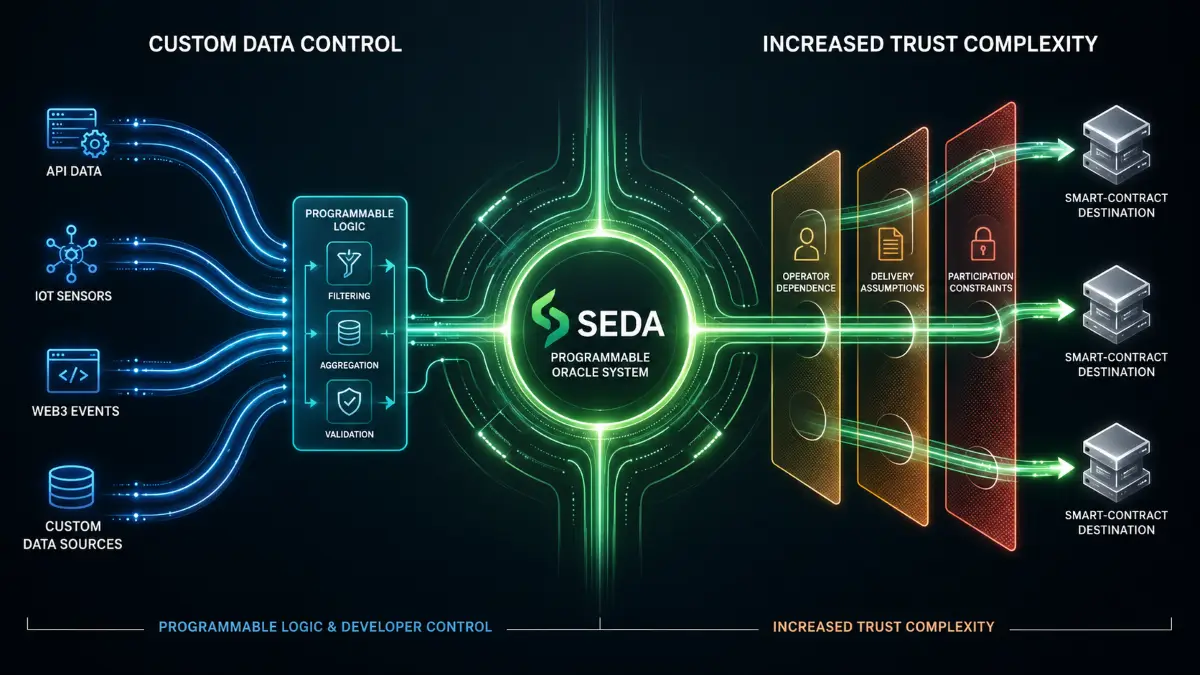
This SEDA Protocol Review examines the unusual freedom SEDA gives developers for an oracle network. They can choose the source, define the calculation, set the replication level, and decide how the result reaches another chain. That flexibility is the product. It is also the risk surface. The review follows each handoff from source to destination. The aim is not to ask whether SEDA can move data. It can. The useful question is whether an application can explain who supplied the data, how SEDA processed it, who relayed the result, and what the receiving contract accepts as valid. SEDA Lets Developers Program the Oracle Itself SEDA is an application-specific Layer 1 for programmable oracle infrastructure. It uses Cosmos SDK and CometBFT for the base chain. Oracle Programs define the instructions used to retrieve, filter, aggregate, calculate, and return external data. That is different from asking a network for one predefined market feed. A builder can request public API data, use private data through a proxy, combine several sources, or apply custom logic before the result reaches an application. The Oracle Program documentation describes these programs as WASM-based instructions that tell the network what to query and how to process the response. The flexibility can support markets that do not fit a standard feed. It can also move more responsibility toward the builder. A well-secured network cannot make a weak source reliable. It cannot fix a bad weighting rule. It cannot reject an economically strange answer unless the Oracle Program or receiving application defines that rule. One Data Request Crosses Several Trust Boundaries A SEDA data request does not travel through one component. A Solver can relay the request to SEDA. Overlay Nodes query the sources named by the Oracle Program. The tally phase applies the program’s calculation rules. Validators coordinate the chain state and sign data batches. A Solver then returns the result to a destination-side Prover Contract, where an application can consume it. Each step solves a different problem. Layer Main job Main question SEDA Chain Consensus, batching and canonical state How distributed is validator control? Oracle Program Source selection and computation Are the rules appropriate and inspectable? Overlay Network External data retrieval Who operates the nodes, and how many sources are queried? Solver Network Request and result relay Can delivery fail, stall, or become concentrated? Prover Contract Destination verification Which signer, proof and upgrade rules apply? Receiving application Final acceptance decision What happens when data is stale, missing, or implausible? Oracle security is not one signature. It is a chain of decisions. That same distinction appears in our cross-chain verification analysis. A result can be authentic while the system around it still contains weak assumptions. Source Quality Remains Outside Consensus External data creates a problem that blockchains cannot solve through consensus alone. If ten nodes read the same incorrect API, consensus can faithfully agree on the wrong answer. SEDA gives Oracle Programs tools to reduce that risk. Builders can select several sources. They can choose a replication factor. Overlay Nodes can query independently and commit results before revealing them. Those controls help only when the configuration uses them well. A program that depends on one exchange still inherits that exchange’s outage risk. Poor weighting can still distort a multi-source result. Private providers can still publish bad values. Developers should be able to explain their endpoints, missing-data rules, outlier handling, and fallback logic. Customization is valuable when those rules are clear. It becomes another trust layer when they are not. The comparison with a more standardized oracle model is useful here. A fixed or established feed can reduce configuration freedom. SEDA moves in the opposite direction and gives builders more control over the feed itself. Neither approach removes the need to inspect the exact feed. The Overlay Network Has Its Own Decentralization Question SEDA’s base chain and its Overlay Network should not receive one shared decentralization label. The chain uses proof of stake. Validators produce blocks and participate in batch signing. The MiCA material describes an active validator set capped at up to 100, selected by delegated stake. The Overlay Network performs a different job. Its nodes fetch the external data requested by Oracle Programs. SEDA documentation describes the long-term Overlay model as permissionless.It also says the rollout occurs in phases, with phase one using an allowlisted group of professional validator companies. A staged rollout can explain both statements. Secret committees and commit-reveal can reduce some coordination risks. They do not prove that operators have independent ownership, infrastructure, or incentives. The useful measurements are operator count, stake concentration, committee diversity, and the process for adding or removing participants. Solvers Move Results, but They Do Not Make Results True The Solver Network connects SEDA with destination chains. Solvers watch for requests, quote the cost of relaying them, submit requests to SEDA, and return completed results to Prover Contracts. The model lets independent Solver operators compete. A requestor can settle with a Solver in a currency that the Solver accepts. The Solver still needs SEDA inventory to pay the network-side execution costs. That detail matters for token analysis later. It also matters for reliability. A Solver outage can interrupt delivery without changing the truth of the underlying data. A destination contract can also contain its own verification or upgrade risk. Our interoperability risk review makes the same distinction. Transport security and source truth are separate problems. A valid proof of delivery does not prove that the original API was accurate. SEDA FAST Changes Latency, Not the Meaning of Trust SEDA FAST provides a lower-latency delivery path for Oracle Programs. SEDA’s delivery documentation says endpoint latency can be as fast as 50 milliseconds in internal benchmarks. That is not an end-to-end guarantee. Readers should not convert speed into a broader security claim. A fast response can still come from a weak source. A signed response can still contain a calculation that the receiving application should reject. Network latency also differs from the total time between a real-world event, source publication, data retrieval, … Read more
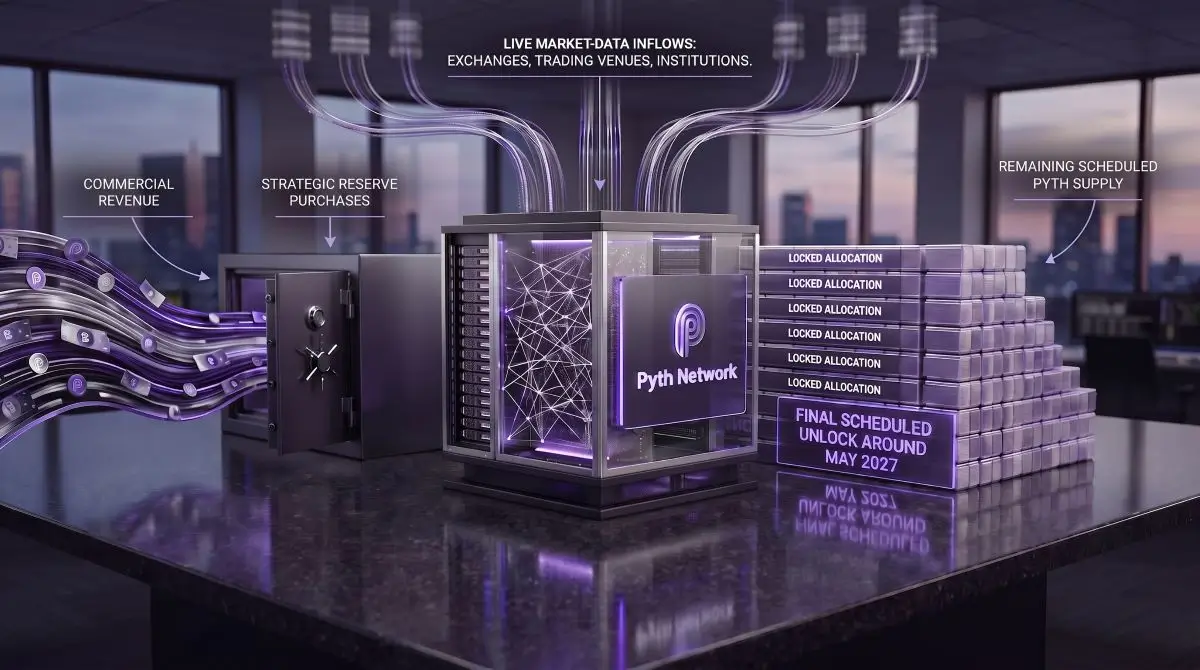
Pyth now generates measurable data revenue and buys PYTH through its reserve, but value capture still depends on supply unlocks, governance and oracle reliability.
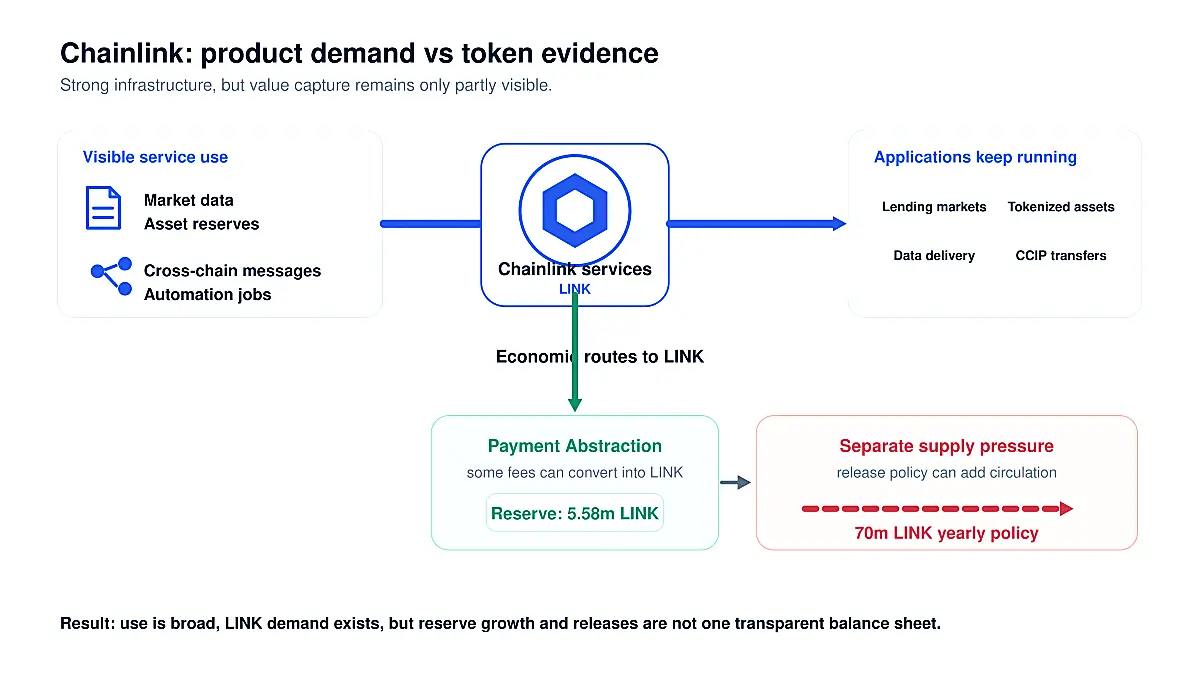
Chainlink has real oracle and cross-chain adoption. This evidence-led review examines LINK supply, staking scope, Payment Abstraction, the Reserve and trust risks.

Evidence-led review of Supra’s oracle and AutoFi architecture, token distribution, validator design, security assumptions, governance, and adoption risks.