Decred Technical Audit: Hybrid Security And Liquidity Risks

A raw, documentary-style close-up photograph of a physical metallic Decred coin for the Decred Technical Audit on Cryptosmedia.

Crypto projects often rely on heavy marketing to hide centralized control, but conducting a thorough Decred technical audit on a network built entirely from scratch requires looking past the standard promises. Decred operates as an independent layer-one blockchain designed to fix the mining cartels that dominate legacy networks like Bitcoin. By merging two distinct consensus models – Proof-of-Work and Proof-of-Stake – into one engine, the protocol attempts to build a truly sovereign financial ecosystem. This Decred technical audit looks at how this hybrid architecture actually functions, who holds the voting power, the realities of its low exchange liquidity, and the security of its treasury system. How I Reviewed This Project I reviewed this project by examining the original Decred documentation, the Politeia DAO governance structure, and on-chain token supply metrics. I also checked open-source developer activity and historical market data from platforms like CoinMarketCap. Because Decred runs on its own independent network rather than relying on Ethereum, my analysis focused heavily on its custom hybrid consensus mechanics rather than standard smart contract audits. I treated all market figures as time-sensitive and checked them strictly on July 1, 2026. The Core Problem Decred Solves Standard mining systems eventually give absolute power to large industrial cartels. Average holders usually lose their voice in network upgrades over time. Decred fixes this by building a secondary validation layer that shifts power directly back to the users. Token holders earn governance rights by locking their native DCR assets into the system. This process creates explicit network voting tickets, allowing the community to manually validate how the network produces blocks. This unique reward split strips absolute power away from mining groups, ensuring the project remains sustainable without falling under corporate influence. Decred Technical Audit: Architecture and Built-In Governance Most digital assets copy existing code, but Decred is a custom build created from zero. Original Bitcoin and Monero developers engineered this base architecture to ensure total independence. My review validates the unique 1%, 89%, and 10% economic split, which confirms that voting power remains with the community rather than with mining firms. The team built native voting directly into the base layer. This prevents the chaotic network splits that once plagued early Bitcoin. The hybrid security system runs on two main pillars: The network operates on its own sovereign blockchain, completely isolated from Ethereum. This protects users from the sudden gas fee spikes often seen on other platforms. Smart Contract Safety and Exploit Defense Unlike Ethereum, this base ledger avoids complex smart contract states. Multi-layered virtual machines frequently suffer from bugs and exploit loops. Decred keeps its architecture simple by isolating transactional data from governance logic. This strict separation makes the system highly secure. The ledger is immune to common minting loops and flash loan attacks that target complex decentralized finance layouts. While automated scanners might give a low safety score because they cannot read standard smart contract data, the actual foundational security of the network is incredibly strong. Team Verification and Treasury Funding Jake Yocom-Piatt and Dave Collins lead the core operations. Both are public, trusted figures in the technology space. A well-known anonymous developer named “tacotime” – who previously helped build Monero privacy architecture – also co-founded the platform. This mix of public and independent leadership protects the ecosystem. The decentralized treasury pays developers directly, creating a massive operational advantage: The network has seen zero successful exploits since its launch in 2016. All community disputes are settled transparently through the Politeia portal, which puts an end to messy network forks. Decred Technical Audit: Tokenomics and Liquidity Threats The circulating supply currently sits near 17.37 million DCR, and users have locked 64% of this inside voting pools. This high lockup rate creates severe liquidity risks because only a small fraction of tokens remains available for daily trading. Tokenomics Factor Details Why It Matters Max Supply 21,000,000 DCR Creates absolute scarcity similar to Bitcoin. Circulating Supply ~17.37 Million DCR The total amount of tokens currently mined. Staked Supply ~64% (Locked) Massively reduces active trading supply, increasing volatility. Daily Trading Volume $1.6M – $3.9M Dangerously low volume makes the asset easier for large holders to influence. Total Market Cap ~$375 Million Current network valuation based strictly on circulating units. Note: Always check live trading volumes on verified dashboards before making any moves. Active daily trading volume hovers between $1.6 million and $3.9 million. This volume is dangerously low for an asset of this size. Wealthy individual whales can easily manipulate the price on thin exchange order books. The asset dropped significantly from its 2021 peak, showing exactly how thin liquidity can accelerate sharp drops during market corrections. Ecosystem Expansion and Privacy The developers focus heavily on real utility rather than social media marketing. They are building secure mobile wallet infrastructure and bridges that connect the network to other systems. Their premier sub-project is the DCRDEX. This platform enables direct peer-to-peer trading without any identity verification. They are also adding on-chain privacy features to ensure that your private funds remain under your control, free from the interference of centralized middlemen. How Decred Compares to Competitors Metric Decred (DCR) Bitcoin (BTC) Ethereum (ETH) Category Sovereign Layer 1 Sovereign Layer 1 Smart Contract Layer 1 Consensus Hybrid PoW / PoS Pure PoW Pure PoS Governance Native On-Chain Voting Off-Chain Miner / Dev Consensus Off-Chain Social Consensus Funding 10% Treasury Reward No Native Treasury No Native Treasury Compared to Bitcoin, Decred offers a much fairer governance model that stops mining pools from controlling the network. However, it lacks the massive institutional liquidity and mainstream adoption that Bitcoin enjoys. Compared to Ethereum, Decred is far more secure against smart contract exploits, but it lacks the sprawling decentralized application ecosystem that drives daily network usage. Risk Signal and Scam Warnings Decred runs on its own independent mainnet. It is absolutely not an ERC-20 or BEP-20 token. Never purchase ‘Wrapped DCR’ on exchanges like Uniswap – these are unauthorized copycat scams. Always use the official ‘Decrediton’ wallet and verify all data through the official … Read more

Celestia Token Review: Tech Risks And The Truth

A documentary-style photo for Celestia Token Review, showing a modern laptop with a matte screen protector displaying modular blockchain data and data availability node performance on a clean wooden desk.

Coin markets move fast, but checking a network with heavy insider selling requires separating the technology from the actual tokenomics. Celestia operates differently from old blockchains. It focuses strictly on keeping data available. Evaluating blockchain infrastructure requires deep research because network conditions change daily. Many platforms launch with great software but fail to protect retail holders from venture capital supply dumps. This setup makes it hard for standard participants to find real value. This independent audit looks past the hype. My goal is to expose the real network stats, price action, and future risks so you can evaluate the project clearly. What Celestia Actually Does Most old blockchains try to do everything at once. They process transactions and store data all in one place. This makes them highly inefficient. Celestia uses modular technology instead. It handles only the raw data availability layer. It takes the hard work of executing transactions and gives it to other networks. The team recently upgraded to Fibre Blockspace to carry a higher volume of data. It acts as a strong foundation for developers to build custom chains. Historical Timeline And Price Action People were very excited when Celestia first launched. The genesis block created 1 billion TIA tokens. The core plan releases more inflation tokens every year, starting at an 8 percent rate. The token price pumped to an all-time high of $20.91 in February 2024. Then a sudden cliff unlock occurred. The network released 176 million tokens directly to early investors and developers. These venture capital firms sold heavily. This caused the price to crash by 98 percent. By April 2026, the asset fell to a low of $0.27. It trades near $0.41 in late May 2026. The token is heavily struggling after a brutal downtrend caused by continuous insider selling. Network Security And Revenue Metrics Celestia operates as its own standalone consensus network. People pay their data transaction costs exclusively in TIA tokens. This makes the infrastructure very cheap for rollups. However, this cheapness is a direct challenge for token holders. Recent on-chain data shows the entire global network generated only about $53.52 in total transaction fees in a 24-hour period. The network simply does not earn enough protocol revenue to protect itself over time. From a technical audit standpoint, it is safer from common smart contract exploits. Leading platforms like CertiK Skynet gave the base layer a security score of 4.2. Whale Concentration Risks Only 12.15 percent of the total supply was sold during the initial public distribution. Private insiders, seed investors, and early contributors divided the remaining supply. This extreme concentration gives a handful of wallets complete control over the market direction. Currently, about $150 million worth of the Celestia Token moves daily. Private whale wallets still hold total dominance. Celestia Tokenomics For Strategic Analysis Tokenomics Factor Details Why It Matters Total Max Supply No Max Supply (—) There is no fixed supply ceiling. Initial supply expands through a built-in inflation model. Circulating Supply 919.93 Million TIA Represents the active portion of tokens currently tradeable in the open market. Total Supply 1.16 Billion TIA The complete number of tokens generated so far, including locked reserves. Initial Inflation Rate 8% Annually The network started with high dilution, meaning a large expansion of competing supply. Target Inflation 1.5% Floor Rate The system decreases emission rates by 10% each year until it hits its permanent floor. Insider Control ~67% Tier-1 Lockups A large portion of the supply was allocated to VCs, creating permanent sell pressure. Future Upgrades and Technical Roadmap The core technical team is rolling out a major network upgrade called Hibiscus. They are also developing a custom system known as Lazy Bridging. This allows rollups to communicate safely without relying on third-party apps. Scam groups frequently target this ecosystem by creating fake lookalike tokens. Users must always verify the authentic identifier on the official explorer. Social sentiment remains very quiet. Community engagement has dropped significantly. The technology is great, but the lack of revenue forces a low score for financial sustainability. Frequently Asked Questions Is Celestia A Dead Project? The technical development is alive. However, token performance remains painful for retail buyers because early whales continue to sell. Why Are Network Fees So Low? The network only processes data availability rather than executing complex smart contracts. This low cost structure is great for developers but represents a major threat to long-term survival due to zero revenue. Can It Reach Its Old High Of 20 Dollars Again? Returning to $20 is highly improbable in the current market. The large increase in circulating supply means the project needs billions in new capital just to offset whale sell pressure. Related Reviews For Further Research If you want to understand alternative layer structures, check our complete Aerodrome Finance Aero review. Additionally, read our detailed Decred review to evaluate governance systems. The Veteran Observation The truth is simple. Celestia is a beautiful piece of blockchain engineering. But the token is mostly used to help early investors cash out their profits using retail money. It works great for developers, but it has been painful for buyers. This is just for education. It is not advice to buy or sell. Zahid Hussaincryptosmedia.com

Arkham Intelligence Asset: The End Of Crypto Privacy?

Wooden desk featuring a laptop displaying Arkham Intelligence Asset market charts, alongside a calculator and handwritten forensic audit notes.

Arkham Intelligence asset is stripping away blockchain anonymity through its highly debated intelligence platform. Crypto projects often look simple from the outside like a logo, a chart, or a short promise. Most communities just repeat the same talking points. Arkham is fundamentally different from most coins on the market. Instead of promising a new network or a decentralized finance protocol, it aims to deanonymize data. People are looking into this project because of its high-profile investors. Its tokenized marketplace has also sparked a lot of debate. The real question is whether the asset has a clear role and if the ecosystem can survive long-term. This audit looks at the platform utility, supply structure, and serious privacy risks. How I Evaluated The Project I examined this platform by analyzing official documentation on arkm.com. Live market data from CoinMarketCap and their corporate LinkedIn presence provided deeper context. Security audit reports were also checked. All market figures are treated as time-sensitive and verified strictly on the listed data date. Comparing Arkham with traditional on-chain analytics tools helped me understand its exact place in the market. What The Platform Actually Does Blockchain transactions are public, but the raw data is completely anonymous. It is very difficult for an average user to read. Arkham uses its AI system, Ultra, to collect on-chain and off-chain data. It matches real-world identities to crypto addresses. The platform currently holds over 350 million labels and 200,000 entity pages. It offers several core tools for on-chain sleuths and institutions: The system serves trading firms, exchanges, media outlets, and government entities. It claims over 3 million registered users. The Arkham Intelligence Asset And Intel Exchange It is always important to separate a working software product from its cryptocurrency. The token serves strictly as the native currency for the Arkham Intel Exchange. This exchange operates as a decentralized intelligence economy. Buyers who want specific on-chain information can place bounties using the token. For example, they can request the identity of a hacker wallet or find the owner of a specific address. Blockchain investigators can conversely conduct auctions to sell the intelligence they have gathered. Arkham calls this model intel-to-earn. It aims to incentivize on-chain research as a public good. The marketplace strictly drives the token active utility. The asset has a clear mechanism for transfer if the exchange sees high volume. The utility becomes much weaker if users only use the free frontend dashboards and ignore the bounty system. Tokenomics And Supply Structure Researchers must evaluate tokenomics carefully, especially for projects with large amounts of locked supply. I checked the supply mechanics to see who actually controls the Arkham Intelligence Asset. Tokenomics Factor Details Why It Matters Total Max Supply 1 Billion Tokens A fixed maximum supply limits total dilution, provided the contract prevents new minting. Circulating Supply 640.84 Million Tokens Over half of the supply is now circulating, reducing initial sell pressure. Ecosystem & Grants 37.3% of Supply Reserved for incentives, which can introduce sell pressure if distributed too quickly. Core Contributors 20% of Supply The team retains a standard, but significant, portion of the tokens. Early Investors 17.5% of Supply Early backers hold a large share, creating potential exit liquidity risks during vesting. Vesting Schedule 1 to 7 Years The long vesting period shows long-term planning but creates continuous inflation. The main research risk here is the future distribution compared to the fully diluted valuation. Future unlocks will continually increase the circulating supply. Roughly 36 percent of the supply is still locked as of my data check. Readers should treat this unlock schedule as a primary market factor. Team Backers And Security Miguel Morel founded the company in 2020. He is an entrepreneur with deep experience in crypto markets and intelligence. Arkham has a highly visible team. It operates as a registered software development company with dozens of public employees on LinkedIn. The project has secured over $10 million in equity financing from major finance and tech players. Investors include Palantir Co-Founder Joe Lonsdale, Tim Draper, Wintermute, and an undisclosed OpenAI Co-Founder. Having a Palantir co-founder on board is notable since Arkham is trying to build the Palantir of crypto. On the security front, the Ethereum Proof-of-Stake network secures the ERC-20 token. The project has undergone security assessments by Hacken. It maintains a 4.3 rating on the CertiK Skynet platform. A public audit can reduce uncertainty, but it does not completely remove smart contract risk. The Privacy Backlash And Core Risks Every crypto project carries market risks, but this platform carries a unique ideological and regulatory risk. The stated mission is ‘deanonymization is destiny’. This means the platform aims to link everyone’s blockchain identity to their real-world identity. This philosophy has sparked severe backlash from crypto privacy advocates. They argue that Arkham violates the core principles of anonymity and censorship-resistance. The company defends its platform by stating they do not collect or store personal user data. They only aggregate and verify publicly available information already present on the ledger. However, the existence of a bounty system that pays users to doxx wallet addresses creates an inherent risk of harassment, misidentification, and regulatory scrutiny. Competitor Context Arkham occupies a unique middle ground compared with similar projects. Enterprise compliance companies like Chainalysis and TRM Labs focus almost exclusively on government agencies, law enforcement, and massive exchanges. Platforms like Nansen focus heavily on retail traders looking for alpha. Arkham bridges these areas by providing a highly visual, retail-friendly intelligence platform. It successfully attracts institutional users. The clearest advantage over competitors is its AI-driven address matching engine and its free-to-use public dashboards. These tools drive massive user acquisition. The main disadvantage is the public controversy surrounding its bounty marketplace. What Readers Should Verify If you are researching this project further, I suggest checking: Frequently Asked Questions In short, what does the Arkham Intelligence Asset actually do? The token acts as the native currency of the Intel Exchange. Buyers use it to post bounties for on-chain information, and sellers use it to auction their … Read more

Lido DAO (LDO) Review: Tech, Risks & The $22B Truth

A real-world validator node infrastructure analyzed during this Lido DAO (LDO) Review.

Listen to me carefully right from the start of this investigation. As an analyst, conducting this Lido DAO (LDO) Review, i am here to share technical research, not financial advice. You must always protect your capital, and conduct your own deep diligence before risking funds in any decentralized physical infrastructure. When i checked the technical framework, the structural data of this protocol showed immense historical growth. But, this transparency is essential. Still, it does not remove severe market risks. For example, if you read our Decred Review, you will see that governance models always come with unique operational dependencies. So, having an audited, mainnet-ready platform is a crucial first step for long-term technical credibility. Lido DAO (LDO) Review: The True Core Purpose Lido DAO is a group that works together to provide a way for people to stake their crypto easily. Its main job is to help people who want to stake Ethereum. Normally, if you stake your ETH directly on the Ethereum network, your money gets locked. You cannot use it or move it anywhere else. Also, to do it yourself, you need at least 32 ETH, which is a lot of money, and you need to be very good at computers to keep a server running all the time. So, Lido solves this problem for everyone. They let you put any small amount of ETH into their system. In return, they give you a token called stETH (Lido staked ETH). This token is great because it stays liquid—meaning you can sell it, trade it, or use it in other apps while you are still earning a 3-5% profit every year. It takes away the big barriers and lets everyone join in. Analyst Perspective On This Liquid Staking Giant If we look at the facts, Lido is not just another copy-cat project. It actually started the whole liquid staking idea. It began in 2020 before Ethereum even fully changed its system. Today, Lido is the biggest player. It handles about 33% of all staked Ethereum, which is more than 9 million ETH. They also use special technology called Distributed Validator Technology (DVT) to make sure the system is safe and not controlled by just one person. This shows that the project has real value and is not a fake or empty shell. Historical Timeline & Price Action Founded by Konstantin Lomashuk, Vasiliy Shapovalov, and Jordan Fish, the project secured early backing from heavyweights like ParaFi Capital. The LDO token has experienced severe market cycles. After peaking at $18.62 in late 2021, it suffered a brutal 98% correction. Now, as of May 18, 2026, the price hovers around the $1.50 to $2.00 range. It has been a heavy and exhausting journey for early believers. Blockchain Network and Technical Analysis Lido works mostly on the Ethereum network. They used to work on Solana too, but they stopped that recently. Now they only support Ethereum and Polygon. Because it runs on Ethereum, if the Ethereum network is busy or expensive, Lido also feels the pressure. Right now, most people running the system want Ethereum to increase its capacity so more transactions can happen. Regarding money, Lido takes a 10% fee from the profit you earn. They don’t keep it all. 5% goes to the people running the servers, 4.5% goes to the project’s bank (DAO treasury), and 0.5% is kept for insurance in case something goes wrong. Technical Audit & Contract Safety Lido’s smart contracts maintain a high security rating from CertiK, backed by a massive $2,000,000 bug bounty. However, independent automated scans, like Token Sniffer, flag unusual contract logic that requires caution. The deepest technical threat lies in threshold signatures. Because protocol keys are distributed among a closed group of node operators, a coordinated compromise could theoretically freeze funds. To understand how automated systems manage cross-chain validation safety, checking the recent Celestia Review provides excellent architectural context. Lido DAO (LDO) Review: The Reality of the Team and Founders In the crypto sector, anonymous founders are a huge red flag, but the Lido team is completely public. They are backed by famous investors, which means they are legally responsible for their code. The founders have a clean historical record. But, because the LDO token price suffered massive drawdowns, internal financial pressure forced the DAO to execute a $20M to $23M treasury buyback. They are actively trying to stabilize the floor price. The code is safe, but the financial tokenomics are under heavy stress. Lido DAO (LDO) Review: Market Performance and Tokenomics If we check the blockchain, we can see exactly who holds the power. The original creator wallet sits at 0%. The top 10 holders control roughly 22.34% of the supply, which is surprisingly well-distributed for a project of this size. Next, you can analyze the live market depth on CoinMarketCap to trace daily movements before executing any allocations. Having 22% concentrated at the top minimizes sudden rug-pull threats, but coordinated selling could still break price floors. LDO maintains deep liquidity, trading millions daily across major exchanges like Binance and Coinbase, making rapid market manipulation highly difficult. The Competitor Clash Lido is clearly dominating this sector. Its competitors are fighting for fractions of the market share. Metric Lido DAO (LDO) Rocket Pool (RPL) Jito (JTO) Market Cap ~$376M ~$43.3M ~$148.5M Main Use ETH Staking Decentralized ETH Solana MEV Holders 84K+ Holders 3,500+ Nodes Growing Recent Update $20M Buyback Saturn Upgrade KODA Partnership When we process raw network metrics, comparing these specialized institutional layers requires sharp focus. To evaluate how liquid ecosystems capture deep trading volume, you should examine our Aerodrome Finance Review for broader market comparison. Risks and Scam Alerts (Red Flags to Avoid) Since 2014, i have watched phishing operations closely, and i want to warn you clearly. Scammers constantly deploy fake tokens mimicking LDO. Always verify the official contract address: 0x5a98fcbea516cf06857215779fd812ca3bef1b32. Recently, attackers dropped fake YIELDX tokens into wallets to lure users to malicious phishing sites. Never interact with unverified airdrops, because they only exist to drain your capital. … Read more

Babylon BABY Review: Truth, Airdrops & Staking Risks

Cryptos Media - honest Babylon (BABY) Review and staking risks.

If you are looking for an honest Babylon (BABY) Review, you have come to the right place. Today, we will sit down and talk. We will uncover the real technology and the hidden risks behind this big project. Furthermore, we will look at the true reality of native Bitcoin staking. Therefore, you can make safe and completely smart choices with your hard-earned money. The crypto market is like a deep ocean. Consequently, it is full of empty promises. Sometimes, a man just needs a steady boat. You need solid ‘Asra’ and clear facts. You must know these facts before you lock your assets anywhere. This guide will give you that exact clarity step by step. What is Babylon and Its True Purpose? The Core Problem It Solves For many years, Bitcoin has been the safest digital money in the world. However, it has one big problem. It just sits there, doing nothing. If you have Bitcoin, it simply stays in your wallet. Consequently, you do not earn any DeFi passive income from it. Babylon is a special network built on the Cosmos system. It takes the heavy security of Bitcoin and shares it. Normally, small networks are weak. Therefore, hackers can attack them easily. But Babylon makes a mathematical bridge. It lets you lock your pure Bitcoin safely. Then, it uses that value to provide Proof-of-Stake security to other chains. Thus, you can earn a profit on your Bitcoin without giving it to a risky exchange. Analyst Perspective I have looked at many crypto codes since 2014. Therefore, I can tell you like a brother. This is not a cheap copy. Indeed, it is a very serious piece of technology. In the old days, you had to give your Bitcoin to a lending company. We all saw how those companies failed. They took people’s life savings. But here, Babylon uses deep math. It keeps your crypto assets safe on its own home network. However, listen to me carefully. This new math brings new dangers. It solves a real problem, yes. But you must pay full attention. Babylon Genesis and the Early 2025 Airdrop The Supercharged Network Launch This project worked quietly in the dark for years. Recently, the team launched a heavy upgrade called “Babylon Genesis.” This is a supercharged network. Specifically, they made it to handle massive pressure from big institutional money without breaking down. The Airdrop Hype Because of this Genesis launch, they officially announced an airdrop. The registration period is for early 2025. When the market hears “airdrop,” people rush immediately. Just like we talked about in our detailed Pi Network (PI) ecosystem review, big hype always brings big money. Everyone wants free money. Furthermore, earning from idle Bitcoin is a big dream. But delivering this safely in the real world is very hard. When the network takes real deposits, they keep the limits very tight. The space gets full in just a few minutes. Consequently, this creates a panic for everyday investors like us. When a man rushes, he makes mistakes. He clicks the wrong links. This is a clever marketing trick. However, it puts unnecessary pressure on a common man’s mind. Technical Audit in this Babylon BABY Review The Slashing Risk on Native Bitcoin Pay close attention here, brother. This is the most important part of this Babylon (BABY) Review. The smart contracts do not actually hold your Bitcoin. Instead, your Bitcoin is locked using special digital signs. But remember, profit is never free. If the smaller network gets hacked, the system does a “slashing”. Alternatively, if the validator does something bad, the code will react. This means the code will automatically burn your locked Bitcoin. This is the heavy price you pay. Therefore, small users put their most precious asset in danger just for a few extra dollars. Smart Contract and Cryptography Vulnerabilities The team uses very advanced math. Top security companies have checked their work carefully. However, the real danger is the bugs we cannot see yet. Bitcoin was never made for this kind of complex work. It is like putting an airplane engine on an old train. If they find a hidden bug, the whole system could freeze. As a result, millions of dollars could get stuck forever. The Reality of the Team and Founders Real Identities vs. Anonymous Developers Throughout this Babylon (BABY) Review, we must look at the creators. The people running this are not hiding. This platform is led by respectful teachers. Specifically, they are researchers from Stanford University. They are not random boys trying to make quick money. They have real knowledge of finance and computer networks. Because they show their real faces, the chance of a scam is very low. This creates high trust. The Track Record When we look deeply into their past, their record is totally clean. There are no old scams. Their past shows they are real experts. Therefore, this is exactly what is needed to build a bridge between Bitcoin and the rest of the crypto world. Live Market Performance and Binance Liquidity The BABY Token and Binance Danger While your Bitcoin is locked, the internal economy runs on the BABY token. You must verify market limits. Therefore, always check the official CoinMarketCap data for the exact real-time circulating supply. This is a strict rule for financial safety. If you look at the live market data, the volume is centralized. Specifically, big centralized exchanges like Binance control the BABY token. If Binance whales control too much, it is very dangerous. Consequently, if they suddenly dump their BABY tokens, the smaller networks will get a heavy shock. If big banks try to control this market, normal users will suffer. If the liquidity goes down, exiting your position becomes expensive. To understand this danger better, you can read our Bitget Wrapped BTC (BWBTC) market guide. Moreover, to understand how networks feed data, check our [Supra Oracle tech audit. Complete Babylon BABY Review: Comparison with Market Leaders The Competitor Clash In this Babylon (BABY) Review, … Read more

Worldcoin (WLD) Review

Worldcoin WLD Review Cryptos Media

Worldcoin WLD Review The Brutal Truth Behind The Iris Scan And Free Money Illusion People come to crypto looking for hope. A way to escape a broken financial system. As we explore in this Worldcoin WLD review, the project looks straight into your eyes, literally, and promises exactly that. A universal basic income. A fair share for everyone. Right now, it sits with a massive Fully Diluted Valuation FDV in the billions. At first glance, it looks like a global revolution. Powerful, well funded, backed by tech billionaires. However, strip the beautiful narrative away, and the math underneath is terrifying. Look at the circulating supply, Look at the total supply. The gap between them is a graveyard for retail investors. The vast majority of the tokens are not in the hands of the people. They are locked up by Venture Capitalists VCs and insiders. Therefore, this is not a fair distribution. It is a delayed execution. The regular investor is just standing there, waiting to be diluted into nothing. ⚠️ Mandatory Educational & Financial Disclaimer This content is provided strictly for informational and educational purposes only. It does not constitute financial, investment, or trading advice. ⚠️ Risk Warning Cryptocurrency markets are highly volatile and risky. You may lose your entire investment. Always consult a qualified financial professional before making any investment decisions. 🔍 Transparency & Editorial Policy:  Transparency & Editorial Policy All content published on CryptosMedia is purely based on information and research. Our goal is to present the real and unbiased picture of the market to our readers. We do not encourage users to click on any links, nor do we advise anyone to buy, sell, or invest in any cryptocurrency or financial asset. Every piece of information is created after deep study, technical analysis, market research, and evaluation of current trends and news to ensure maximum accuracy and value for our audience. All research, analysis, and final content are performed and verified by our team. We only use AI tools to assist with simplifying language, improving clarity, and formatting the content ensuring that information remains human reviewed, accurate, and easy to understand. Worldcoin WLD RANK Top 100 MARKET CAP Highly Distorted VOLUME Driven by Speculation Powered by Market Data What is Worldcoin WLD Really The Core Problem It Solves The pitch is simple, as we highlight in this Worldcoin WLD review. In an age of AI, how do you prove you are human. They built a device called the Orb to scan your retina. In exchange for your biometric data, they give you WLD tokens. Essentially, that is the whole hook. Fundamentally, it is a token built on the Ethereum ecosystem, leveraging Layer 2 scaling. The main idea is to create a global identity and financial network. Sounds like a noble cause, does it not. But here is where the trust breaks. Specifically, the tokenomics are designed to enrich the creators, while slowly bleeding the retail holders through endless supply inflation. Analyst Perspective A Utopia or a VC Exit Plan Look I will be straight with you in this Worldcoin WLD review. The technology behind the Orb is advanced. But we are here to analyze the asset, not the camera. What is the real danger. The Low Float High FDV trap. They released a microscopic percentage of the total supply to the public at launch. This artificially pumped the price because there were barely any tokens to sell. As a result, the project looks incredibly valuable on paper. But behind the curtain, millions of tokens are waiting to be unlocked. You are buying a token at a premium, while the insiders are holding the vault master key. Ultimately, that is a massive red flag. Historical Timeline & Price Action Launch Details and Initial Hype Let us look at the launch details in this Worldcoin WLD review. Long lines of people in developing nations, waiting to scan their eyes for a few dollars. The media hype was deafening. Sam Altman name was plastered everywhere. But right now, the price chart shows the reality of inflation. When you have a token where the supply constantly increases, organic demand cannot keep up. Consequently, the price struggles to hold its ground against true assets like Bitcoin. Major Crashes and Unlock Cycles The charts tell a mathematical truth. WLD does not crash because of bad news. It bleeds because of scheduled token unlocks. Every time the insiders and team members get their locked tokens released, they sell. In normal crypto, you look for support levels. But in a market with massive impending unlocks, support is an illusion. It shows how easily the founders can extract liquidity from the public. Therefore, we just do not see healthy growth. We see a slow, calculated wealth transfer. Blockchain Network and Technical Reality Network Dependency & Centralized Hardware It lives on the blockchain, yes. But it depends entirely on a piece of proprietary hardware, The Orb. Want to participate fully. You must hand over your biometric data to a centralized corporate entity. If they change the rules, alter the app, or shut down the Orbs, the entire ecosystem halts. You are entirely at the mercy of their corporate roadmap. The Reality of the Team and Founders As noted in this Worldcoin WLD review, the project has very public, very famous founders. We know their names. But knowing who holds the knife does not make the cut hurt any less. Trusting a famous Silicon Valley billionaire, without analyzing the token release schedule, is how people get wrecked. They are legally protected. They are already wealthy. The technical code might be audited and secure, but the economic design is heavily tilted against you. Live Market Performance & Whale Concentration Visualizing The Extreme Inflation Threat Within WLD Tokenomics. Insert a chart here showing the tiny circulating supply vs the massive locked total supply Blockchain Evidence The blockchain does not care about the Basic Income narrative. It only holds facts. Total supply 10 Billion tokens. Circulating supply at launch Just … Read more

Supra Oracle Review: The Real Story

Cryptos Media Supra Oracle Review

Market Risks and Technical Truth in this Supra Oracle Review Look brother, sit down, and just clear your mind for a minute. Welcome to CryptosMedia. The crypto market is a ruthless place, and people lose their life savings chasing shiny marketing. In this Supra Oracle Review, we are putting away the noise. We will look at the forensic details, the raw on-chain data, and the actual mechanics. No glossy words, just matte, technical reality, so you can see the truth. Let us break it down, piece by piece, so your mind can process the depth of what is really happening on-chain. What is Supra and Its True Purpose? The Core Problem It Solves Normally, smart contracts are dead, passive things. They wait for outside bots to move them. Supra ($SUPRA) is built to fix this broken system. It is a Layer-1 blockchain, officially built for what they call AutoFi. This network does not just feed data. It hardcodes oracles, verifiable randomness, and automation, directly into its base layer. This infrastructure stops race conditions, and fixes MEV leakage at the root. For developers, this provides a solid ‘Asra’. It allows safe, instant settlement of high-value assets, bringing ‘Umeed’ for a financial system that actually moves on its own without relying on fragile third-party keepers. Analyst Perspective: A Necessity or Another Copy-Paste? Having checked thousands of networks, I can tell you straight, this is not a generic copy-paste job. The market is full of EVM clones that patch together broken bridges. But as we look deeper for this Supra Oracle Review, the path here is completely different. Supra runs a MultiVM environment. It supports MoveVM, EVM, SolanaVM, and CosmWasm natively. Backed by its proprietary Moonshot consensus and DORA protocol, it brings off-chain needs into the main execution layer. This allows developers from different ecosystems to build without rewriting their entire code. This is built for institutional grade work, not just retail noise. Historical Timeline & Price Action Launch Details and Initial Hype To understand an asset, brother, you must look at its history. The token launched with massive initial hype, selling an ambitious, full-stack narrative. The market went irrational, driven by the promise. Because of this aggressive institutional backing, the asset hit its all-time high of $0.07345 on December 8, 2024. Major Crashes and Bleeding Data But the market has no mercy. A true, honest Supra Oracle Review must show the deep scars, not just the green candles. The historical data shows a devastating contraction. The token suffered a brutal 99.53% collapse, hitting rock bottom at $0.0003374 on April 26, 2026. Right now, the 24-hour trading volume is just around $902,777. This shows a severe, undeniable lack of demand today. You must accept that even the most advanced cryptography cannot protect an asset from a severe market liquidation cycle. Blockchain Network and Technical Analysis Gas Fees and Network Dependency Supra runs entirely on its own independent network. The native $SUPRA token is the absolute lifeblood here. You pay gas fees, and specific automation tasks, with it. Because it is native, these fees go directly back to the treasury and validators. But, securing this Proof of Stake network is strict. Node operators must lock up a massive 55 million tokens. While this secures the chain against cheap attacks, it essentially forces the network into the hands of wealthy whales. The average retail investor cannot run a node, which centralizes the underlying validation process. Technical Audit and Severe Vulnerabilities Here is where we look at the raw code. The consensus is formally verified by Microsoft’s IVy Verifier. However, there are massive on-chain red flags. As a critical part of this Supra Oracle Review, you must know this. The network holds a highly concerning CertiK rating of only 3.9 out of 100. A score this low, especially in a MultiVM setup, points to severe structural risks. Mixing Solidity, Move, and Rust multiplies the attack surface. It creates massive chances for hidden exploits, cross-VM execution errors, and bridging loopholes. You must use absolute caution here, as hackers constantly target these specific vulnerabilities. The Reality of the Team and Founders Background Check and Verification Never trust a ghost with your money. Luckily, Supra is run by a fully doxxed, human team. The CEO, Joshua D. Tobkin, has been building in blockchain since 2017. The Chief Research Officer is Dr. Aniket Kate, an academic heavy-hitter who invented the KZG commitments that scale Ethereum today. They have over ten PhDs specializing in cryptography on their payroll. They are legally accountable, real people. Past Controversies and Funding The team has a clean public record. There are zero hacks, no exit scams, and no internal disputes found in their history. They raised $42 million from big institutional names like Coinbase Ventures, Animoca Brands, and HashKey. This absolute transparency brings top-tier technical trust to the project. Live Market Performance, Liquidity, and Tokenomics Whale Concentration Data Look at the numbers, brother. The maximum supply is mathematically capped at 100 billion tokens. But the macro tokenomics show heavy, undeniable centralization. Specifically, 22.6% goes to the Foundation, 20.7% to early contributors, and 16% to the team. This proves that nearly 60% of the total supply is tightly controlled by insiders. When the majority of an asset is held behind closed doors, the retail market is always at risk. The Liquidity Threat This is the most critical threat in this Supra Oracle Review. Pay close attention to the exchange data. Only 25.9 billion tokens are in the live, circulating market. With order books this incredibly thin, some major exchanges show barely $3,000 in upside depth. If the whales or early contributors move their massive bags when vesting cliffs hit, the buy pressure cannot absorb it. The price will instantly collapse, draining all liquidity and leaving retail investors trapped. Comparison with Market Leaders To see the truth clearly, we must compare Supra against the heavy giants of the industry. Metric Supra (SUPRA) Ethereum (ETH) Solana (SOL) Market Cap $8.92 Million Market Leader Market Leader Core Utility … Read more

MANTRA Review

Cryptos Media MANTRA Review forensic analysis of RWA token migration

Tech, Risks, and The Real Truth Look brother, sit down and clear your mind. The crypto market is a ruthless place. People lose their life savings because they chase shiny promises and marketing hype. We do not do that here. In this MANTRA Review, we are going to strip away the noise. We will look at the forensic details, the raw on-chain data, and the actual mechanics of the network. No glossy words. Just matte, technical reality, so you can make decisions based on facts. What is MANTRA and Its True Purpose? The Core Problem It Solves Traditional finance, like real estate and banking, holds trillions of dollars. But, it is heavy. It is slow. Moving assets takes days, and involves too many middlemen. MANTRA is an EVM-compatible Layer-1 blockchain, explicitly engineered to fix this massive friction. As we highlight in this MANTRA Review, it is built for Real World Asset (RWA) tokenization. Why do institutions hate crypto? Because of regulatory fear. They cannot trade on networks where money laundering is a risk. MANTRA attacks this problem at the root. It natively integrates Know Your Customer (KYC), Know Your Business (KYB), and Know Your Transaction (KYT) directly into the protocol. More importantly, it uses Know Your Validator (KYV). This means the people running the network are legally verified. This infrastructure gives big money a solid ‘Asra’. It allows the safe, legal trading of real estate and US Treasuries on the blockchain, bringing ‘Umeed’ for a bridge between old money and new technology. Analyst Perspective in this MANTRA Review I have watched this market since 2014. Every bull run, we see hundreds of useless Layer-1 clones. They copy Ethereum, change the logo, and dump tokens on retail. But as we compile data for this MANTRA Review, the technical reality shows a different path. MANTRA is not a blind copy. Specifically, it uses the battle-tested Cosmos SDK. It is a permissionless chain, meaning anyone can use it, but it supports permissioned applications for strict institutional use. This is a very specific, and highly necessary, niche. Furthermore, they secured a Virtual Asset Service Provider (VASP) license from Dubai’s VARA. You do not get this license by faking code. You get it by proving operational legitimacy. Ultimately, this shows it is built for concrete, legal use cases, not just retail hype. The RWA sector is projected to be a multi-trillion dollar market by 2030, and MANTRA is positioning itself as the primary legal gateway for this capital. Historical Timeline & Price Action Launch Details To understand an asset, you must know its history. MANTRA started testing its RWA Layer-1 in November 2023. The official mainnet went live on October 23, 2024. Then, a massive structural shift happened. The team migrated from their old Ethereum-based ERC-20 token, known as $OM. Subsequently, they moved to their own native chain with the new $MANTRA token. In early 2026, they executed a 1:4 token split upgrade to adjust the supply and optimize the network for institutional throughput. Major Crashes The market has no mercy, brother. A true, honest MANTRA Review must show the deep scars, not just the green candles. Historical data exposes extreme volatility. After the token migration and a major Binance listing, the price saw a massive 68% surge. We saw aggressive pump cycles in early 2026. For instance, it spiked 25.07% around February 14, and another 15.89% by February 20. But gravity always wins. The asset suffered severe, punishing drawdowns. It plummeted 11.55% in a single day on December 18, 2025. Now, as of late April 2026, the token trades roughly 60.9% below its March 4, 2026, all-time high of $0.02659. In fact, it touched an all-time low of $0.01009 just days ago. This is the brutal reality of market cycles. You must realize that even the strongest technology cannot protect you from the violent swings of BTC-led liquidations. Blockchain Network and Technical Analysis Gas Fees Ethereum is slow, and the gas fees drain your wallet. MANTRA steps away from that trap. It operates independently of Ethereum’s congestion. By using its own Cosmos SDK Layer-1 infrastructure, transactions are logically optimized. Therefore, they are built for low costs, and high speed. It executes cross-chain asset movements smoothly through the Inter-Blockchain Communication Protocol (IBC). Operating natively like this removes the heavy fee friction. Consequently, this gives the retail trader a functional, real advantage against network costs. Technical Audit In this section of our MANTRA Review, we look at the core code. MANTRA’s v5.0.0 Abunnati Upgrade introduced a custom EVM module. This allows standard Solidity smart contracts to run on Cosmos architecture. The Cosmos base is very secure. But, listen closely. When you connect an EVM module to cross-chain bridges, you open doors to hackers. The network relies on external bridging protocols, like the Hyperlane Nexus bridge. These bridges are the weakest link in DeFi, and are often exploited. However, MANTRA actively fights this by using its closed, KYV-screened validator set to block malicious consensus attacks. The Reality of the Team and Founders Background Check Never trust a ghost with your money. Unfortunately, many projects are run by anonymous avatars who disappear when things go bad. However, MANTRA operates with absolute public transparency. For instance, key leaders, like John Patrick Mullin and Henri Arslanian, show their faces globally. Furthermore, they maintain a verified corporate office in Dubai. Additionally, they list 124 real employees on professional networks, including people like Calvin Ng and James Birney. Ultimately, Dubai’s VARA demands this strict corporate structure. Therefore, they are legally accountable, human entities. Past Controversies Looking at the operational data, the track record is clean. There are zero recorded smart contract exploits, no wallet hacks, and no internal team fights. The team did undergo aggressive restructuring to align with their new RWA focus. First, they burned 300 million old tokens to clean up the supply. Consequently, the original ERC-20 framework was completely shut down. Finally, management moved the entire workforce to the new native mainnet. Some people panicked, but this was … Read more

Hyperliquid HYPE Token Review – Real Facts

Massive high-end server chassis physically displays the Hyperliquid HYPE Token logo, showcasing the custom-built network infrastructure on the Stylue website.

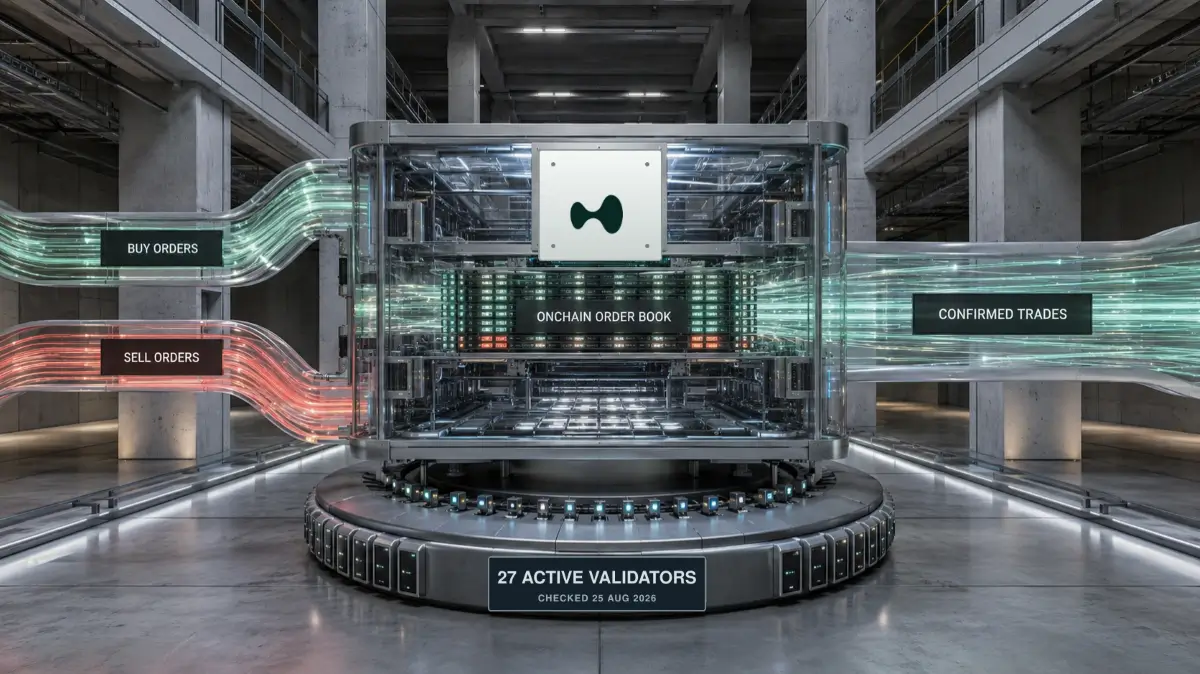
Every serious trader wants a clear edge, and our Hyperliquid HYPE Token review delivers exactly that. The decentralized finance market moves incredibly fast today, but traditional networks simply cannot handle heavy trading volume without breaking. This specific Layer-1 network promises to fix that broken infrastructure permanently. Many platforms try to copy existing blockchain codes and fail miserably. This project takes a completely different and bold path. The development team built a custom engine to handle massive global derivatives trading natively, without relying on slow secondary layers. Let us look closely at the facts, the actual network speed, and the hidden centralization risks that everyday retail buyers often miss. The Architectural Reality Standard financial markets have fixed opening times that stop you from trading freely. This network operates 24/7, allowing you to trade crypto, oil, and gold with up to 40x leverage. You never have to ask a bank for permission. The system runs on a custom built engine called ‘HyperCore’. This unique setup completely removes the need for third-party banks or centralized custody vaults. Traders keep their own funds secure while executing rapid market moves. There is zero risk of an exchange owner running away with your money. Every single trade executes directly on the transparent public ledger, giving the trader real peace of mind. Execution Speed and Network Fees Old blockchain systems get jammed quickly and become dangerously slow. This network processes an astonishing 200,000 transactions per second. Blocks finalize completely in just 0.07 seconds. This extreme speed means your trades execute almost instantly. You avoid the dangerous network lag that often ruins trading positions during sudden market panics. Furthermore, the platform offers true zero gas fees for regular trading. You simply use the native token to stake, vote, and pay tiny fees when interacting with external smart contracts. EVM Compatibility Despite this raw, custom speed, the network supports standard Ethereum smart contracts seamlessly. Developers do not need to learn a complex new coding language to build here. They can simply port their existing decentralized applications directly onto this fast infrastructure. This is not a cheap copy-paste job, it is a massive technical upgrade for the entire ecosystem. The Self-Funded Advantage Venture capital firms usually ruin new crypto projects by dumping locked tokens on retail buyers. The founders of this network funded the entire initial build completely out of their own pockets. This early independence is a very strong positive signal. It removes aggressive corporate pressure and aligns the core development team directly with the everyday community users. By early 2026, the public trusted this independent approach so much that the network secured almost $5 billion locked actively inside its system. Tokenomics and the Supply Trap The maximum supply is strictly locked at 1 billion tokens. While the lack of early corporate investors is fantastic, the network still schedules regular token unlocks for the team and the community. Constant token emission creates permanent inflation within the ecosystem. If normal buyers do not purchase these newly released tokens, the price stability will simply collapse over time. Recently, the team reduced a massive token unlock from 1.2 million down to just 140,000 units. They did this specifically to save the open market from a sudden and brutal price crash. The Centralization Bottleneck Here lies the biggest danger of the entire project. The entire global network is secured and controlled by only 24 active validators. This is a massive centralization bottleneck. A tiny group of computer operators holds absolute power over the entire trading ledger. If these big whales decide to sell their unlocked tokens in a hurry, the market price could fall very fast. Security Audits and Time Locks Security is the most important factor in decentralized finance. Right now, the network holds a very solid safety score of 4.6 from CertiK, proving the base code is highly resistant to standard attacks. To stop sudden network attacks or rapid capital flight, the system enforces a mandatory 7-day waiting period to unstake tokens. This time lock acts as a strong physical barrier against malicious behavior. Market Volatility and Price Action The open market always moves in aggressive waves. Historical data shows that the price of this asset has seen very violent jumps and crashes since its public launch. The asset traded near $3.20 in late November 2024. Speculative momentum then pushed the valuation up over 1,000 percent, hitting a massive peak near $60 in September 2025. A severe, market-wide crash in October 2025 wiped out many late buyers. However, the asset recovered quickly moving into early 2026, proving it has real staying power. Real Trading Volume Every single day, about $345 million worth of the asset is actively traded. This high volume proves that the token is highly liquid and not easily manipulated by small retail groups. You can easily buy or sell it on major trusted platforms like OKX, Bybit, and Coinbase. It is not a dead asset, real institutional money is actively moving through these order books. The Founder Transparency Gap The engineering team comes from elite institutions like Harvard, MIT, and Citadel. They clearly understand the complex mathematics behind high-frequency trading. However, they operate strictly under fake internet names like ‘iliensinc’. For big institutional investors, hiding real names always creates a minor trust gap in the financial sector. Fortunately, their past record is completely clean. No wallets were hacked, there are no internal team fights, and no smart contracts were ever broken under their watch. Competitor Clash Evaluating market position requires a direct look at the competition: Metric Hyperliquid Aster Poly Market Market Cap $10.18 Billion Much Lower Private Valuation Primary Utility Fast L1, EVM, Prediction Decentralized Exchange Pure Prediction Market Community Size 1.91 Million Users Lower Volume Massive Event Traffic The HIP-4 Ecosystem Catalyst The team is actively pushing real code updates, not just empty marketing promises. The recent price recovery is heavily tied to the upcoming HIP-4 network upgrade. This specific update introduces decentralized prediction markets natively into the blockchain. Users will soon be able to … Read more