io.net IO Token Review: The Brutal Truth Behind AI GPU Compute

A raw and realistic GPU computing cluster showing the physical hardware analyzed in this io.net IO Token Review.

Listen to me carefully right from the start of this investigation. As an analyst, conducting this io.net IO Token Review, i am here to share technical research, not financial advice. You must always protect your capital and conduct your own deep diligence before risking funds in any decentralized physical infrastructure network. When i checked the technical framework, the leadership of IOG Network was found to be public and documented. Founders Ahmad Shadid and CEO Tory Green actively support the project. This is a rare sight in the anonymous world of cryptocurrency. But, this transparency is essential. Still, it does not remove market risks. For example, if you read our Zenlink ZLK Crypto Review, you will see that managing liquidity and decentralized networks comes with significant operational dependencies. So, having an audited, mainnet-ready platform is a crucial first step for long-term technical credibility. io.net IO Token Review: The YMYL Safety Check Evaluating high-utility digital assets under the Your Money or Your Life framework requires looking directly at security audits and systemic risk protocols. When we process raw network metrics, the threat of smart contract vulnerabilities or data leakage during distributed machine learning tasks can cause immediate financial damage to participants. Thus, checking the platform stability on the Solana infrastructure is not just a secondary task. In fact, it is the primary shield protecting your deployed capital from sudden structural exploits. The Core Problem And Solution The modern artificial intelligence ecosystem is facing a crushing, existential graphics processing unit shortage. Training complex models now takes months and requires thousands of high-end chips that only corporate monopolies control. This enormous financial barrier destroys independent innovation. Next, it forces developers to use centralized systems that might compromise their privacy. So, io.net solves this hardware crisis through the lens of a decentralized physical infrastructure network for AI compute clusters. Their protocol pools idle GPU power from independent data centers, cryptocurrency miners, and retail hardware owners across the globe. This coordination creates a massive, singular computational grid that developers can instantly rent with a single click. The platform secures the entire hardware validation process via Solana-based smart contracts. Also, this allows for transparent yields while hardware owners maintain absolute device ownership. How It Works ELI5 Style Imagine that the global computing landscape is a massive, crowded construction zone with a severe shortage of heavy cranes. If you want to build a major skyscraper quickly, you need one thousand high-performance cranes immediately. Normally, you have to contact the large corporate leasing companies. Yet, you often find they are fully booked for years, and their prices are far too expensive. Now, the io.net protocol functions as a universal, decentralized digital radio system. It instantly contacts thousands of independent individuals across the world who have a single crane sitting idle in their backyards. Then, instead of relying on one slow monopoly, the system seamlessly links all these separate cranes together to operate as one unified machine. This builds your skyscraper in record time. Then, the developer gets the AI model trained at a fraction of the cost. The crane owners secure automated payouts via secure blockchain channels. And, the validator grid ensures absolute efficiency through proof-of-compute metrics. You simply rent the precise collective power you need. Besides, the decentralized network manages the operational complexity. To understand how specialized networks handle these heavy AI tasks, you should review our Heurist AI Token Analysis for deeper context. io.net IO Token Review: Supply and Emissions Audit Here is where we perform the essential forensic audit on the IO asset itself. Honestly, i dug deep into the hard metrics, and the structural parameters of this token require sharp caution. The IO token operates with a fixed maximum supply of 800 million coins. These will gradually enter circulation through systematic proof-of-compute emissions. So, the initial circulating supply is only a modest fraction of the full structure. A considerable allocation went to ecosystem growth, hardware providers, and early backers. This is a consistent reality in infrastructure protocols. Next, you must check the live metrics on CoinMarketCap using the updated widget below to track the real-time circulating supply before making an asset allocation decision. You must watch the emission velocity carefully. Because, if real hardware demand fails to absorb the incoming token supply, systemic inflation pressure will gradually settle the asset price. The Competitive Matrix Core Metric io.net (IO) Reality Aethir (ATH) Reality Akash Network Reality Primary Focus Decentralized AI cluster coordination. Enterprise cloud gaming infrastructure. General purpose cloud computing. Infrastructure Coordinated GPU clusters on Solana. Distributed node virtualization layers. Open marketplace for multi-resource servers. Data Handling High-throughput cluster communication. Enterprise server data encryption. Standard containerized web hosting. User Role Rent clusters or supply idle GPU power. Run nodes or consume gaming data. Bid for server space using tokens. Yield Engine Proof-of-compute emissions. Service provider fees and rewards. Provider marketplace matching incentives. Competitive Analysis And Moat When you compare these specialized computational categories, the operational rationale of this protocol becomes abundantly clear. Before, developers had generalized compute networks that often treated heavy AI workloads like simple file storage. This led to massive inefficiencies. Today, the competitive landscape for these high-utility assets requires forensic precision. We saw similar structural shifts when evaluating institutional asset layers in our Nexera NXRA Review. Great technical architecture alone cannot build an unbeatable information moat. Since competitors are always launching similar decentralized compute layers, survival requires constant innovation. Also, this platform differentiates itself by offering rapid, single-click cluster deployments. In short, this gives it a powerful tool in attracting machine learning engineering talent. Final Expert Verdict On This io.net IO Token Review Truly, i want to tell you this is a hidden gem, but i promised you the raw, logical truth in this io.net IO token review. The technical foundation they built is incredibly ambitious. But, the decentralized physical infrastructure landscape carries massive volatility risks. We must not let short-term AI hype blind our logical reasoning. In fact, the massive token supply cap and the continuous emissions require extreme portfolio management … Read more

Zenlink (ZLK) Crypto Review: The Brutal 99 Percent Crash Reality

Zenlink Crypto Review market crash reality by Cryptosmedia

The $100B Cross-Chain Dream: Zenlink Crypto Review Reality Listen to me carefully. I remember digging deep into the Polkadot ecosystem back in the first quarter of 2021. I was watching the Rococo test network roll out, and i saw the team finish their first cross-chain test, which leads me to this Zenlink Crypto Review. It reminds me of the infrastructure depth we analyzed in our Aethir (ATH) Technical Review. Back then, it felt like a massive breakthrough. Fast forward to May 2026, i sat down with my coffee, pulled up the market data, and felt a heavy drop in my stomach. The price had collapsed from an all-time high of 4.40 dollars, to a mere 0.0011 dollars. I want to give you hope, but i also need to give you the facts so you do not burn your hard-earned money. Let us look at what is really happening here. Zenlink Crypto Review: The YMYL Safety Check Before we go further, you must know this is not financial advice. I am sharing my personal research to help you see the reality. When i looked into their security on [CertiK], i found a rating sitting at a brutal 2.8 score. The project is backed by the Zenlink Foundation, but that low security rating is a serious concern when we are talking about your funds. Always protect your capital first. The Core Problem And Solution When developers build new chains on Polkadot, they face a huge wall. Building an exchange from scratch takes too much time, and the liquidity gets trapped on one single chain. I saw Zenlink step up to fill this gap. They created a plug-and-play module. As they stated, their vision was to build an ultimate, open, and universal cross-chain DEX protocol with one click. Developers could just insert the code, and deploy an exchange instantly. It was meant to be the ultimate hub, sharing liquidity across every single chain. How It Works ELI5 Style Imagine Polkadot is a massive shopping mall with hundreds of different stores. Normally, if you buy something in one store, you cannot easily exchange it at another store. Zenlink acts like a master plumbing and delivery system, hidden completely behind the walls. They use smart order routing to find the best trading path across all the stores. You just click swap, and the system pulls liquidity from everywhere to give you the best price, without you ever noticing the complex pipes behind the scenes. This kind of backend complexity is similar to what we discussed in the Akash Network Analysis. Tokenomics Reality Check Here is where the brutal truth comes out in this Zenlink Crypto Review. i dug into the supply numbers. They have a maximum supply of 100 million coins. Right now, a fraction of that is actually circulating. But the demand is completely dead. The market capitalization is sitting around 58 thousand dollars according to CoinMarketCap. On some exchanges, the 24-hour trading volume is literally zero dollars. You cannot sustain a project, or build trust, when no one is trading it. The Brutal Pros And Cons Strong Points Red Flags Zenlink vs Rivals: The Metric Truth Metric Zenlink (ZLK) Standalone DEXs Primary Focus Cross-Chain Aggregation Single-Chain Isolation Liquidity Strategy Shared / Routed Trapped / Localized Slippage Control Algorithm Based Pool Depth Dependent Active User Base (2026) Near Zero High Security Trust Very Low (2.8 CertiK) Varies (Usually Audited) Competitive Analysis When you compare Zenlink to standalone exchanges, the difference is clear. Standalone platforms isolate their liquidity, making trades more expensive for users. Zenlink tried to aggregate everything to give low slippage. But the harsh reality is that rival platforms with massive user bases completely crushed them. If you look at our recent audits like the MegaETH Crypto Review or the [Pyth Network Review 2026], you will see what a thriving infrastructure actually looks like. Great technology means absolutely nothing, if the competitors already have all the active traders. Final Expert Verdict: Zenlink Crypto Review I want to tell you this is a hidden gem, but i promised you the brutal truth in this Zenlink Crypto Review. The technological foundation they built in 2021 was solid, but the market has completely abandoned it by 2026. The zero volume and low security score make this extremely risky. Keep your money safe, watch from a distance, and look for projects that actually have active users. Zahid Hussaincryptosmedia.com

Babylon BABY Review: Truth, Airdrops & Staking Risks

Cryptos Media - honest Babylon (BABY) Review and staking risks.

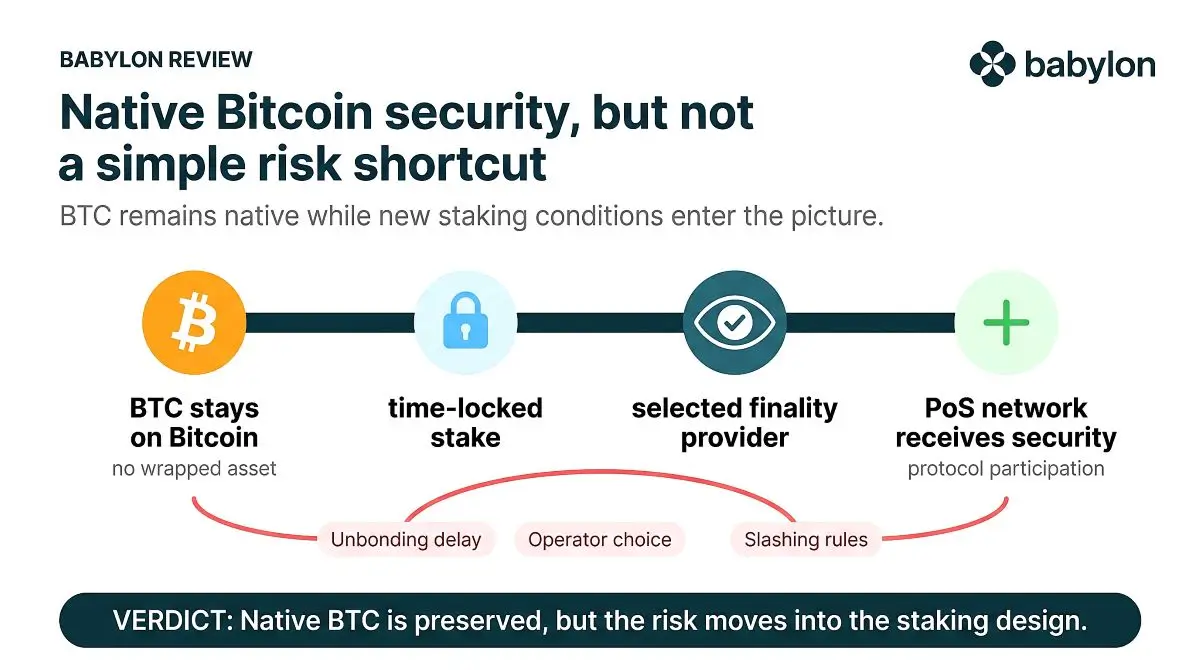
If you are looking for an honest Babylon (BABY) Review, you have come to the right place. Today, we will sit down and talk. We will uncover the real technology and the hidden risks behind this big project. Furthermore, we will look at the true reality of native Bitcoin staking. Therefore, you can make safe and completely smart choices with your hard-earned money. The crypto market is like a deep ocean. Consequently, it is full of empty promises. Sometimes, a man just needs a steady boat. You need solid ‘Asra’ and clear facts. You must know these facts before you lock your assets anywhere. This guide will give you that exact clarity step by step. What is Babylon and Its True Purpose? The Core Problem It Solves For many years, Bitcoin has been the safest digital money in the world. However, it has one big problem. It just sits there, doing nothing. If you have Bitcoin, it simply stays in your wallet. Consequently, you do not earn any DeFi passive income from it. Babylon is a special network built on the Cosmos system. It takes the heavy security of Bitcoin and shares it. Normally, small networks are weak. Therefore, hackers can attack them easily. But Babylon makes a mathematical bridge. It lets you lock your pure Bitcoin safely. Then, it uses that value to provide Proof-of-Stake security to other chains. Thus, you can earn a profit on your Bitcoin without giving it to a risky exchange. Analyst Perspective I have looked at many crypto codes since 2014. Therefore, I can tell you like a brother. This is not a cheap copy. Indeed, it is a very serious piece of technology. In the old days, you had to give your Bitcoin to a lending company. We all saw how those companies failed. They took people’s life savings. But here, Babylon uses deep math. It keeps your crypto assets safe on its own home network. However, listen to me carefully. This new math brings new dangers. It solves a real problem, yes. But you must pay full attention. Babylon Genesis and the Early 2025 Airdrop The Supercharged Network Launch This project worked quietly in the dark for years. Recently, the team launched a heavy upgrade called “Babylon Genesis.” This is a supercharged network. Specifically, they made it to handle massive pressure from big institutional money without breaking down. The Airdrop Hype Because of this Genesis launch, they officially announced an airdrop. The registration period is for early 2025. When the market hears “airdrop,” people rush immediately. Just like we talked about in our detailed Pi Network (PI) ecosystem review, big hype always brings big money. Everyone wants free money. Furthermore, earning from idle Bitcoin is a big dream. But delivering this safely in the real world is very hard. When the network takes real deposits, they keep the limits very tight. The space gets full in just a few minutes. Consequently, this creates a panic for everyday investors like us. When a man rushes, he makes mistakes. He clicks the wrong links. This is a clever marketing trick. However, it puts unnecessary pressure on a common man’s mind. Technical Audit in this Babylon BABY Review The Slashing Risk on Native Bitcoin Pay close attention here, brother. This is the most important part of this Babylon (BABY) Review. The smart contracts do not actually hold your Bitcoin. Instead, your Bitcoin is locked using special digital signs. But remember, profit is never free. If the smaller network gets hacked, the system does a “slashing”. Alternatively, if the validator does something bad, the code will react. This means the code will automatically burn your locked Bitcoin. This is the heavy price you pay. Therefore, small users put their most precious asset in danger just for a few extra dollars. Smart Contract and Cryptography Vulnerabilities The team uses very advanced math. Top security companies have checked their work carefully. However, the real danger is the bugs we cannot see yet. Bitcoin was never made for this kind of complex work. It is like putting an airplane engine on an old train. If they find a hidden bug, the whole system could freeze. As a result, millions of dollars could get stuck forever. The Reality of the Team and Founders Real Identities vs. Anonymous Developers Throughout this Babylon (BABY) Review, we must look at the creators. The people running this are not hiding. This platform is led by respectful teachers. Specifically, they are researchers from Stanford University. They are not random boys trying to make quick money. They have real knowledge of finance and computer networks. Because they show their real faces, the chance of a scam is very low. This creates high trust. The Track Record When we look deeply into their past, their record is totally clean. There are no old scams. Their past shows they are real experts. Therefore, this is exactly what is needed to build a bridge between Bitcoin and the rest of the crypto world. Live Market Performance and Binance Liquidity The BABY Token and Binance Danger While your Bitcoin is locked, the internal economy runs on the BABY token. You must verify market limits. Therefore, always check the official CoinMarketCap data for the exact real-time circulating supply. This is a strict rule for financial safety. If you look at the live market data, the volume is centralized. Specifically, big centralized exchanges like Binance control the BABY token. If Binance whales control too much, it is very dangerous. Consequently, if they suddenly dump their BABY tokens, the smaller networks will get a heavy shock. If big banks try to control this market, normal users will suffer. If the liquidity goes down, exiting your position becomes expensive. To understand this danger better, you can read our Bitget Wrapped BTC (BWBTC) market guide. Moreover, to understand how networks feed data, check our [Supra Oracle tech audit. Complete Babylon BABY Review: Comparison with Market Leaders The Competitor Clash In this Babylon (BABY) Review, … Read more

Vana (VANA) Review: The Real Story

Vana VANA crypto coin breaking data chains.

Let me be direct with you. When you sit down to read a real Vana (VANA) Review, you are looking for the exact truth, not a marketing pitch. We are not here to chase shiny promises or blindly follow the hype. At CryptosMedia, we deal in the bare concrete of reality. Take a deep breath, clear your mind, and let us look closely at what your money is actually touching. We need to find real Umeed (Hope) in this market, but it must be built on raw math and solid facts, not just loud slogans. Vana (VANA): Data Sovereignty or a Liquidity Trap? What is Vana (VANA) and Its True Purpose? The Core Problem It Solves For years, big technology companies have treated your personal information like their own private property. They take your data, build massive AI models, and keep all the profit. As we highlight in this Vana Review, the protocol was created to change this exact system.. It is an EVM-compatible Layer-1 blockchain, explicitly designed to establish programmable data ownership. Instead of letting your digital footprint remain trapped within corporate walls, Vana (VANA) provides a way for individuals to take control. It gives you a solid Asra (Support) by allowing you to aggregate and tokenize your personal datasets. It routes user data into Data Liquidity Pools (DLPs) and DataDAOs. This means your information can be used to train AI models, but you get rewarded for it. To make sure your data is not stolen by external validators, the protocol uses Proof-of-Contribution mechanisms. These run strictly inside Trusted Execution Environments (TEEs). In simple words, the network checks that your data is valid, but it never exposes your raw, private files to the public. It is a powerful concept. Analyst Perspective: A Necessity or Another Copy-Paste? Think about this for a second. I have tracked market cycles and watched projects rise and fall since 2014. Conducting this detailed Vana Review from a builder’s view, I see the network as a necessary infrastructural evolution.. It is not just another generic clone. Previous generations of “data monetization” tokens failed miserably. Back in 2017, those projects had no real protection against fake users, and they operated just as weak utility tokens on other networks. Vana (VANA) is fundamentally different. It natively merges the logic of Ethereum smart contracts with a decentralized token structure, feeling almost like a hybrid between Ethereum and Bittensor. By deploying specialized Data Registry contracts and using TEE pools, it solves the critical data-valuation problems that destroyed older projects. The core utility here is objectively sound. However, having good technology is only half the battle. The financial structure must also protect the user. Historical Timeline & Price Action Launch Details To understand the current market, we must look at where this started. The foundational VANA smart contracts were deployed late in 2024. The market at that time had an aggressive appetite for anything related to decentralized AI, a trend we closely exposed in our io.net review. When the tokenomics were finally revealed, it triggered immediate speculative hype. People were chasing the dream of user-owned data. This blind, parabolic demand pushed the token to a massive, unsustainable peak shortly after its introduction. Major Crashes But the market is a harsh teacher. The post-launch euphoria was violently rejected. What followed was a brutal, extended distribution phase where early holders dumped their coins. From its peak, Vana (VANA) suffered a catastrophic 95.88% structural drawdown. It crashed down to an absolute floor of $1.19 on March 28, 2026. Right now, as we sit in late April 2026, the asset is trading near $1.46. This represents a very weak 23.23% recovery from the bottom. The price action remains heavily suppressed. Why? Because of programmed token inflation. Just recently, on April 16, 2026, an unlock of approximately 2.57 million tokens hit the market. This injects sustained supply pressure, keeping a heavy ceiling on the price. Blockchain Network and Technical Analysis Gas Fees Here is the reality of the network structure. VANA is not a simple ERC-20 token resting on a larger chain. It relies on its own proprietary Vana L1 network, where the $VANA token acts as the native gas asset. If you want to perform any vital data portability action—like registering a file record or modifying a grant in a DataDAO, you must pay the transaction fee strictly in VANA. This creates a mandatory, built-in baseline of utility. However, to keep money moving across the broader crypto ecosystem, wrapped versions of the token circulate as Omnichain Fungible Tokens (OFT) across Ethereum, Base, Arbitrum, Optimism, and Polygon. Technical Audit They claim to have secured full audits from reputable firms like Hashlock and Nethermind. But when we run automated on-chain scanner data for this Vana Review, several critical technical flags appear. Certain cross-chain deployments, specifically on Arbitrum and Avalanche, scored a dangerous 0/100 on safety indexes. The primary vulnerability here is active ownership. The smart contract source does not have renounced ownership. This theoretically leaves a silent backdoor open. The creator could modify contract behavior at any time. They could disable selling, alter fee structures, or even mint new tokens. In a system that preaches decentralization, holding onto the master key is a fundamental flaw. The Reality of the Team and Founders Background Check According to the official protocol documentation audited for this Vana Review, the core developers operate largely behind the scenes under the title of “Core Contributors”. For their efforts, they have secured an 18.8% supply allocation. This is protected by a massive 5-year vesting schedule and a 1-year cliff, which shows they plan to stay around. The project does boast serious institutional validation, including a $5M strategic investment led by Coinbase Ventures. But the lack of heavily publicized, front-facing founders introduces a standard transparency concern. Anonymous or shielded teams make long-term accountability very difficult to enforce. Past Controversies If we check the open-source GitHub repository, there are no documented hacks, scams, or internal team disputes. The code history is relatively clean. However, … Read more